Few places in Southeast Asia feel as gentle as Luang Prabang in the cool season. Saffron-robed monks walk at dawn, mist drifts off the Mekong, and golden temples catch the first light above French shutters and bougainvillea. In the hot months, the heat and the smoke from farm fires can take the edge off a visit. From November to February, however, the old royal capital shows its best face.
This Luang Prabang travel guide covers what to do, how to get there on the fast new train, when to visit, and how to plan a respectful, affordable trip. You will also find current fees for Kuang Si Falls, Mount Phousi and the main temple sites, plus an honest look at the alms-giving ceremony so you can take part without turning it into a photo set.
Why Luang Prabang in the Cool Season
Luang Prabang sits where the Nam Khan meets the Mekong, ringed by forested hills in northern Laos. The whole peninsula is a UNESCO World Heritage Site, protected since 1995 for its blend of Lao temples and French colonial shophouses. Strict building rules keep the skyline low, and neon signs are banned. The result is one of the calmest small cities in the region.
From November to February the weather fits the atmosphere. Days are warm and dry, with daytime highs around 22 to 28°C. Mornings are cool, sometimes 12 to 15°C, so a light fleece is useful for sunrise walks and alms-giving. Skies stay clear, the Mekong flows at a steady level, and Kuang Si’s pools turn a bright turquoise. This is also the main tourist window, which means a few more visitors but plenty of room for quiet corners.
A Brief History of the Royal Capital
Luang Prabang was the seat of the Lan Xang kingdom from the 14th century and remained the royal capital of Laos until 1975. The town takes its name from the Phra Bang, a revered Buddha image gifted by the Khmer kingdom. For centuries it was both a religious and political centre, and dozens of monasteries grew up along the river.
French colonial rule arrived in the late 19th century. The French built villas, brick shophouses and a slow café culture that still shapes the town today. After independence and the end of the monarchy, Luang Prabang’s unique mix of temples, teak houses and European arches survived. UNESCO listing followed in 1995, and the town has since become one of Southeast Asia’s most loved heritage destinations.
Things to Do in Luang Prabang
You can see the headline sights of Luang Prabang in two full days, but three to four days gives you time to slow down. Cycle the back lanes, linger at a riverside café, and watch the light change on the temple roofs. Here are the experiences worth building your trip around.
Watch the Alms-Giving Ceremony at Dawn
Each morning, long before sunrise, monks from the town’s many monasteries walk in single file to collect food from local people. The procession, known as Tak Bat, begins around 5:30 am and lasts about an hour. It is a genuine religious ritual, not a tourist show, and it has suffered from poor visitor behaviour in the past.
If you want to take part, follow a few simple rules. Dress modestly, with shoulders and knees covered. Buy sticky rice from a trusted source rather than the hawkers along the main street, where food quality can be poor and prices inflated. Kneel or stand quietly to one side, keep your head lower than the monks, and do not touch them. Use a silent camera, no flash, and keep a respectful distance. If you are not offering food, just observe from across the street.
Climb Mount Phousi for Sunset
Mount Phousi rises in the middle of the peninsula, with roughly 300 steps to a small golden stupa at the top. The entrance fee is 30,000 kip, about USD 1.40, and the climb takes 15 to 20 minutes. From the top, you look down on the two rivers, the temple roofs and the Chomphet ridge opposite. Sunset is the famous slot, so it draws a crowd. Sunrise is quieter and often prettier, with mist rising off the water. Carry a small torch and water.
Explore Wat Xieng Thong and the Temple Trail
Wat Xieng Thong, at the tip of the peninsula, is the most celebrated temple in Laos. Built in 1559 by King Setthathirath, it features the classic Luang Prabang roof that sweeps almost to the ground, plus a mosaic “tree of life” on its outer wall. Entry is around 20,000 kip. Nearby, Wat Sensoukharam and Wat Mai Suwannaphumaham round out an easy walking tour. Dress modestly and remove shoes before entering any sim, the main prayer hall.
For another UNESCO-listed Southeast Asian town where candlelit nights and temple architecture come together, see our guide to Sukhothai and the Loy Krathong festival.
Wander the Night Market and Street Food Scene
Sisavangvong Road closes to traffic each evening and turns into one of the best night markets in the region. Hmong weavers sell indigo scarves, silver jewellery and hand-stitched cushion covers. Prices are fair, and gentle bargaining is expected. Behind the market, a narrow lane known as “Food Alley” serves a changing menu of noodles, grilled fish and curries. It is budget-friendly and a good place to try Lao staples such as laap, or·lam stew and sticky rice.
By day, cafés along Sakkaline Road serve good coffee and homemade pastries, a lasting legacy of the French era. Lao coffee from the Bolaven Plateau is excellent and worth a cup or two.
Kuang Si Falls: The Must-Do Day Trip
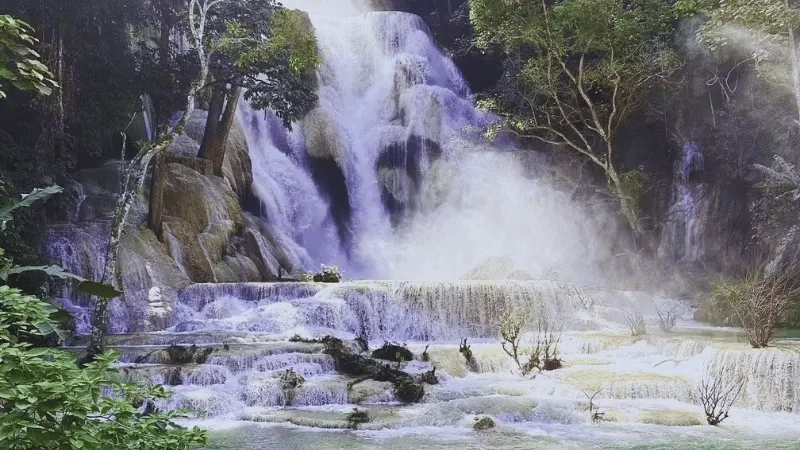
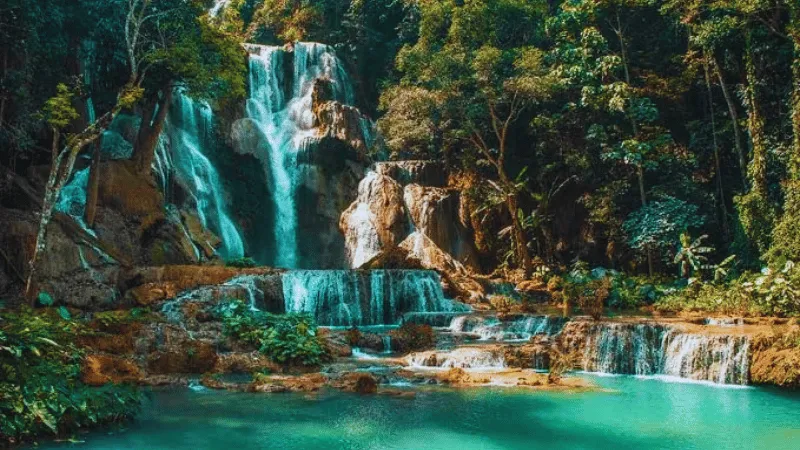
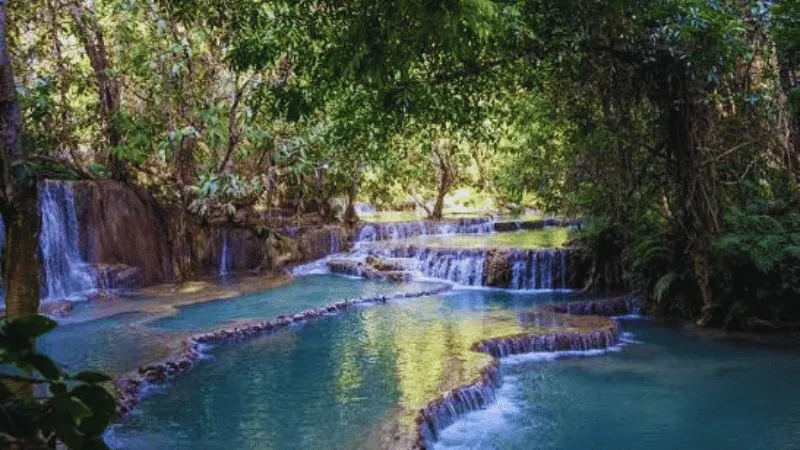
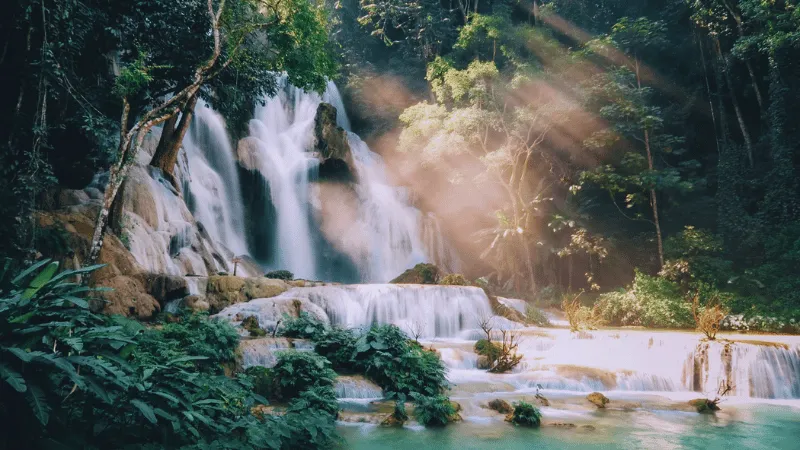
Kuang Si Falls, about 29 to 30 km south of town, is the single most popular day trip from Luang Prabang. A series of limestone terraces catch the Nam Si river and spill it into a string of turquoise pools, with a main waterfall that drops around 60 metres through the forest. Several of the lower pools are open for swimming, which makes it one of the few major waterfalls in the region where you can take a dip.
According to visitor-information sources updated for 2026, the park is open daily from 8:00 am to 5:30 pm, and the entrance fee is around 60,000 kip per person, or about USD 2.70. Shared minivans from town cost around 60,000 to 70,000 kip return, and tuk-tuks hired privately run closer to USD 6 per person. The ride takes about 40 to 60 minutes. Arrive at opening time to beat the tour buses and the midday glare.
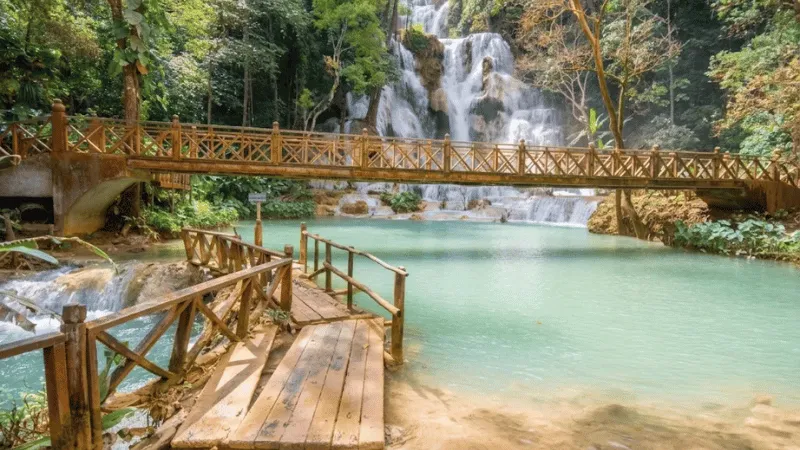
Inside the park, follow the stream up past the swimming pools to the base of the main cascade. A steep, slippery side trail climbs to the top, but skip it in wet weather. Also visit the Tat Kuang Si Bear Rescue Centre near the entrance, run by Free the Bears. Entry to the centre is free, and the moon bears were saved from poaching and bile farms.
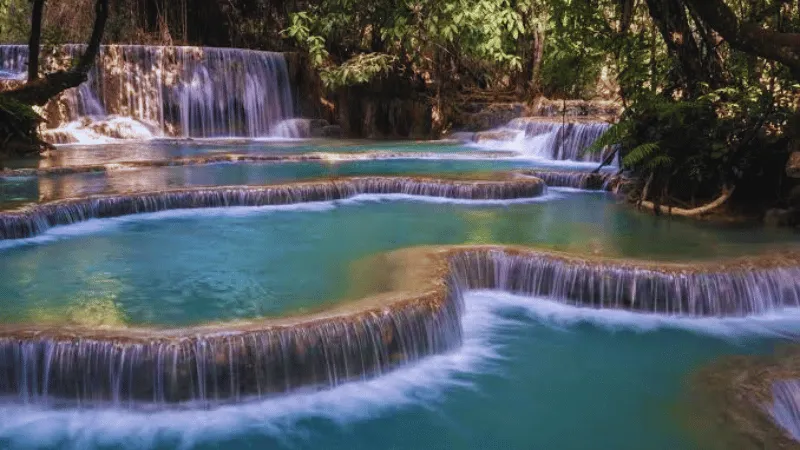
If turquoise pools are your thing, pair this day with our Plitvice Lakes guide in Croatia, another karst waterfall network that photographs beautifully in the cooler months.
Pak Ou Caves and a Mekong Cruise
The Pak Ou Caves sit on a cliff where the Nam Ou meets the Mekong, about 25 km upriver from Luang Prabang. Inside the two caves, Tham Ting and Tham Theung, pilgrims have left more than 4,000 Buddha images over the centuries. The sight is small but striking, and the boat ride up the Mekong is half the pleasure. Longtail boats leave from the town pier most mornings. A shared trip costs around USD 15 to 20 per person, and private boats run higher.
Many boat tours stop at Ban Xang Hai, the “whisky village”, where families still distil lao-lao rice spirit. A sunset cruise without the caves is also a lovely option and takes about two hours. Dress for cool river breezes after 4 pm, and bring a light jacket.
Best Time to Visit Luang Prabang
Laos has three clear seasons. The cool, dry season runs from November to February, the hot season from March to May, and the rainy season from June to October. For a first trip, aim for the cool season.
- November to February: Daytime highs 22 to 28°C, cool mornings around 12 to 15°C, almost no rain and clear skies. Peak season for crowds and room rates.
- March to May: Temperatures climb above 35°C. Farmers burn fields across northern Laos and Thailand, and the smoke haze can be heavy. Views suffer, and some flights have been delayed over the years. Skip this window if you can.
- June to October: Warm, green and far quieter. Kuang Si runs full and brown rather than turquoise, and some trails and river routes close. Short afternoon storms are the norm.
Shoulder weeks in late October and early March can be good value. You still get mostly dry weather with lower prices than the Christmas and New Year peak.
How to Get to Luang Prabang
By Train from Vientiane or Vang Vieng
The Laos-China Railway has transformed travel in Laos. The high-speed service cuts the old 10-hour bus slog from Vientiane down to about 1 hour 50 minutes. According to recent schedules, trains such as C82 and C84 leave Vientiane in the morning, with afternoon services running through the day. Vang Vieng to Luang Prabang takes just over an hour.
Prices depend on class and demand. In 2026, Vientiane to Luang Prabang second-class seats run roughly USD 24 to 30, and first-class around USD 30 to 45. Fares went up about nine percent in April 2026, so check live prices before booking. Buy tickets in advance through an online agent such as 12Go, or at a station ticket office in Vientiane, Vang Vieng or Luang Prabang. The Luang Prabang station sits about 10 km east of the old town, and shuttle vans run to the centre for roughly 40,000 kip.
For another world-class rail journey in the region, read our Ella, Sri Lanka guide. The hill country train from Kandy to Ella is one of Asia’s most scenic.
By Air
Luang Prabang International Airport (LPQ) handles flights from Vientiane, Bangkok, Chiang Mai, Hanoi, Siem Reap, Kuala Lumpur and several Chinese cities. The airport is a short 10-minute drive from the old town. A taxi costs about USD 7 to 10 depending on the time of day.
Overland from Thailand or Vietnam
You can also reach Luang Prabang overland. The slow boat down the Mekong from Huay Xai, on the Thai border, takes two days with a night in Pakbeng. It is a classic Southeast Asia experience. From Vietnam, buses cross from Dien Bien Phu or Hanoi, though the journey is long and the roads are mountainous. For a very different Vietnamese adventure, see our Ha Giang Loop guide.
Where to Stay and What to Budget
Accommodation in Luang Prabang ranges from USD 15 guesthouses to USD 500 heritage suites. The peninsula, between the two rivers, is the most atmospheric area and puts you within walking distance of the temples and the night market. Ban Wat That and the streets behind the Royal Palace are slightly cheaper and only a short walk from the centre.
- Budget: USD 15 to 35 per night for guesthouses with fan or air-con rooms.
- Mid-range: USD 50 to 120 for boutique hotels in restored colonial villas.
- Luxury: USD 200 and up for riverside heritage hotels with pools and spa treatments.
Daily costs beyond your room are modest. A bowl of noodles runs 25,000 to 40,000 kip, a coffee around 20,000 kip, and a sit-down dinner at a mid-range restaurant costs USD 8 to 15. Allow USD 45 to 80 per day as a budget traveller and USD 120 to 200 for mid-range comfort.
Travel Tips and Things to Know
- Visa: Most nationalities can get a visa on arrival at LPQ airport and the main land borders, valid for 30 days. Fees range from USD 30 to 45 depending on nationality. Carry a passport photo and USD cash. An eVisa is also available in advance.
- Currency: Lao kip (LAK) is the local currency. ATMs are common in town, but cash is king for markets, tuk-tuks and small guesthouses. Many places accept Thai baht and US dollars.
- Dress code: This is a deeply Buddhist town. Cover shoulders and knees at temples, remove shoes before entering sim halls and avoid revealing clothes in public spaces.
- Alms-giving etiquette: Keep a quiet distance, do not use flash and never block the monks’ path.
- Getting around: The old town is compact and best explored on foot or by bicycle. Rentals cost about USD 2 to 4 per day. Scooters are around USD 10 per day; drive carefully as roads can be uneven.
- Night curfew: Most bars and restaurants close by 11:30 pm under local rules. Plan a slow evening rather than a late night out.
- Connectivity: Lao SIM cards are cheap, with 5 to 10 GB data packs for a few dollars. An eSIM also works well.
Nearby Destinations Worth Adding
Luang Prabang pairs easily with other places in northern Laos. Nong Khiaw, a quiet river town three to four hours north by road, sits beneath limestone cliffs and has fine viewpoints. Further north, Muang Ngoi is reached by boat from Nong Khiaw and feels even more remote. Vang Vieng, four hours south by road or about an hour by train, has moved on from its party reputation and now attracts visitors for kayaking, hot-air balloons and karst scenery. You can also travel on to Vientiane in a single easy train ride.
If you prefer slow river towns elsewhere in Southeast Asia, our slow-travel guide to Kampot in Cambodia is a natural next stop.
Important Things to Know Before You Go
Luang Prabang is safe and welcoming, but a few practical points save trouble. The water is not safe to drink from the tap; buy bottled water or refill from filtered stations in cafés. Sun is strong even on cool mornings, so pack sunscreen and a hat. Mosquitoes are around in the evenings, especially near the rivers, so bring repellent and consider long sleeves.
Travel insurance is wise. Health care in Luang Prabang is basic, and serious cases often need evacuation to Bangkok. Keep a photo of your passport and visa on your phone, and separate cash and cards between bags. For official listings, opening times and seasonal advice, the Tourism Luang Prabang visitor-information site is a good starting point.
Final Thoughts on Luang Prabang
Few towns in Southeast Asia reward slow travel as well as Luang Prabang. You can tick off the headline sights in two or three days, but the real memories tend to come from the quiet hours. Watching dawn alms from across the street. Cycling past rice paddies to a riverside temple. Sipping Lao coffee as the Mekong turns gold at dusk. The cool season, from November to February, gives you the best weather to do all of that in comfort.
Book your train or flights early, respect the temple etiquette, and leave room in your itinerary to do nothing much. Luang Prabang’s magic is in the pace, not the checklist.
Explore More Destinations on LessExplore
Loved this guide? LessExplore covers slow-travel gems, waterfalls and cultural journeys across the globe. Trek through Nepal on our Poon Hill sunrise guide, chase the dry-season fruit-bat spectacle in Zambia with our Kasanka bat migration guide, or celebrate autumn in Europe with our Val Bavona feature. From hidden gems and nature escapes to practical travel tips, there is always another corner of the world to discover.
Luang Prabang Travel FAQs
Three to four days is ideal. Two days cover the main temples, Mount Phousi and the night market. A third day lets you visit Kuang Si Falls at a relaxed pace, and a fourth day gives you time for the Pak Ou Caves or a bike ride into the countryside.
November to February is the best time. Days are warm and dry with clear skies, and mornings are cool. Avoid March to May, when heat rises above 35°C and smoke haze from farm burning reduces visibility.
The fastest route is the Laos-China Railway high-speed train, which takes about 1 hour 50 minutes. Ticket prices in 2026 run roughly USD 24 to 30 in second class and USD 30 to 45 in first class. Book in advance online or at a station ticket office.
Yes. Kuang Si Falls is the highlight of a Luang Prabang trip. The turquoise pools are open for swimming and the entrance fee is around 60,000 kip (USD 2.70). Visit early in the morning for cooler light and fewer tour buses.
Dress modestly with shoulders and knees covered, keep a quiet distance across the street, and do not use flash photography. If you want to offer food, buy sticky rice from a trusted seller rather than hawkers on the main road, kneel or stand to one side, and keep your head lower than the monks.