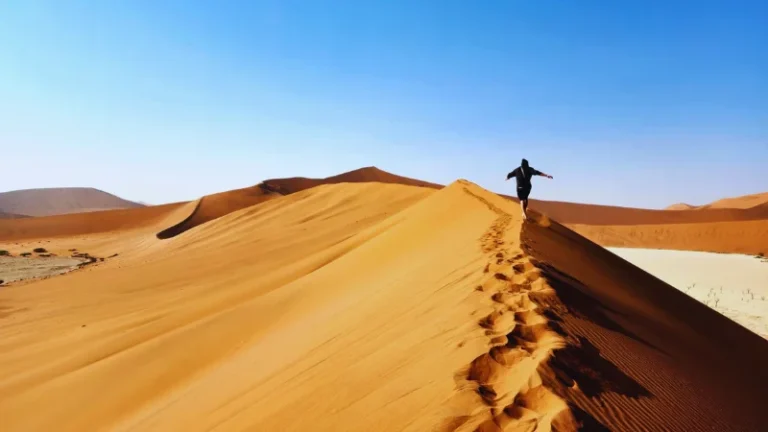
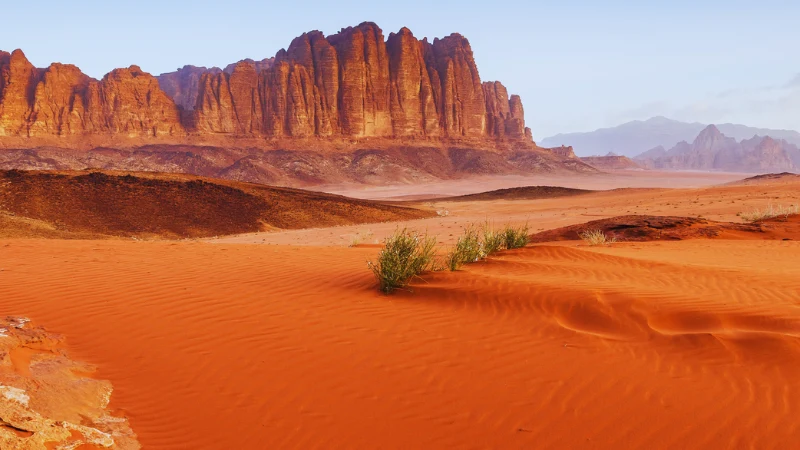
Picture red sand, towering sandstone cliffs and a silence so deep you can hear your own footsteps. That is the Wadi Rum desert in southern Jordan. Locals often call it the Valley of the Moon, and it is easy to see why. The landscape looks so unearthly that filmmakers have used it to stand in for Mars and distant planets.
Yet Wadi Rum is far more than a film set. Bedouin families still live and work here, and people have left their mark on these rocks for thousands of years. In this guide, you will learn what makes Wadi Rum special, the best sights and activities, when to go, how to get there, and the practical tips that make a desert trip smooth and safe.
Wadi Rum Desert at a Glance
- Location: Southern Jordan, about 60 km east of the Red Sea city of Aqaba.
- Protection: Wadi Rum Protected Area, a UNESCO World Heritage Site inscribed in 2011 for both natural and cultural value.
- Size: Around 74,000 hectares (roughly 720 km²).
- Highlights: Jeep tours, rock bridges, canyons, ancient rock art, sand dunes, stargazing and Bedouin camps.
- Gateway: Rum Village, just past the official visitor centre.
- Ideal stay: At least one night, so you can see sunset, the stars and sunrise.
Why Visit the Wadi Rum Desert?
Many deserts are flat and endless. Wadi Rum is different. Here, huge mountains of sandstone and granite rise straight out of the sand. Between them run wide valleys, narrow gorges and natural rock arches. The colours shift all day, from pale gold in the morning to deep orange and red at sunset.
The desert also offers a rare sense of space. Phone signal fades, roads disappear and the night sky fills with stars. For many travellers, a night in a Bedouin camp becomes the highlight of their entire Jordan trip. Moreover, Wadi Rum fits neatly into a classic route that links Amman, Petra and Aqaba.
History and Background
People have lived in Wadi Rum for around 12,000 years. According to UNESCO, the area holds about 25,000 rock carvings, 20,000 inscriptions and 154 archaeological sites. These records trace human life, from early herders to the Nabataeans, the same people who carved Petra. As a result, the desert is as valuable to historians as it is to nature lovers.
You can read more about this heritage on the official UNESCO World Heritage listing for Wadi Rum Protected Area. It explains why the site was recognised as a mixed property, with both outstanding landscapes and cultural importance.
Wadi Rum is also linked with T. E. Lawrence, the British officer known as Lawrence of Arabia. He passed through the area during the Arab Revolt in the First World War. The 1962 film Lawrence of Arabia was shot here in large part. More recently, the desert has appeared in The Martian, Dune and several Star Wars films.
Top Attractions in Wadi Rum
Most sights are spread across the open desert, far from paved roads. Therefore, the easiest way to see them is on a guided jeep tour with a local Bedouin driver. Here are the places most tours include.
Lawrence’s Spring
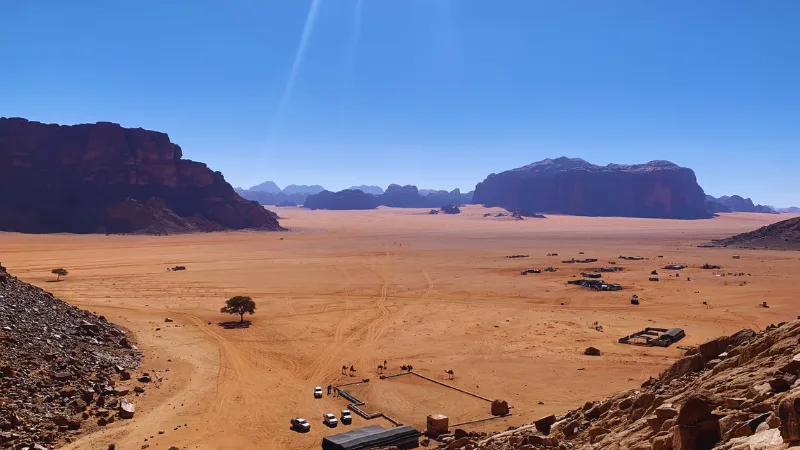
This small spring sits on a rocky slope about 2 km south-west of Rum Village. A short scramble brings you to a shaded spot with fig trees and wide views across the valley. It is linked with Lawrence’s time in the area, and camels often rest nearby.
Khazali Canyon
Khazali is a narrow slot in the side of a mountain. Inside, the cool walls are covered with ancient carvings of people, animals and footprints. Visitors can walk only a short way in, but the rock art is close and easy to see. It is one of the best places to understand Wadi Rum’s long human story.
Burdah and Um Fruth Rock Bridges
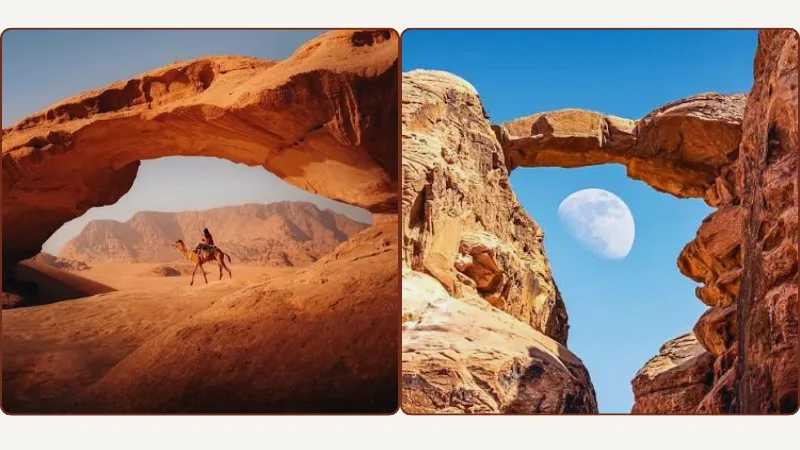
Wadi Rum has several natural rock arches. Um Fruth is the smaller and more popular one. You can scramble onto it in a few minutes, so it is great for photos. Burdah Rock Bridge is much higher and far more dramatic. Reaching it involves a demanding climb, so only attempt it with a local guide and a good level of fitness.
Red Sand Dunes

Some of the most photographed spots are the red dunes that pile up against the cliffs. Climbing barefoot to the top is tiring, yet rewarding. From the crest, you look over a sea of red sand and dark rock. Some tours even offer sandboarding here.
Seven Pillars of Wisdom and the Nabataean Temple
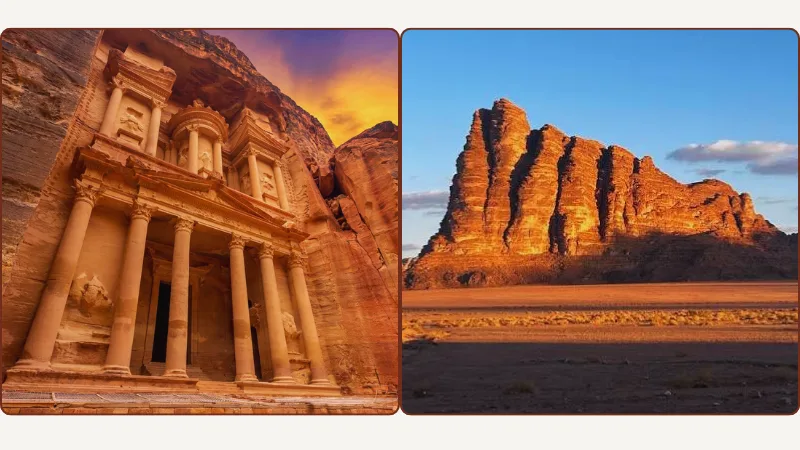
Near the visitor centre, a large cliff with deep vertical grooves is known as the Seven Pillars of Wisdom. The name comes from Lawrence’s famous book, although the link is a modern one. Close to Rum Village, you can also see the remains of a small Nabataean temple, discovered in 1933.
Jebel Rum and Jebel Umm ad Dami
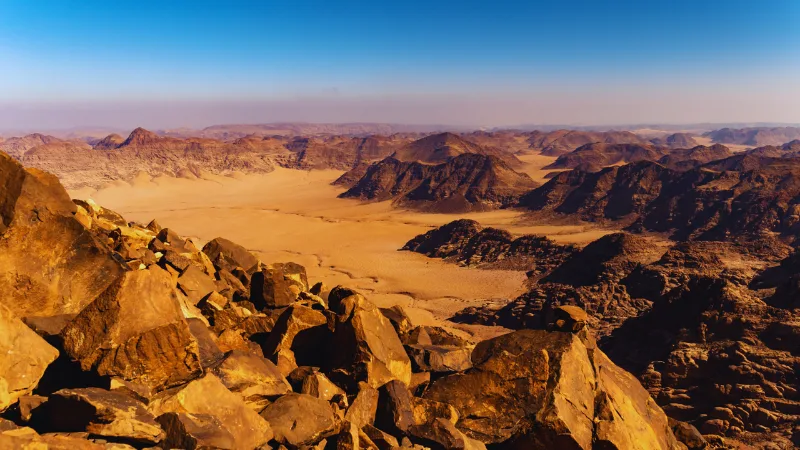
Jebel Rum rises to about 1,734 m and is one of Jordan’s highest peaks. Further south, Jebel Umm ad Dami reaches around 1,840 m and is usually listed as the highest point in the country. Climbing either requires a guide. However, simply driving past these giants is a highlight in itself.
Things to Do in the Wadi Rum Desert
- Jeep tours: Half-day and full-day 4×4 tours are the most popular way to explore. Tours usually include tea stops with Bedouin hosts.
- Camel rides: A slow and peaceful way to travel, especially at sunset. Short rides are ideal for first-timers.
- Hiking and scrambling: Guided walks lead through canyons and up to viewpoints. The long-distance Jordan Trail also passes through Wadi Rum.
- Rock climbing: Wadi Rum has a long climbing history. The first recorded European ascent of Jebel Rum took place in 1952.
- Hot air balloon flights: Seasonal sunrise flights give a bird’s-eye view of the desert.
- Stargazing: With almost no light pollution, the night sky is spectacular on clear nights.
- Bedouin food: Many camps serve zarb, a meal of meat and vegetables slow-cooked in an underground pit.
If you love dramatic deserts, you may also enjoy our guide to the red dunes of Sossusvlei and Deadvlei in Namibia. It offers a very different but equally striking desert experience.
Scenic Views and Photography Tips
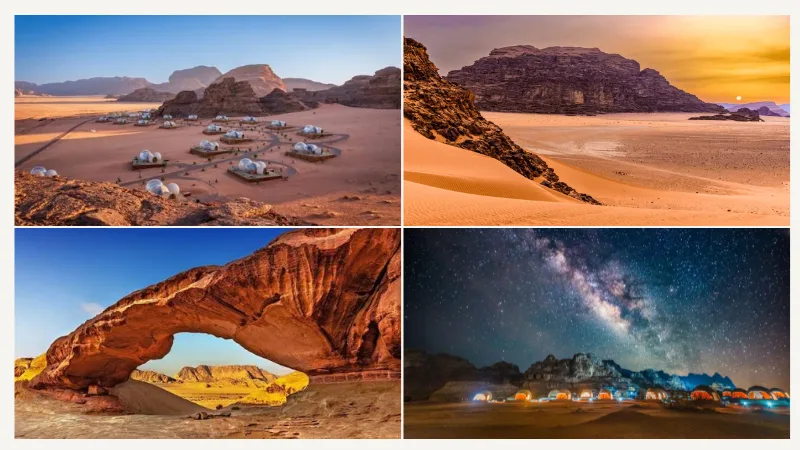
Light changes everything in Wadi Rum. Early morning and late afternoon bring soft, warm tones and long shadows. In contrast, midday light is harsh and flat. Plan your best shots for the golden hours.
- Book a tour that ends at a sunset viewpoint, often on a rocky ridge or dune.
- Wake up early for sunrise near your camp. The cold, still air makes the colours glow.
- Bring a small tripod for night photography of the Milky Way.
- Protect your camera from fine sand with a zip bag or cover. Change lenses inside the jeep.
- Always ask before photographing Bedouin people, especially women.
Best Time to Visit Wadi Rum
Spring (March to May) and autumn (September to November) are the best seasons for most travellers. Days are warm and pleasant, and nights are cool. These are also the busiest months, so book camps ahead.
Summer is very hot. Average daytime highs reach around 35°C in July, and the sun is intense. If you visit in summer, explore early and late in the day. Winter, on the other hand, brings mild days of about 15°C in January but cold nights near freezing. Pack warm layers if you plan to sleep in the desert from December to February.
Rain is rare, with an average of only about 74 mm a year. Still, sudden storms can cause flash floods in valleys, so follow your guide’s advice if the weather turns.
How to Reach the Wadi Rum Desert
All visits start at the Wadi Rum Visitor Centre, close to Rum Village. Here you pay the entry fee or show your Jordan Pass. Most camps then collect guests from the centre or the village.
From Aqaba
Aqaba is the closest city, about 60 km away. A taxi or private transfer takes roughly an hour. Aqaba also has an international airport, which makes it a handy entry point.
From Petra (Wadi Musa)
The drive from Petra takes around two hours. Many travellers combine both places in one trip. Local minibuses have run between Wadi Musa and Rum Village in the morning, but schedules change by season. Ask your hotel or camp for the current timetable.
From Amman
Wadi Rum is a long drive south from Amman via the Desert Highway, roughly four hours. There is no reliable direct public bus. Most visitors rent a car, hire a driver or join a tour. For more transport ideas, the Visit Jordan Wadi Rum guide from the Jordan Tourism Board is a helpful starting point.
If you are driving yourself, park at the visitor centre or in Rum Village. Do not take a normal car into the open desert, as the sand is soft and tracks are unmarked.
Entry Fees and the Jordan Pass
Visitors pay a modest entry fee at the visitor centre. Fees can change, so check the current price on arrival or with your camp. If you plan to see several sites, consider the Jordan Pass. It includes entry to more than 40 attractions, including Petra and Wadi Rum.
The Jordan Pass also waives the standard tourist visa fee for many nationalities. To qualify, you must buy it before arrival and stay at least two nights (three days) in Jordan. Always confirm the latest rules on the official site before you travel.
Where to Stay: Desert Camps
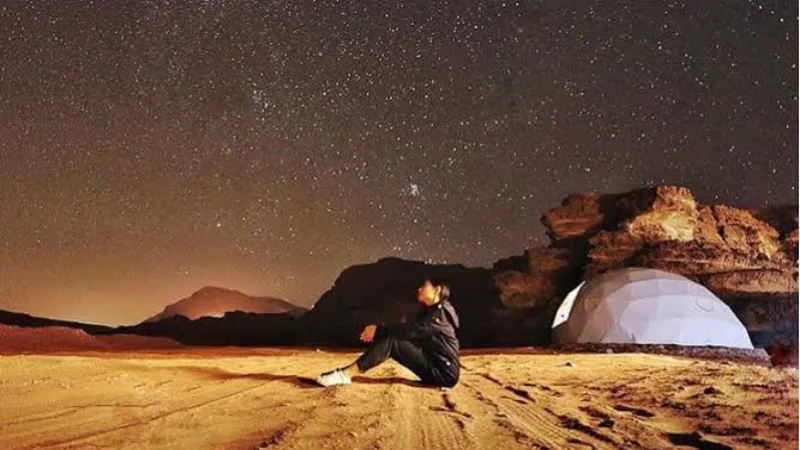
Sleeping in the desert is the best way to experience Wadi Rum. Camps range from simple Bedouin tents with shared bathrooms to comfortable bubble domes with private facilities and glass roofs for stargazing. Most include dinner and breakfast, and many sell jeep tours as a package.
- Book with a licensed camp inside the protected area and read recent reviews.
- Check whether transfers from the visitor centre are included.
- Confirm what is in the price, such as meals, tours and blankets.
- Ask about hot water and charging points if those matter to you.
Travel Tips and Important Things to Know
Avoid common scams
Some drivers outside the protected area may take visitors to other villages and claim they are in Wadi Rum. To avoid this, always head to the official visitor centre. Book tours directly with established camps or licensed guides rather than touts in Petra or Aqaba.
Respect local culture
Jordan is a conservative country, and Wadi Rum is home to Bedouin communities. Dress modestly, covering shoulders and knees, especially in Rum Village. Ask before taking photos of people. Accept tea when it is offered, as hospitality is an important part of Bedouin life. Alcohol is not part of local custom, so check your camp’s policy before you bring any.
Pack the right gear
- Sun hat, sunglasses and high-factor sunscreen.
- A light scarf to protect your face from wind and sand.
- Warm layers for the evening, even in spring and autumn.
- Closed shoes for scrambling, plus sandals for the dunes.
- Plenty of water, a headlamp and a power bank.
- Cash in Jordanian dinars, as card payments are not always possible.
Protect the desert
UNESCO highlights visitor pressure and vehicle tracks as threats to Wadi Rum. Help by staying on established tracks, taking your rubbish with you and never touching or marking rock carvings. Small actions keep this landscape special for future visitors.
New to planning a big trip like this? Our beginner’s guide to planning the perfect vacation covers budgeting, booking and packing basics.
Nearby Attractions
- Petra: Jordan’s famous rock-cut Nabataean city, about two hours north.
- Aqaba: Coral reefs, snorkelling and diving on the Red Sea, about an hour away.
- Hejaz Railway heritage train: Historic train rides operate on a short stretch of old track near Wadi Rum on selected days.
- Disi: A quieter desert area on the edge of Wadi Rum, with more camps and balloon flights.
Love ancient wonders? Explore the rock-hewn churches of Lalibela in Ethiopia, another place where history is carved straight into stone.
Conclusion
The Wadi Rum desert is one of the world’s great landscapes. It combines giant sandstone mountains, red dunes and ancient rock art with warm Bedouin hospitality. Visit in spring or autumn, spend at least one night in a licensed camp, and explore with a local guide. Plan well, travel respectfully, and Wadi Rum will give you memories that last a lifetime.
Explore More on LessExplore
LessExplore brings you worldwide travel guides, hidden gems, hiking routes, waterfalls and scenic escapes, plus practical travel tips. If you are drawn to vast, open places, read about Brazil’s white dunes at Lençóis Maranhenses or the quiet beauty of Ormiston Gorge in Australia’s Red Centre. For a North African adventure, our Ouzoud Falls visitor guide is a great next read.
Wadi Rum Desert FAQs
One night is enough for a jeep tour, sunset and stargazing. Two nights let you add hiking, a camel ride or a balloon flight at a relaxed pace.
Yes. The Jordan Pass lists Wadi Rum among its included attractions. Show your pass at the visitor centre on arrival.
Wadi Rum is generally considered safe for visitors. Book with licensed camps, go to the official visitor centre and follow your guide’s advice on heat and terrain.
March to May and September to November usually offer the best weather. Days are warm and nights are cool but comfortable.
Yes, a day trip is possible from either city. However, staying overnight lets you enjoy sunset, stars and sunrise, which many travellers say are the highlights.
Fees, transport schedules and visa rules change. Always confirm current details with official sources before you travel.