Few places in Europe look as unreal as Plitvice Lakes National Park in Croatia. Turquoise lakes step down a green valley, and waterfalls spill over mossy barriers. Wooden boardwalks float just above the water. If you are planning a trip, this Plitvice Lakes National Park guide covers what to see, when to go, and how to avoid the worst crowds.
Plitvice is not a secret. It is one of the most visited places in Croatia. Even so, it rewards careful planning. With the right timing and route, you can still find quiet corners and calm water. Below, you will find practical advice on routes, transport, seasons, and the rules that protect this fragile landscape.
Plitvice Lakes National Park at a Glance
Plitvice sits in central Croatia, in the hilly Lika region. It lies roughly between the capital, Zagreb, and the coastal city of Zadar. That position makes it an easy stop on many road trips.
The park protects a chain of 16 named lakes. They are split into the Upper Lakes and the Lower Lakes. Water flows from one to the next over natural dams, which creates dozens of cascades. UNESCO added the park to its World Heritage List in 1979, mainly for these living limestone barriers and the forests around them.
The scenery is more than pretty. It is a working natural system, and that shapes how you visit. Paths stay on boardwalks, swimming is not allowed, and the rules are strict for good reason.
How the Lakes Were Formed
The lakes exist because of travertine, a soft rock that forms from minerals in the water. Moss and algae help this process. Over thousands of years, they built natural walls across the valley. Water pooled behind each wall, and the chain of lakes grew.
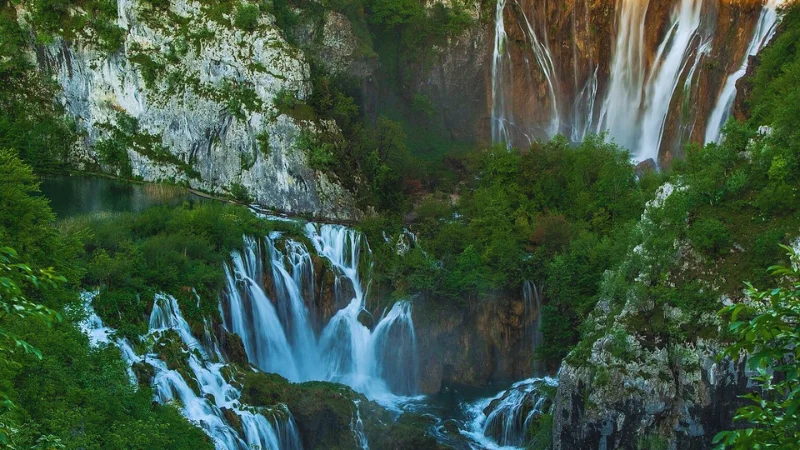
This process never stopped. The barriers keep growing slowly, and the landscape keeps changing. That is one reason the park needs careful protection. Walking on the barriers or entering the water could damage them.
The colours also change. Depending on minerals, sunlight, and the angle you view them from, the lakes appear green, blue, grey, or turquoise. Photographers love this, and so do first-time visitors.
The Best Things to See in Plitvice Lakes National Park
Veliki Slap, the Big Waterfall
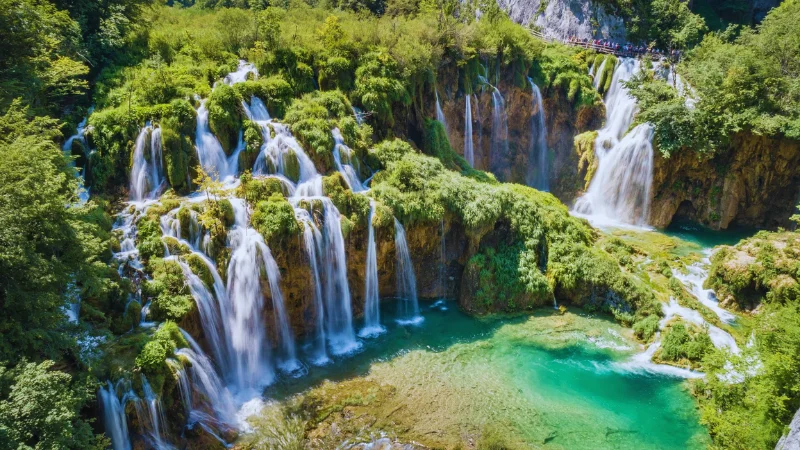
Veliki Slap is the tallest waterfall in the park and in Croatia, at around 78 metres. It drops from the Upper Lakes area into the canyon below. A lookout near the Lower Lakes gives a classic view, and a boardwalk takes you close to the spray.
Come early if you want a quiet photograph. By late morning, the viewing platforms can be busy in summer.
The Upper Lakes
The Upper Lakes sit in a wider, greener valley. Dolomite rock surrounds them, so the scenery feels softer and more open. Boardwalks wind over shallow water, and small cascades appear at nearly every turn.
Many visitors rate this section as the most beautiful. Take your time here. The best views often come from the smaller side paths rather than the main walkway.
Kozjak and the Lower Lakes
Kozjak is the largest lake in the park and sits between the two lake groups. Electric boats cross it, which makes it a handy link between the two sections of the trail. The ride is quiet and short, and it gives a fresh angle on the surrounding forest.
The Lower Lakes lie in a narrower limestone canyon. Cliffs and caves sit beside the water. The mood here is wilder, and the cascades feel more dramatic.
Boardwalks, Forests, and Wildlife
Dense beech and fir forest covers much of the park. It is also home to wildlife, including brown bears, wolves, and lynx. You are very unlikely to see them on the busy paths. Even so, it is a reminder that this is real wilderness, not a theme park.
You are much more likely to see birds, butterflies, and fish in the clear water. Keep your voice low and move slowly, and you will notice more.
Plitvice Lakes Hiking Routes and Walking Times
The park offers several marked routes of different lengths. They combine walking with the boat and a panoramic train, and the official website lists the current options. Choose based on your time and fitness rather than trying to see everything.
A short route covers the main highlights in a few hours. Longer routes add the quieter Upper Lakes paths and extra viewpoints. A full day lets you walk at a relaxed pace and take photographs without rushing.
Trails are mostly flat or gently sloping, but some sections have steps. Wear shoes with good grip, because wet boards get slippery. Bring water and a light rain jacket, since the weather can change quickly in the hills.
If you enjoy waterfall walks elsewhere in Europe, you might also like our guide to Rhein Falls in Switzerland, or the cascades described in Lauterbrunnen, the valley of 72 waterfalls.
Best Time to Visit Plitvice Lakes
Each season gives a different experience, so the best time depends on what you want.
Spring
Spring brings strong water flow from snowmelt and rain. The waterfalls look powerful, and the forest turns fresh green. Crowds are usually lighter than in summer, though weather can be mixed.
Summer
Summer is the busiest season. Days are warm and long, and the colours are vivid. The trade-off is heavy crowds, so arrive at opening time or later in the afternoon. Flows can also be gentler after dry spells.
Autumn
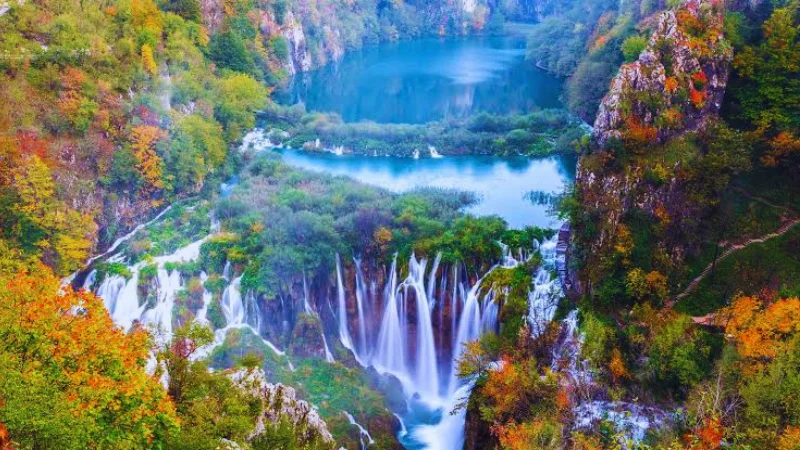
Many travellers consider autumn the sweet spot. The beech forest turns gold and red, and the crowds thin out. Just as the leaves change, the lakes keep their colour. If you love seasonal scenery, our guide to autumn colours in Switzerland shows how well fall and water pair together.
Winter
Winter transforms the park. Snow covers the trees, and some waterfalls partly freeze. It is magical and quiet, but boardwalks can be icy. Some facilities and routes may be limited, so check the official site before you go.
How to Get to Plitvice Lakes National Park
Plitvice is easy to reach, but it is not on a train line. Most visitors arrive by car or bus.
By Car
Driving gives you the most freedom. The trip from Zagreb or Zadar usually takes around two hours, depending on traffic. Roads are good, and the park has parking near its main entrances. Parking can fill up in peak season, so arrive early.
By Bus
Regular intercity buses connect Plitvice with Zagreb, Zadar, and other towns. Schedules change by season, so check current timetables with the bus operators. Buses stop near the park entrances.
On a Guided Tour
Day tours run from several Croatian cities. They are convenient, but they set your timing. If you want a peaceful visit, going independently often works better.
Tickets, Entrances, and Planning Tips
The park has two main entrances. Entrance 1 is closer to Veliki Slap and the Lower Lakes. Entrance 2 is closer to the Upper Lakes and the boat landing. Pick the one that fits your route and parking plans.
Ticket prices and opening hours change by season, so we have not listed figures here. In busy months, booking online in advance is strongly recommended, and entry may be limited by time slot. Always confirm details on the official park website before you travel.
A few practical tips will make your day smoother:
- Arrive early, because the first hours are the quietest.
- Wear sturdy shoes, since boardwalks can be wet.
- Bring water and snacks, but follow the park rules on food and litter.
- Carry a rain layer, as mountain weather shifts quickly.
- Download an offline map, because signal can be patchy.
Important Rules Every Visitor Should Know
The rules at Plitvice are not minor. They protect the travertine barriers that make the lakes possible.
Swimming is not allowed anywhere in the park. Stay on the marked paths and boardwalks at all times. Do not pick plants, feed animals, or leave rubbish. Drones are also restricted in protected areas, so check the current rules before packing one.
Respecting these rules keeps the park beautiful for the next visitor. Rangers do enforce them, so plan your day without a swim.
Where to Stay Near the Park
Small guesthouses, family-run rooms, and a few hotels sit close to the park. Staying nearby lets you start early, which is the single best way to beat the crowds. Book ahead for summer, because good places fill quickly.
If you prefer a base with more services, nearby towns offer restaurants and shops. Many travellers also stay one night on the way between Zagreb and the Dalmatian coast.
Combine Plitvice With Other European Nature Stops
Plitvice pairs well with a wider Balkan or Central European itinerary. If you love lakes surrounded by mountains, take a look at Oeschinensee in Switzerland. If you are weighing up alpine regions, our comparison of the Albanian Alps and the Swiss Alps covers cost, crowds, and scenery.
For more ideas across the continent, our list of beautiful spots in Switzerland is a good place to start.
Frequently Asked Questions About Plitvice Lakes National Park
Most visitors spend between three hours and a full day. A short route covers the highlights, while a full day allows longer routes and slower photography.
No. Swimming is not allowed anywhere in the park. The rule protects the delicate travertine barriers and the water quality.
Spring and autumn offer a good balance of scenery and smaller crowds. Summer is warm but busy, and winter is quiet but can be icy.
You can drive or take an intercity bus. The journey usually takes around two hours. Check current bus timetables before you travel.
In busy months, advance online booking is strongly recommended, and entry can be limited by time slot. Confirm current rules on the official park website.
Final Thoughts on Visiting Plitvice Lakes National Park
Plitvice Lakes National Park earns its fame. The mix of glowing water, thundering falls, and quiet forest is hard to match anywhere in Europe. With an early start, sturdy shoes, and respect for the rules, you can enjoy it at its best.
Plan around the season, pick a route that suits your energy, and leave room to simply stand and look. That is often the part you will remember most.
Explore More on LessExplore
Ready for your next trip? Browse more worldwide travel guides, hidden gems, waterfalls, and hiking destinations on LessExplore. Start with the Valley of 72 Waterfalls, or discover scenic escapes and adventure ideas across every continent. Happy exploring!