Every year, as the first rains reach northern Zambia, a small patch of swamp forest fills with fruit bats. Millions of them. At dusk they pour out of the trees and darken the sky, and at dawn they come streaming back. The Kasanka bat migration is one of Africa’s great wildlife events, yet only a tiny fraction of the travellers who chase the wildebeest ever hear about it.
Right now, in mid-November, the colony is at its seasonal height. However, the 2026 season also looks different on the ground: the park’s main lodge has closed for the year and a small mobile camp has taken its place. This guide explains when to go, where to watch, what changed this season and how to reach Kasanka National Park. All details were checked on 17 November 2026.
Kasanka Bat Migration at a Glance
- Where: Kasanka National Park, Serenje District, Central Province, Zambia.
- What: a seasonal roost of straw-coloured fruit bats (Eidolon helvum), estimated by the Kasanka Trust at up to 10 million animals.
- When: the bats usually arrive from late October, peak in November and leave in early to mid-December. Exact timing shifts with rainfall and fruit.
- Best viewing: the dusk emergence and the dawn return, watched from raised hides near the roost.
- 2026 change: Wasa Lodge is closed for the season. Everwild runs a six-tent semi-permanent camp from 25 October to 1 December 2026, according to Zambia Tourism.
- Getting there: about seven hours by road from Lusaka on tarred roads, or a charter flight of roughly 90 minutes.
What Is the Kasanka Bat Migration?
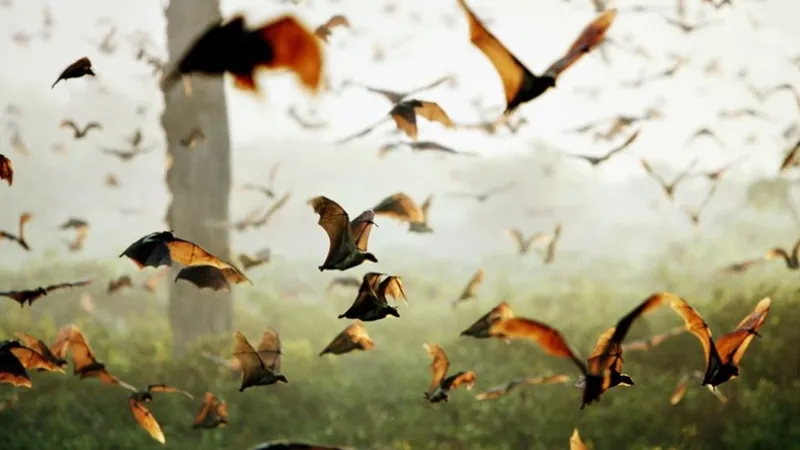
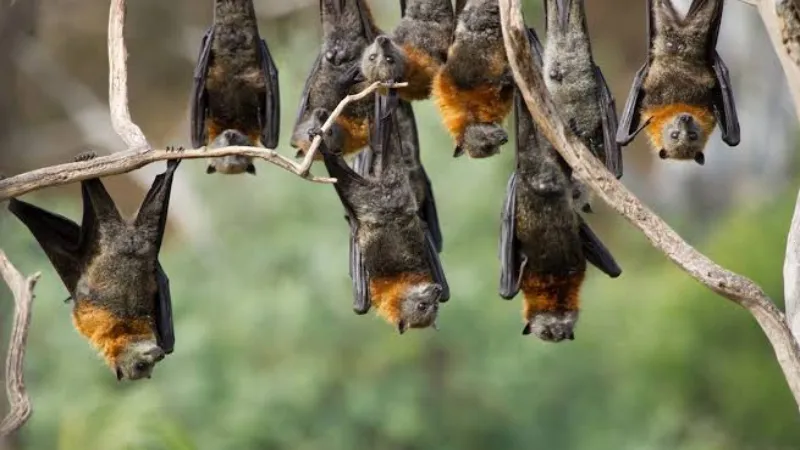
Straw-coloured fruit bats are large, golden-brown flying foxes with a wingspan of around 75 centimetres. They are the only fruit bats on the continent known to migrate over long distances. Each year, a huge share of them converge on Kasanka, where they roost in a small block of evergreen swamp forest locally called mushitu.
The Kasanka Trust, which manages the park, describes the colony as possibly the largest concentration of mammals known in the world. By sheer numbers, it outstrips the famous Serengeti migration. Yet the event plays out in the air rather than across open plains, so you experience it as a rushing, chattering river overhead instead of a line of animals on the horizon.
Why do they come here? Scientists still debate the details. The leading explanation is food: the bats arrive with the early rains, when fruit ripens across the surrounding miombo woodland. Each night they fly out to feed, and research summarised by Zambia Tourism shows they can travel tens of kilometres before returning. Where they go after Kasanka remains partly a mystery.
How Many Bats Are There, Really?
You will see “eight to ten million” quoted almost everywhere, and that range comes from long-running estimates by the park’s managers. Still, counting bats is hard. A research team used camera footage and artificial intelligence to count the evening emergence over five days in November 2019, and their average came to roughly 857,000 bats, as they reported in Down To Earth. Numbers almost certainly change from week to week and year to year. Either way, it remains the most important bat colony in Africa and an overwhelming sight in person.
When to See the Bats: Timing Your Visit
Timing matters more here than at almost any other wildlife event. The window lasts only a few weeks, and the bats follow the rain, not the calendar. Broadly, the season looks like this:
- Late October: the first bats arrive and numbers build quickly.
- November: the peak. Mid-November is widely considered the safest bet for the biggest flights.
- Early to mid-December: the colony thins out and moves on.
If you are reading this in November 2026, you are inside the main window. Nevertheless, note that the only camp currently confirmed in the park closes on 1 December. Therefore, a visit in the next two weeks is the realistic option for this season unless you plan to camp independently.
Dusk Emergence vs Dawn Return
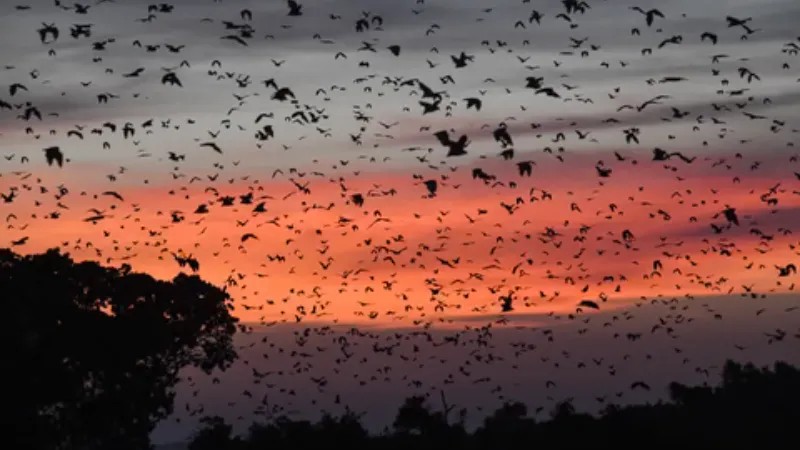
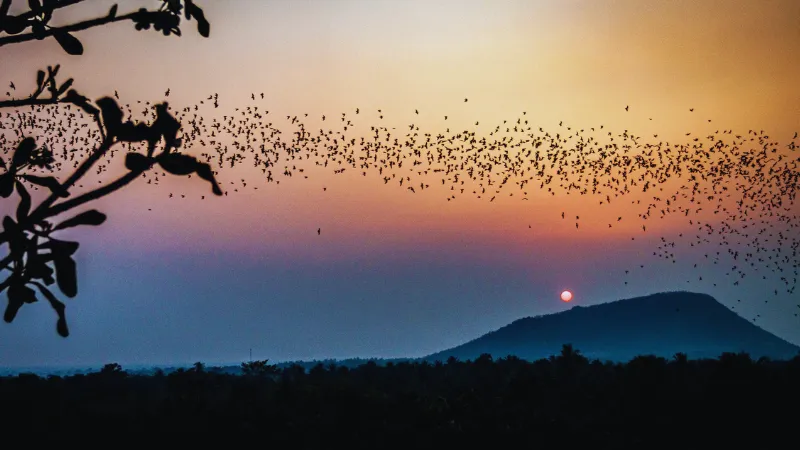
You get two shows each day, and they feel very different. At dusk, a few scouts lift off first. Then the trickle becomes a flood, and the outbound flight can take close to an hour to clear the forest. The sound alone, millions of wings and calls, stays with most visitors.
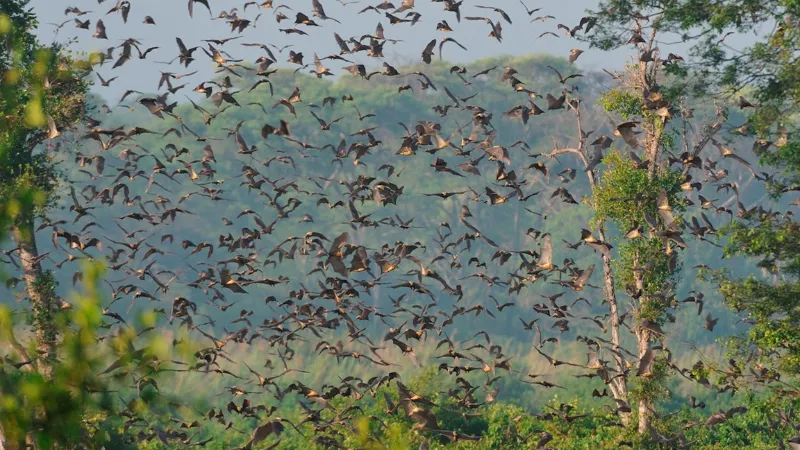
Dawn is quieter but often more beautiful. You climb into a hide in the dark, often before 5 a.m., and watch the bats drop back into the canopy as the sky turns orange. Branches sometimes snap under their weight. Ideally, plan at least two evenings and one morning so you can see both.
Where to Watch: The Fibwe Hide and Bat Platforms
Kasanka’s viewing hides sit in the treetops near the roost. The best known is the Fibwe hide, a platform about 18 metres up a mahogany tree. You reach it by ladder, so anyone with limited mobility should check access with their camp before booking.
Fibwe is not only a bat platform. It also overlooks the swampy floodplain where the shy sitatunga antelope feeds, and many guides rate it as one of the best places in Africa to see this semi-aquatic species. In addition, several other raised platforms stand close to the bat forest, each giving a slightly different angle on the emergence.
For 2026, Everwild says it is repairing the bat hides as part of its season preparations, according to Zambia Tourism’s report. Ask your operator which hides are open on your dates.
The Predators Show Up Too
Ten million bats do not go unnoticed. Eagles, kites and hawks patrol the edges of the flight at dawn and dusk, and crocodiles wait below for bats that fall into the water. Birders, in particular, come for the chance to see a bat hawk hunting on the wing. As a result, the action around the colony is often just as gripping as the bats themselves.
What Changed for the 2026 Season
This is the time-sensitive part of the guide. Wasa Lodge, the lakeside lodge that has long served as Kasanka’s main base, closed for the 2026 season. In response, the safari company Everwild received approval from the Kasanka Trust and Zambia’s Department of National Parks and Wildlife to run a semi-permanent bush camp during the migration. Zambia Tourism reported the news on 11 September 2026.
Here is what that means for travellers this year:
- The camp hosts guests from 25 October to 1 December 2026.
- It has only six guest tents, so space is very limited.
- It runs as a fully self-sufficient mobile operation.
- Guests originally booked at Wasa Lodge were offered alternative arrangements.
- Everwild is also maintaining the access road and the airstrip for the season.
Because the situation changed this year, treat older guidebook advice about lodges and catered stays with care. If you plan to visit in a future season, check whether Wasa Lodge has reopened before you book.
Beyond the Bats: More to Do in Kasanka
Kasanka covers roughly 390 square kilometres, which makes it one of Zambia’s smallest national parks. Even so, it packs in a surprising mix of habitats: miombo woodland, evergreen forest, wetlands, grassy plains called dambos and several rivers. Consequently, the days between bat flights rarely feel empty.
- Sitatunga watching: early morning and late afternoon from Fibwe give the best odds.
- Birding: the park and its wetlands attract a long list of species, and the arrival of the rains brings extra activity.
- Walks and drives: guided walks and game drives reveal puku, hippos, crocodiles and Kinda baboons, a smaller baboon species that Kasanka researchers have studied for years.
- Bangweulu Wetlands: serious birders often combine Kasanka with the nearby wetlands, famous for the shoebill. Check seasonal access, because the best shoebill months fall outside bat season.
One more reason to visit: tourism income is central to the park’s conservation work. The Kasanka Trust runs tourism as a social enterprise and reinvests revenue in the park, according to its official website. Meanwhile, the straw-coloured fruit bat is declining across its range, so a visit directly supports one of its most important refuges.
Travel Tips for the Kasanka Bat Migration
Best Time to Visit
Aim for mid-November and build in a couple of spare days, since the colony’s size varies with the weather. Late October offers drier, hotter conditions and fewer bats, while early December brings rain and a thinning colony. Remember that this is a rainy-season trip. Late November marks the start of the wet season in this part of Zambia, so expect afternoon storms, muddy tracks and lush green scenery.
How to Reach Kasanka National Park
By road: the drive from Lusaka typically takes about seven hours, according to the Kasanka Trust, and the roads are tarred all the way to the park entrance. Take the Great North Road through Kabwe, Kapiri Mposhi and Mkushi to Serenje. Fill up with fuel in Serenje, because it is the last reliable fuel stop. About 36 kilometres north of Serenje, turn left onto the tarred road signed to Mansa and Samfya. After roughly 55 kilometres, you will see the Kasanka sign and the park gate on your left.
By transfer: for the 2026 season, Everwild offers private road transfers from Lusaka at US$750 per vehicle, according to Zambia Tourism.
By air: charter flights land at Mulembo airstrip inside the park. The Kasanka Trust lists flight times of about 90 minutes from Lusaka, one hour from Mfuwe in the Luangwa Valley and 45 minutes from Ndola. For 2026, SkyTrails operates charters from Lusaka to Mulembo. Flying costs more, but it saves you two long days on the road.
Park Fees and Costs
Park fee information varies between sources, so confirm the current rate before you travel. Zambia Tourism’s 2025 park fee table lists Kasanka at US$10 per day for international visitors. Several operators, however, quote US$25 per adult plus a vehicle fee. A park “day” runs from 6 a.m. to 6 p.m., and children under five enter free. In practice, the camp and transport will make up most of your budget, not the entry fee.
Things to Know Before You Go
- Visas: Zambia waived visa requirements for nationals of around 167 countries from January 2025. Nevertheless, rules differ by passport, so check with the Zambia Department of Immigration before you fly.
- Health: Kasanka lies in a malaria area. Speak to a travel clinic about prevention well before your trip.
- Connectivity: expect little or no phone signal or Wi-Fi inside the park.
- What to pack: a rain jacket, dry bags for camera gear, a head torch for pre-dawn walks, insect repellent and a wide-brimmed hat. Wear an old hat in the hides, since bats overhead are not always tidy.
- Photography: light is low at both dawn and dusk. Bring a fast lens and practise higher ISO settings before you arrive.
- Respect the roost: stay on the routes your guide sets, keep noise down and never enter the roost forest. Disturbance can stress the colony.
Where to Stay
For the rest of the 2026 season, the Everwild bush camp is the confirmed option inside the park, with six tents running until 1 December. Book through Everwild or a Zambia safari specialist, and move fast, because space is tight.
The Kasanka Trust also lists riverside campsites, including Pontoon and Kabwe near the bat forest, plus a self-catering tented camp called Kapabi and rooms at the Kasanka Conservation Centre near the gate. Campers need their own tents and equipment. Given this year’s operational changes, contact the Trust directly at localres@kasanka.com to confirm what is open before you set off.
Is the Kasanka Bat Migration Worth the Trip?
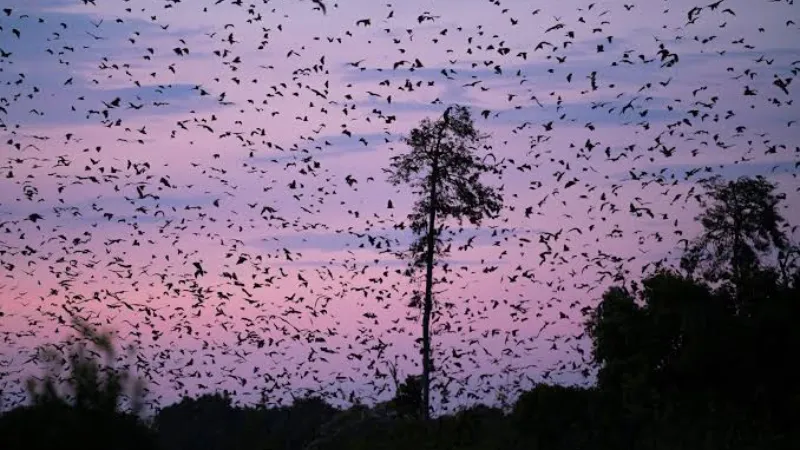
If you love wildlife and want something truly different, yes. Kasanka is remote, the season is short and the logistics take effort. In return, you get a spectacle that very few people on Earth have seen, in a quiet park with almost no crowds. Few safaris end with you standing in a treetop at sunrise while millions of animals rain down into the forest below.
For the 2026 season, act quickly: the camp closes on 1 December, and only six tents are available. Otherwise, start planning for next November, keep an eye on whether Wasa Lodge reopens and book early.
Time-sensitive information: camp dates, lodge status, transfer prices and park fees were checked on 17 November 2026 and may change. We will update this guide as new season details are announced.
Explore More Destinations
Love planning trips around nature’s big seasonal moments? Follow millions of red crabs to the sea in our Christmas Island red crab migration guide, or see forests turn orange with wings in our guide to the monarch butterfly sanctuaries in Mexico. For more of Africa, explore the red dunes of Sossusvlei and Deadvlei in Namibia or the thundering Ouzoud Falls in Morocco.
FAQ Section
The straw-coloured fruit bats usually arrive in Kasanka National Park from late October, peak in November and leave in early to mid-December. Exact timing depends on rainfall and fruit availability.
The Kasanka Trust estimates up to 10 million straw-coloured fruit bats. A 2019 count using cameras and artificial intelligence averaged about 857,000 over five November evenings, so numbers vary by method and year.
No. Wasa Lodge closed for the 2026 season. Everwild is running a six-tent semi-permanent bush camp in the park from 25 October to 1 December 2026, with approval from the Kasanka Trust and Zambia’s wildlife department.
The drive takes about seven hours on tarred roads via the Great North Road to Serenje, then the Mansa road to the park gate. Charter flights to the Mulembo airstrip take roughly 90 minutes from Lusaka.
Go at dusk to watch the bats leave the roost to feed, and at dawn to see them return. Plan at least two evenings and one morning, ideally from a raised hide such as Fibwe.