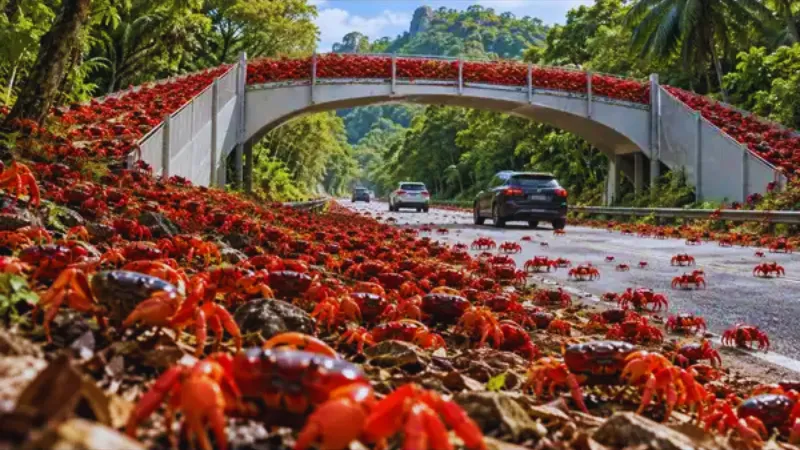
Imagine stepping out of your car at dawn and finding the road gone. Not washed away, just covered. A moving red carpet of crabs pours across the bitumen, down the footpaths and over the rocks towards the sea. Some climb your boots. Most ignore you completely. This is the Christmas Island red crab migration, and it’s one of the strangest, most moving wildlife spectacles on Earth.
Every year, when the wet season’s first heavy rain arrives, millions of red crabs leave the rainforest of this remote Australian island and march to the Indian Ocean to breed. Right now, in November 2026, the season is here. The tourism association’s predicted spawning dates for this year are 5–6 December 2026 and, if the rains come late, 2–3 January 2027. So if you’ve ever wanted to see it, this is the window to start planning. In this guide, you’ll find the predicted dates, how the timing works, the best viewing spots, flights, road rules and practical tips for a trip that rarely goes exactly to plan.
Christmas Island Red Crab Migration at a Glance
- Location: Christmas Island, an Australian external territory in the Indian Ocean, about 1,500 km from the Australian mainland.
- What happens: Millions of red crabs walk from the forest to the coast to mate and release eggs into the sea.
- Season: Usually starts in October or November with the first wet-season rain, but can slip to December or January.
- Predicted 2026–27 spawning dates: 4–6 November 2026 (now passed), 5–6 December 2026 and 2–3 January 2027, give or take a day.
- Getting there: QantasLink flights from Perth, currently twice weekly via the Cocos (Keeling) Islands.
- Getting around: No public transport or taxis. Book a hire car (ideally a 4WD) well in advance.
- Protected area: Roughly two-thirds of the island is Christmas Island National Park.
Research date: 12 November 2026. Spawning dates are predictions based on moon phases and tides. The actual migration depends on rainfall, so always check local updates before and during your trip.
What Is the Christmas Island Red Crab Migration?
The Christmas Island red crab (Gecarcoidea natalis) is a land crab. It lives in burrows on the shady rainforest floor and spends most of the year quietly eating leaves, fruit and flowers. It can’t breed on land, though. Its larvae must start life in the ocean. So once a year, the whole adult population heads for the coast at roughly the same time.
Estimates of how many crabs live on the island vary between sources. The local tourism association puts the number at more than 100 million, while tour operators often quote around 60 million crabs taking part in the march. Either way, the numbers are almost impossible to picture until you’re standing among them. According to Christmas Island National Park, crowds of up to 100 crabs per square metre can gather along the shore, and each female can carry up to 100,000 eggs.
What makes this event special isn’t just the scale. It’s that it happens right through the island’s only town, across roads, school grounds, golf courses and front yards. Locals reroute their days around the crabs, and the island has built crab bridges, underpasses and barrier fences so the animals can cross safely.
How the Migration Works: Rain, Moon and Tide
The red crab migration follows a precise natural clock. Understanding it will help you choose your dates and set realistic expectations.
1. The Rain Sets It Off
Red crabs need moist conditions to travel without drying out. That’s why the march begins with the first heavy rainfall of the wet season. Parks Australia says this is usually in October or November, but it can be as late as December or January. If the rain comes late, many crabs simply wait and migrate the following month.
2. The Males Lead the Way
Males usually reach the coast first. After a dip in the sea to replenish moisture, they dig burrows on the lower terraces. The females arrive soon after, and mating takes place in or near these burrows. The males then head back to the forest, while the females stay behind in the burrows as their eggs develop.
3. The Moon Decides the Spawning
This is the clever part. According to Parks Australia, the females always release their eggs before dawn, on a receding high tide, during the last quarter of the moon. At that point the difference between high and low tide is smallest, which gives the larvae their best chance. Spawning can continue for five or six nights in a row. The tourism association notes that the migration itself typically starts about four to five weeks before these spawning dates.
Because the moon is predictable, the spawning dates can be forecast years in advance. The rain is the wildcard. That’s why the island publishes several possible windows each season, rather than a single date.
Red Crab Migration 2026–27: Predicted Dates
The Christmas Island Tourism Association lists the following possible spawning dates. It adds that spawning could happen a day either side of each window.
| Possible spawning window | Status as of 12 November 2026 |
|---|---|
| 4–6 November 2026 | Passed. Operators noted this window was unlikely unless the wet season started very early. |
| 5–6 December 2026 | Upcoming. The main window to plan around this season. |
| 2–3 January 2027 | Upcoming. Likely if the wet season starts late. |
Looking further ahead, the same source predicts 23–25 November 2027, 22–24 December 2027 and 21–23 January 2028 for the following season. These are useful if you’d rather plan a year out and book flights early.
Here’s the honest truth, though. Nobody can promise you’ll see the main march on a specific day. If you’re aiming for the December 2026 spawning, the crabs could already be moving in late November or early December, but only if the rains have arrived. Local tour operator Indian Ocean Experiences recommends a stay of at least seven days to give yourself a fair chance, and notes that crabs can be on the move for 10 to 14 days.
Best Places to See the Red Crabs
During a big migration, you’ll see crabs almost everywhere on the island’s northern side. Still, a few places stand out. Christmas Island National Park names the following as the easiest viewing spots.
Drumsite
Drumsite sits on the terraces above the settlement and is one of the busiest crossing points. It’s where you’ll often find crab fencing and the famous crab bridge, a raised structure that lets the crabs climb over the road instead of crossing it. It’s a great spot for photos, especially in soft early-morning light.
Flying Fish Cove
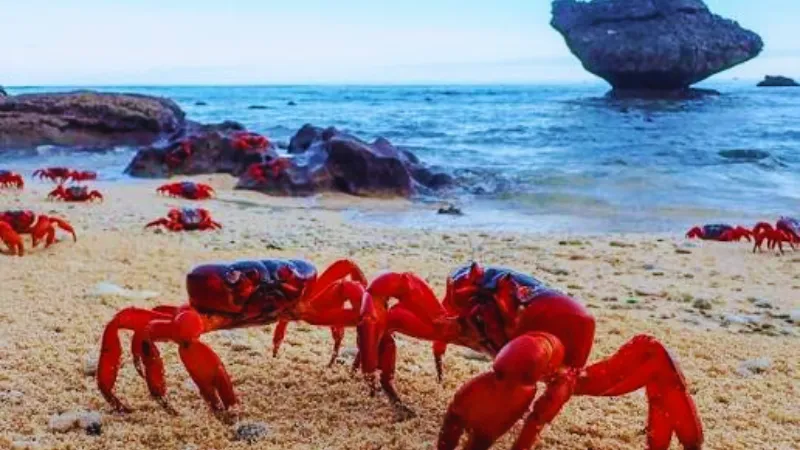
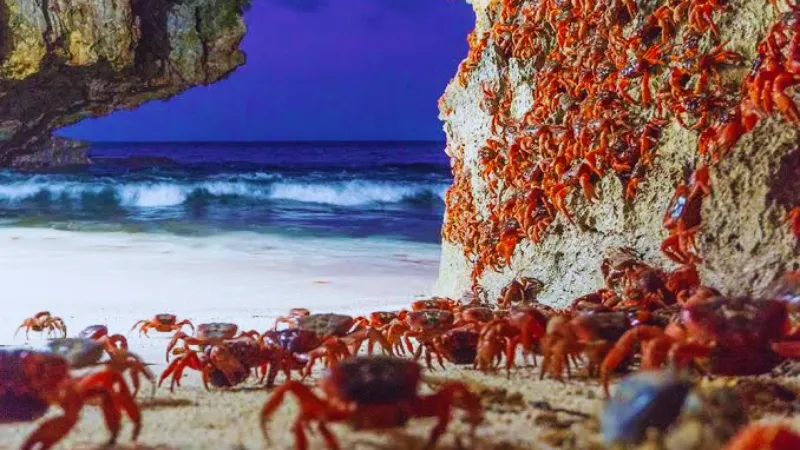
Flying Fish Cove is the island’s main beach and harbour, right beside the settlement. During spawning, the rocks and sea walls can turn completely red. Before dawn on spawning nights, you may see females lined up along the shore, shaking their eggs into the waves. It’s easy to reach and has the island’s best facilities nearby.
Ethel Beach
Ethel Beach on the east coast is another reliable viewing point. It’s a pretty spot with picnic shelters, and it was listed as open on the national park’s access page at the time of writing. Arrive early, as the crabs are most active in the cooler hours.
Greta Beach
Greta Beach is a small, sheltered cove that’s also important for nesting turtles. It’s a quieter place to watch the crabs reach the water. Check access before you go, because tracks in this area can be restricted at times. In fact, the park’s alerts page showed temporary evening restrictions in this area from 9 to 13 November 2026.
Road Closures and Crab Etiquette
The crabs have right of way on Christmas Island, quite literally. Here’s what to expect on the roads during the migration.
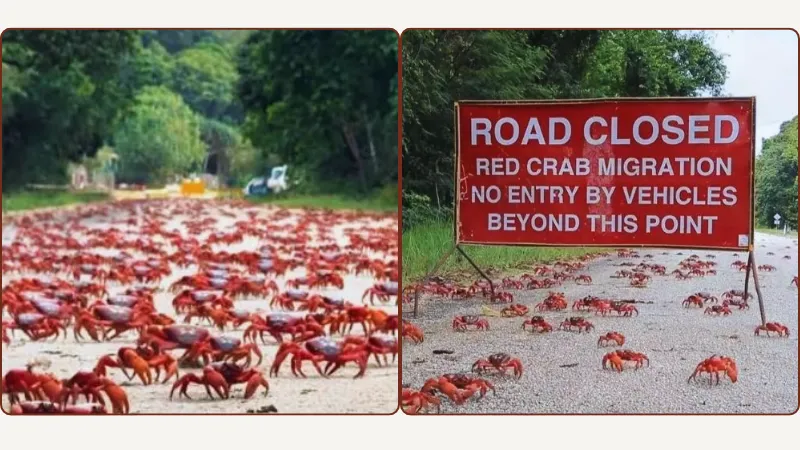
- Roads may close at short notice. Parks Australia warns that some road sections may close for part or all of the day during peak migration. Expect annual road closures between October and February.
- Drive slowly and go around crabs. The island’s travel guidance asks drivers to slow down and steer around crabs on the road when it’s safe. Rangers and volunteers sometimes use rakes and leaf blowers to gently clear crabs from busy roads.
- Park and walk. One of the best ways to experience the migration is to park safely and walk carefully among the crabs. Watch your step at all times.
- Follow signs and ranger advice. Updates appear on public notice boards and local radio. The national park also keeps an online access and alerts page.
- The Dales open late in migration. According to the park, tracks at The Dales are closed until 10:30 am daily during the migration, and vehicles must be out by 3:30 pm.
And one personal tip: don’t pick the crabs up for photos. Admire them from close range and let them get on with their journey. They’ve got a busy week.
How to Get to Christmas Island
Flights From Perth
Perth is the gateway. According to the Christmas Island Tourism Association, QantasLink currently flies from Perth twice a week, on Mondays and Fridays. The trip takes about five hours and includes a stop on the Cocos (Keeling) Islands. An extra Saturday service runs about once a month. Flights depart from Perth Airport’s Terminal 1 (the international terminal), even though it’s a domestic route. Seats are limited and the migration is a popular time, so book as early as you can.
Entry Requirements
Christmas Island is Australian territory, so the tourism association notes Australians don’t need a passport, although photo ID is required. Because flights leave from Perth, international visitors will already need valid Australian entry, such as a visa or ETA, to reach the departure point. If you’re not an Australian citizen, confirm your requirements with the Australian Department of Home Affairs and your airline before you book.
Getting Around the Island
There’s no public transport and no taxi service. Hire cars are essential, and availability is limited, so reserve yours when you book flights. Most roads beyond the settlement are unsealed, which makes a 4WD the best choice. Airport transfers should be booked before you leave Perth. International visitors can drive on their foreign licence for three months, but you’ll need an International Driving Permit if your licence isn’t in English.
Other Things to Do on Christmas Island
Since you’ll likely stay a week, it’s worth knowing that Christmas Island is much more than crabs. In fact, many visitors fall for the rest of the island just as hard.
The Dales and Hugh’s Dale Waterfall
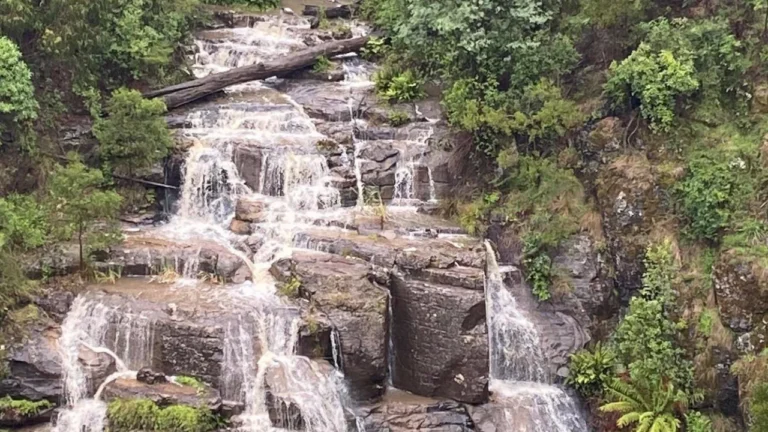
The Dales, on the island’s west side, is a series of rainforest gullies listed as a Wetland of International Importance under the Ramsar Convention. Walking tracks lead to Hugh’s Dale Waterfall and Anderson Dale. You’ll need a 4WD to get there, and remember the morning closures during the migration.
Birdwatching
The island is a bucket-list stop for birders. Around 80,000 seabirds nest here each year. Look out for Abbott’s booby, which the national park describes as the world’s rarest booby, plus the Christmas Island frigatebird, the golden bosun (a white-tailed tropicbird) and the rare Christmas Island hawk-owl. Due to H5 bird flu precautions, the park asks visitors to keep their distance from birds and report any sick or dead birds to a ranger.
Beaches, Blowholes and Lookouts
Dolly Beach, reached by a boardwalk through the forest, is one of the island’s most beautiful coves. The Blowholes on the south coast are dramatic on a big swell, and Margaret Knoll offers wide ocean views. Sea conditions can get rough, so take care before entering the water. Note that the stairs to Winifreds Beach are permanently closed.
Diving and Snorkelling
The island rises steeply from very deep water, so coral reefs and drop-offs sit just metres from shore. Flying Fish Cove is the easiest place to snorkel. Local dive operators run trips along the coast when sea conditions allow.
Practical Travel Tips
Best Time to Visit
For the red crab migration, aim for the weeks leading up to a predicted spawning window. For the 2026–27 season, that means late November into early December 2026, or late December into early January 2027 if the rains arrive late. The wet season brings showers from about November to April. For drier weather and lower humidity, visit mid-year instead, though you’ll miss the big march.
Money and Connectivity
Bring Australian cash. The tourism association says there is no ATM on the island, though Westpac has a branch in the settlement. Mobile coverage is Telstra 4G, and Telstra SIM cards are sold locally. Wi-Fi is available in parts of the settlement and at some accommodation.
What to Pack
- Closed shoes with a good grip, for slippery rocks and crab-covered paths.
- A head torch for pre-dawn spawning visits.
- A light rain jacket, as wet-season showers are common.
- Insect repellent, sunscreen and a reusable water bottle.
- Binoculars for birdwatching and a camera with a wide lens.
Important Things to Know Before You Go
- The dates are predictions. The rain decides when the march begins. Build flexibility into your trip and allow at least a week.
- Book everything early. Flights, hire cars and accommodation are limited and fill up fast during the migration.
- Check alerts daily. Use the Christmas Island National Park access and alerts page, local notice boards and local radio.
- Consider a guided tour. Local operators run red crab packages and spawning tours timed to the predicted mornings.
- Respect the wildlife. Give the crabs space, never drive over them and follow ranger instructions.
For the latest predicted dates and tour options, see the Christmas Island Tourism Association’s red crab migration page. For the science behind the march, read the Christmas Island National Park red crab guide. Flight details are on the official flights page.
Conclusion: Is the Red Crab Migration Worth the Trip?
Absolutely, if you’re comfortable with a little uncertainty. Christmas Island is remote, flights are limited and nature sets the timetable. But that’s also what makes the red crab migration so special. Few places on Earth let you walk through a living river of animals that has followed the moon and the rain for countless generations. Pair it with rainforest walks, rare seabirds and quiet beaches, and you’ve got one of the most unusual island trips you can take from Australia. Pick a window, stay a week and let the crabs do the rest.
Explore More on LessExplore
Love a good wildlife migration? Follow millions of butterflies to the mountains of central Mexico with our monarch butterfly sanctuaries guide. Prefer wild coastlines closer to Perth? Explore the caves, beaches and trails of Leeuwin-Naturaliste National Park. Or swap rainforest for red sand in our Sossusvlei and Deadvlei guide. You’ll find hidden gems, national parks and seasonal escapes from every continent across LessExplore.
Christmas Island Red Crab Migration FAQs
The migration starts with the first heavy wet-season rain, usually in October or November. Predicted spawning dates for 2026–27 are 5–6 December 2026 and 2–3 January 2027, give or take a day.
Estimates vary. The local tourism association says the island has more than 100 million red crabs, while tour operators often quote around 60 million taking part in the march.
Christmas Island National Park names Drumsite, Flying Fish Cove, Ethel Beach and Greta Beach as the easiest viewing spots during the migration.
QantasLink flies from Perth, currently twice a week on Mondays and Fridays, with a stop on the Cocos (Keeling) Islands. The trip takes about five hours.
Plan for at least seven days. The timing depends on rainfall, and crabs can be on the move for 10 to 14 days, so a longer stay gives you a better chance.
Migration timing, road closures, flight schedules and entry rules can change. Always confirm current details with official sources before you travel. Last checked: 12 November 2026.