Picture this. It is 4:45 am, and a long line of head torches is climbing a stone staircase through a dark forest. The air is cold and thin. Then, at the top, the sky turns from grey to pink. One by one, the snow peaks of Dhaulagiri and Annapurna catch the first light. They glow gold above a sea of hills. That moment is the reason thousands of walkers make the Poon Hill trek every year.
The Ghorepani Poon Hill trek is one of Nepal’s best short treks. It takes just three to five days from Pokhara and stays below 3,300 metres. Along the way, it passes rhododendron forests and stone-built villages. Yet it delivers a Himalayan panorama that rivals far harder routes. In this guide, you will find the classic route, a sample itinerary and current permit rules. You will also learn the best time to go, how hard the trek is and tips for a smoother trip.
Poon Hill Trek at a Glance
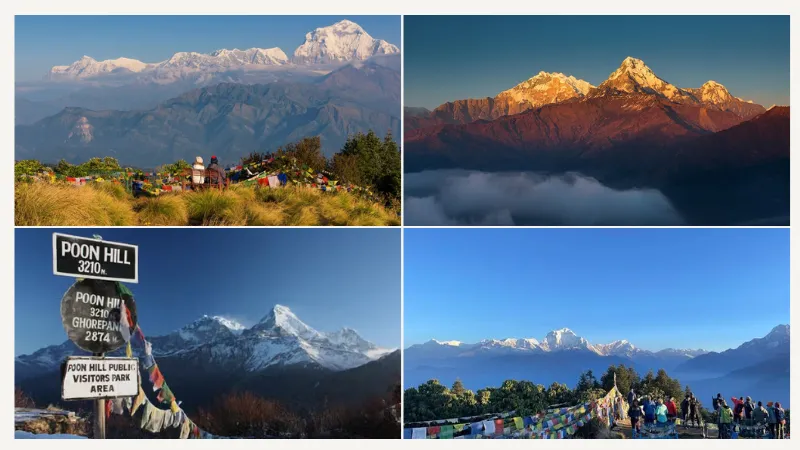
- Location: Annapurna Conservation Area, Gandaki Province, central Nepal.
- Highest point: Poon Hill viewpoint, 3,210 m.
- Duration: Usually 3 to 5 days from Pokhara, depending on your route and road use.
- Classic loop: Nayapul or Birethanti – Tikhedhunga – Ulleri – Ghorepani – Poon Hill – Tadapani – Ghandruk.
- Difficulty: Easy to moderate. Expect long stone staircases rather than technical terrain.
- Best seasons: October to November for clear views; March to April for rhododendron blooms.
- Permits: ACAP entry permit (NPR 3,000 for foreign visitors). A TIMS card and licensed guide are officially required.
- Accommodation: Teahouses (family-run lodges) in every village on the route.
Research date: 12 November 2026. Fees, rules and road conditions in Nepal change often, so confirm the details before you travel.
Why the Poon Hill Trek Is Worth It
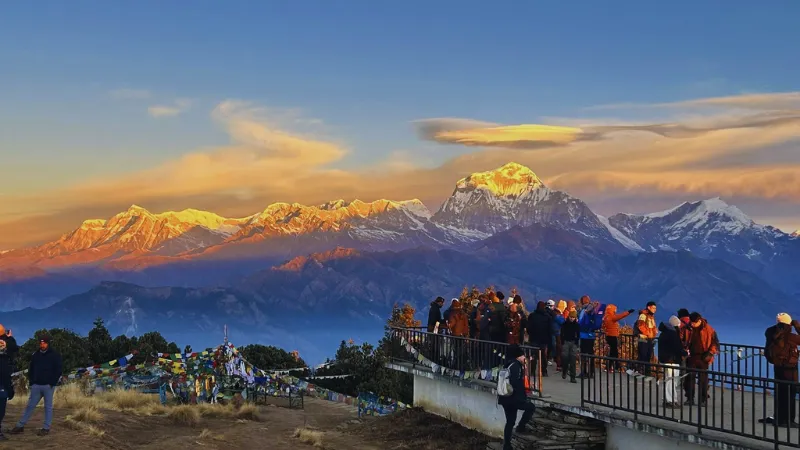
Many people dream of the Himalaya but do not have three weeks for Everest Base Camp or the Annapurna Circuit. This trek solves that problem. In a few days, you get a real taste of mountain life without extreme altitude or expensive logistics.
The highlight, of course, is the sunrise. From the top of Poon Hill, you look across a wide arc of giant peaks. Dhaulagiri I (8,167 m) and Annapurna I (8,091 m) rise on either side of the deep Kali Gandaki valley. Both are among the world’s fourteen 8,000-metre peaks. Between and around them stand Annapurna South, Nilgiri, Tukuche, Hiunchuli and the sharp, fishtail-shaped summit of Machhapuchhre (6,993 m).
However, the trek is more than one viewpoint. You walk through moss-draped forests and cross suspension bridges. You also stay in villages where Magar and Gurung families have farmed terraced hillsides for generations. It is also an excellent first trek. If you enjoy it, the longer Annapurna routes start from the same area.
A Little History: How Poon Hill Got Its Name
Poon Hill has not always carried that name. According to a 2019 Kathmandu Post feature, the hilltop was once known locally as Lumthung ko Danda. Tek Bahadur Poon, a retired army major, later renamed it. He chose the name because the area was mainly settled by the Pun community.
Tourism here grew alongside conservation. In 1986, the Annapurna Conservation Area Project (ACAP) began as a pilot scheme in Ghandruk. Its idea was simple but bold for the time: let local communities manage tourism and protect their forests. Today, it is Nepal’s most visited protected area. Your permit fee helps fund trail upkeep, conservation and community projects.
Poon Hill Trek Route and Itinerary
There are several ways to walk to Poon Hill. Most people follow a loop that climbs to Ghorepani via Ulleri and returns through Tadapani and Ghandruk. Roads now reach further up the valleys than they once did. As a result, many trekkers take a jeep part of the way and shorten the walk.
Below is a relaxed four-day itinerary from Pokhara. Walking times are approximate and vary with fitness, weather and rest stops.
Day 1: Pokhara to Tikhedhunga or Ulleri
Drive about 1.5 to 2 hours from Pokhara to Nayapul. If the road is open, continue by jeep towards Hile and Tikhedhunga. From Tikhedhunga (around 1,500 m), the famous climb to Ulleri begins. This section is a steep stone staircase that takes roughly two hours. Many walkers stay in Tikhedhunga and tackle the stairs fresh the next morning. Others push on to Ulleri (around 2,000 m) for better views.
Day 2: Ulleri to Ghorepani
Above Ulleri, the trail becomes gentler and enters thick forests of oak and rhododendron. Banthanti makes a good tea stop. After roughly four to five hours, you reach Ghorepani. This busy village of colourful-roofed lodges sits at about 2,860 m. Go to bed early, because the alarm rings before dawn.
Day 3: Poon Hill Sunrise, Then on to Tadapani
Leave Ghorepani around 4:30 to 5:00 am. The climb to the viewpoint takes 45 minutes to an hour. After sunrise, return for breakfast. Then follow the ridge east through forest to Deurali and descend to Tadapani (around 2,630 m). On a clear afternoon, Tadapani offers close views of Annapurna South and Machhapuchhre.
Day 4: Tadapani to Ghandruk and Back to Pokhara
Descend through forest to Ghandruk (around 1,940 m). It is one of Nepal’s best-known Gurung villages. Wander its stone lanes, visit a local museum and enjoy the view of terraced fields below the mountains. From Ghandruk, jeeps and buses run back towards Nayapul and Pokhara.
Short on time? Some trekkers drive to Ulleri or beyond and complete a there-and-back walk in three days. If you have more time, add a day in Ghandruk or extend the trip to Annapurna Base Camp.
The Poon Hill Sunrise: What to Expect
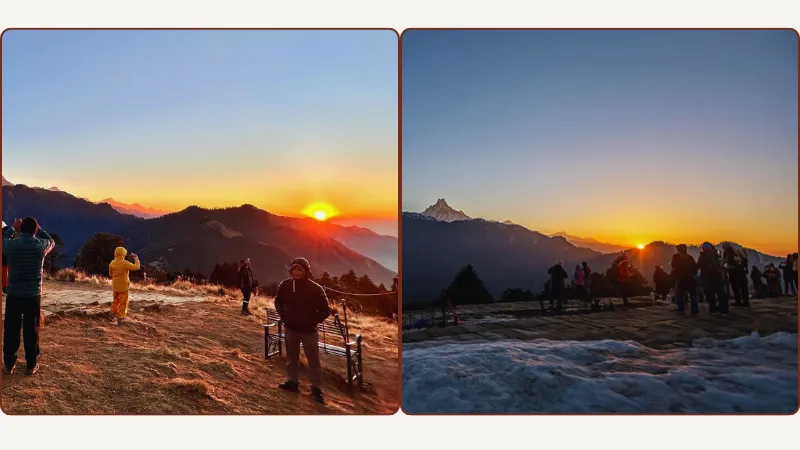
The sunrise is the main event, so plan it well. The viewpoint has a small observation tower and a few tea stalls. A small entry ticket is collected on the hill, with local media in 2025 reporting Rs 150 for foreign visitors. Carry small notes.
Clear mornings are most likely in autumn and early winter. Even so, cloud can roll in at any time. If the view is hidden, stay a little longer, because mist often lifts after sunrise. In addition, the light on the peaks can be better 20 to 30 minutes after the sun appears.
- Pack a down jacket, hat and gloves. Mornings at 3,210 m are cold, especially from November to February.
- Bring a head torch for the dark climb.
- For photography, a short zoom lens helps you frame Dhaulagiri and Machhapuchhre separately.
- Turn around now and then. The view back across the valleys towards Ghorepani is beautiful too.
Best Time for the Poon Hill Trek
You can walk this route most of the year, but the experience changes a lot by season.
- Autumn (October to November): The most popular time. Skies are usually clear after the monsoon, and mountain views are sharp. Expect busy lodges, so book ahead in peak weeks.
- Winter (December to February): Often clear but cold, with fewer people. Frost and occasional snow can make the upper trail slippery, so check conditions first.
- Spring (March to April): Rhododendron season. The forests around Ghorepani turn red, pink and white. Haze can soften the views later in spring.
- Monsoon (June to mid-September): Rain, cloud, leeches and slippery steps. Views are often hidden, so this is the least reliable season.
Weather in the Himalaya can surprise anyone. In late October 2025, for example, heavy snowfall led local authorities to pause treks in parts of the Annapurna region. Always check the forecast before you leave Pokhara.
How to Get to the Trailhead
Reaching Pokhara
Pokhara is the gateway city for the trek. From Kathmandu, tourist buses take roughly six to nine hours by road, and most leave early in the morning. Flights take about 30 minutes. Pokhara International Airport opened in 2023 and handles mainly domestic flights.
Pokhara to the Start of the Trek
Local buses and taxis run from Pokhara to Nayapul, about 40 km away. From there, shared or private jeeps continue towards Tikhedhunga, and on some days further up the road. Road conditions vary with the season, so ask your lodge or guide the evening before. For the return, jeeps run from Ghandruk back towards Pokhara.
Permits, Guides and Entry Requirements
This is the part that confuses most travellers, so here is what is confirmed and what is less clear.
ACAP Entry Permit
Every foreign trekker needs an Annapurna Conservation Area entry permit. The fee is NPR 3,000 for foreign nationals and NPR 1,000 for SAARC nationals. Buy it online through the official ACAP e-permit portal. Alternatively, visit the NTNC permit counters in Kathmandu or Pokhara. A permit bought at a trail checkpoint costs double, so get yours in advance and keep it with your passport.
TIMS Card
Officially, trekkers also need a Trekkers’ Information Management System (TIMS) card. According to the Nepal Tourism Board’s TIMS page, it costs NPR 2,000 for foreign visitors and is issued through registered trekking agencies. In practice, recent traveller reports say checks on the Annapurna trails have been inconsistent. Even so, follow the official rule.
Do You Need a Guide for Poon Hill?
Since 1 April 2023, the Nepal Tourism Board has required foreign trekkers in protected areas to use a licensed guide. The guide must be hired through a registered agency. The Poon Hill area falls under this rule. Enforcement on this route has been patchy, and many independent walkers report no problems. Nevertheless, we recommend going with a licensed guide. It keeps you within the rules, supports local jobs and adds real insight into the culture along the trail.
Nepal Visa
Most visitors can get a tourist visa on arrival. Current fees listed on the Nepal Tourism Board visa page are US$30 for 15 days, US$50 for 30 days and US$125 for 90 days. Check your own nationality’s rules before you fly.
How Difficult Is the Poon Hill Trek?
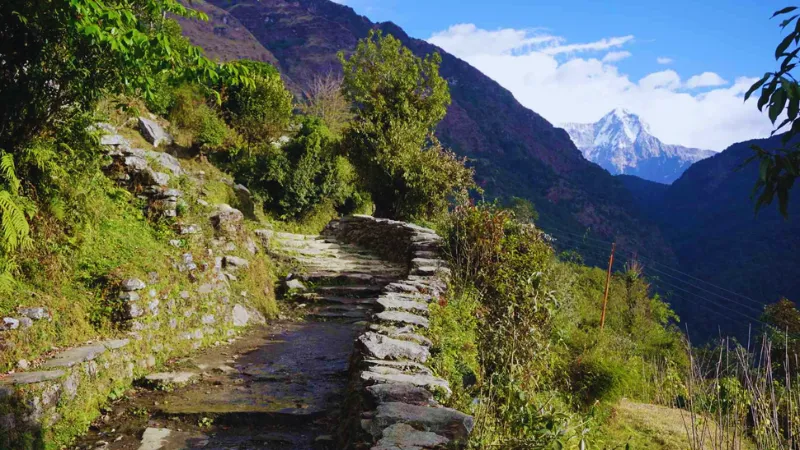
Most reasonably fit people can complete this trek. There are no glaciers or technical sections. However, the route is steep in places, and the steps never seem to end. The climb from Tikhedhunga to Ulleri, with its thousands of stone steps, is the hardest part. The descent back down can be tough on knees, so trekking poles help.
Altitude is not a major concern for most walkers, because the highest point is 3,210 m. Still, some people feel mild headaches or breathlessness above 2,500 m. Walk slowly, drink plenty of water and descend if symptoms become severe. If you have done day hikes such as the Hooker Valley Track in New Zealand, this trek is a natural next step. It simply adds more climbing and several days in a row.
Teahouses, Food and Costs on the Trail
You do not need a tent. Every village on the route has teahouses. They offer simple rooms, shared or private bathrooms and a warm dining room with a stove. Rooms are basic, and they get colder the higher you go, so a warm sleeping bag is useful.
Dal bhat, the Nepali meal of rice, lentil soup and vegetables, is the classic trekking fuel. Refills are often included. Menus also feature noodles, momos, pancakes and Tibetan bread. Prices rise as you climb, because everything is carried up by porters or mules. Hot showers, device charging and Wi-Fi often cost extra. Bring enough Nepali rupees in cash from Pokhara, because ATMs are not available on most of the trail.
Practical Travel Tips for the Poon Hill Trek
- Pack light. A 30 to 40-litre backpack is enough. If you hire a porter, keep their load reasonable.
- Layer up. Days can be warm in the valleys, while nights at Ghorepani drop close to freezing in winter.
- Treat your water. Use purification tablets or a filter rather than buying many plastic bottles.
- Get travel insurance that covers trekking and emergency evacuation.
- Respect local customs. Ask before photographing people, walk clockwise around stupas and dress modestly in villages.
- Start early each day. Mornings are usually clearer, and cloud often builds in the afternoon.
Nearby Attractions Worth Adding
Ghandruk
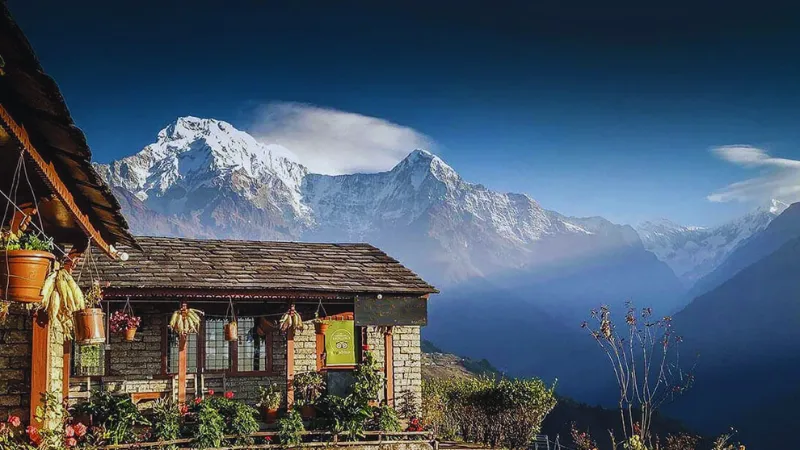
Ghandruk deserves more than a quick lunch stop. This Gurung village has stone houses, slate roofs, small museums on Gurung culture and a lovely view of Annapurna South. An extra night here gives you time to slow down.
Mohare Danda
For a quieter alternative, Mohare Danda (around 3,313 m) lies south-west of Poon Hill. It offers a similar sunrise panorama with far fewer people. Community-run lodges there are operated by local villagers.
Pokhara and Phewa Lake
Before or after your trek, relax in Pokhara. Rent a boat on Phewa Lake, or take the cable car up to Sarangkot for another fine Himalayan sunrise.
If you love mountain scenery across Asia, you may also enjoy our guide to Phander Valley in northern Pakistan. The car-free alpine walks of Kamikochi in the Japanese Alps are another great choice.
Important Things to Know Before You Go
Nepal’s trekking rules have changed several times in recent years. Therefore, confirm permit and guide requirements with a registered agency or the Nepal Tourism Board shortly before your trip. Road access also changes after monsoon landslides, which can affect jeep times.
Finally, be realistic about the weather. A cloudy sunrise is disappointing, but it does not ruin the trip. If your schedule is flexible, a second night in Ghorepani gives you another chance at a clear morning.
Conclusion: Is the Poon Hill Trek Right for You?
If you want a short, rewarding Himalayan adventure, the Poon Hill trek is hard to beat. In just a few days, you climb through rhododendron forests and sleep in friendly teahouses. Then you watch the sun rise over some of the highest mountains on Earth. It suits first-time trekkers, families with older children and anyone short on time. Sort your permits early, hire a licensed guide, pack warm layers and give yourself a spare day for the weather. The view from 3,210 metres will stay with you for a long time.
Explore More on LessExplore
Ready for your next adventure? LessExplore has worldwide travel guides, hidden gems and scenic hikes from every continent. Ride the mountain roads of northern Vietnam with our Ha Giang Loop route guide. Or chase another unforgettable viewpoint on the Reinebringen hike in Norway’s Lofoten Islands. You will also find waterfalls, national parks, weekend escapes and practical travel tips to help you plan your next trip.
Poon Hill Trek FAQs
Most people complete the Poon Hill trek in three to five days from Pokhara. Using jeeps to Ulleri or Ghandruk shortens it, while a slower pace or extra night in Ghandruk adds a day.
Poon Hill viewpoint stands at 3,210 metres. Ghorepani, the village below it where most trekkers sleep, is at about 2,860 metres.
Yes. It is one of Nepal’s best beginner treks. There are no technical sections, but the long stone staircases are tiring, so some basic fitness helps.
You need an ACAP entry permit, which costs NPR 3,000 for foreign visitors. A TIMS card and a licensed guide are also officially required, so check current rules before you go.
October and November usually offer the clearest sunrise views. March and April are best for rhododendron blooms, although haze can soften the mountain views.
Permit fees, guide rules, road access and visa costs in Nepal change. Always confirm current details with official sources before you travel. Last checked: 12 November 2026.