Some waterfalls are famous. Others sit quietly at the end of a gravel road, hidden in tall wet forest, waiting for the few people who know where to look. Toorongo Falls is one of those quiet places.
The Toorongo Falls walk is a short, easy loop near the small town of Noojee in West Gippsland, Victoria. In about an hour, you can see two waterfalls, cross wooden bridges, and walk under a green roof of tree ferns. It is perfect for a day trip from Melbourne, a family outing, or a peaceful weekend of camping.
In this guide, you will find everything you need to plan your visit: where the falls are, how to get there, what the trail is like, the best time to go, and a few local tips to make your day even better.
Toorongo Falls Walk at a Glance
- Location: Toorongo Falls Reserve, near Noojee, West Gippsland, Victoria
- Distance: About 2.2 km loop (Toorongo Falls and Amphitheatre Falls)
- Time: Around 1 to 1.5 hours at a relaxed pace
- Difficulty: Easy (Grade 2)
- Highlights: Two waterfalls, river views, tree ferns, wooden bridges
- Drive from Melbourne: Roughly 2 hours
- Dogs: Allowed on a lead
- Facilities: Toilets, picnic tables and nearby camping
Where Is Toorongo Falls?
Toorongo Falls is in the Toorongo Falls Reserve, a patch of state forest on the southern edge of the Baw Baw ranges. The closest town is Noojee, a tiny timber village about 100 km east of Melbourne.
Noojee sits on the Latrobe River and is surrounded by forest. It has a general store, a pub, and not much else. That is part of its charm. Once you leave the town and head toward the falls, the forest closes in fast, and the phone signal often fades away.
The reserve is protected mainly for the environment and for recreation. That means you can enjoy the walk, picnic by the river, or camp overnight, while the forest stays wild and healthy.
How to Get to Toorongo Falls
Driving from Melbourne
The easiest way to reach Toorongo Falls is by car. From Melbourne, take the Princes Freeway (M1) east toward Warragul. From Warragul, follow the road north to Neerim South and then on to Noojee. The drive takes about two hours, depending on traffic and stops.
You can also go via the Yarra Valley and Powelltown if you prefer a slower, more scenic route through the hills. Either way, the last part of the trip is the most beautiful, with tall trees lining the road.
From Noojee to the Falls
From Noojee, head east for about 4 km and then turn left onto Toorongo Falls Road. Follow this road to the day visitor area and car park. Part of the road is unsealed gravel. It is usually fine for a normal car in dry weather, but drive slowly, as it can be rough and narrow in places.
Tip: Download an offline map before you leave Noojee. Mobile coverage can be patchy in the forest.
Public Transport
There is no regular public transport to Toorongo Falls. You will need your own car, a hire car, or a lift with friends.
The Toorongo Falls Walk: What to Expect
The main walk is a loop of about 2.2 km. It links two waterfalls: Toorongo Falls and the smaller Amphitheatre Falls. The track follows the Toorongo River on the way up and the Little Toorongo River on the way back.
The trail is graded easy. There are some gentle slopes, a few steps, and wooden bridges over the creeks. Most people with average fitness, including children, can finish it without trouble.
Starting the Walk
The walk begins at the day visitor area, where you will find the car park, toilets and picnic tables. Look for the signposted track that heads into the forest beside the river.
Within a few minutes, the noise of the road disappears. You will hear the river, the wind in the tall trees, and maybe the call of a lyrebird or a whipbird. The air is cool and smells of wet earth and eucalyptus.
Walking to Toorongo Falls
Most walkers go anticlockwise and visit Toorongo Falls first. The track climbs gently through tall, wet forest. Tree ferns crowd both sides of the path, and moss covers old logs and rocks. In some spots, the ferns are so thick that they form a soft green tunnel above your head.
After about 20 to 30 minutes, you will hear the falls before you see them. Then the forest opens up, and Toorongo Falls appears in front of you.
Toorongo Falls
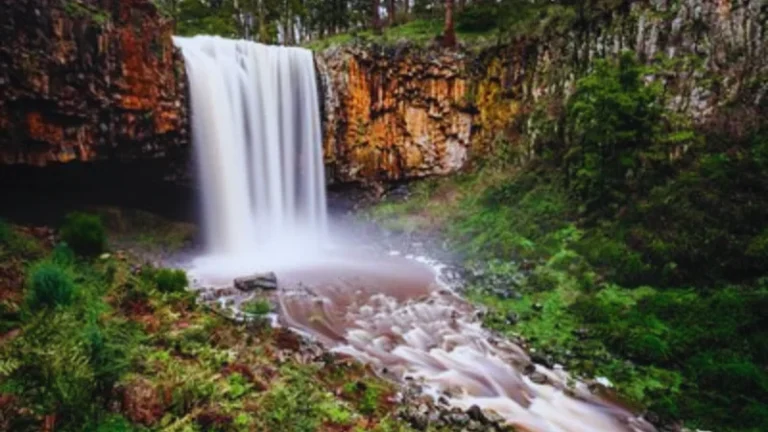
Toorongo Falls is the star of the walk. The water tumbles down a series of rocky steps for around 25 metres before crashing into a pool below. After rain, it becomes a powerful, roaring cascade. In dry months, it is softer, with thin white ribbons of water spreading over dark rock.
A viewing platform lets you get close to the falls without leaving the track. Take your time here. It is a great place for photos, a snack, or simply sitting still and listening to the water.
Please stay on the platform and the marked track. The rocks around the falls are wet and slippery, and the forest floor is easily damaged.
Amphitheatre Falls
From Toorongo Falls, the loop continues across to the Little Toorongo River and on to Amphitheatre Falls. This waterfall is much smaller, only about 5 metres high, but it has its own charm.
The falls drop into a rounded, rocky bowl that looks a little like a natural theatre. That is where the name comes from. The setting feels calm and private, and it is often quieter than the main falls.
Back to the Car Park
The final part of the loop follows the Little Toorongo River downstream back to the picnic area. This section is mostly gentle and shaded. Look out for small cascades, clear pools and patches of bright green moss along the way.
If you are short on time, you can skip the loop and do a simple out-and-back walk to Toorongo Falls only. This is about 1.2 km return and takes roughly 45 minutes.
Best Time to Do the Toorongo Falls Walk
You can visit Toorongo Falls all year round, but each season offers something different.
Winter (June to August)
Winter is the best time to see the falls at full power. Rain fills the rivers, and the waterfalls roar. The forest is at its greenest and most magical. The trade-off is mud. The track can be wet and slippery, so wear good shoes. Some camping areas may also close over winter.
Spring (September to November)
Spring is a great all-round choice. The falls are still flowing well after winter rain, the days are mild, and the forest feels alive. It is a lovely time for photos and family walks.
Summer (December to February)
Summer brings warm days, and the shady forest feels cool and fresh. The falls may be smaller, but the walk is drier and easier. Summer is also the busiest time at the campgrounds, especially on long weekends. Always check fire danger ratings and fire restrictions before you go.
Autumn (March to May)
Autumn is quiet and peaceful. Crowds thin out, mornings are crisp, and the first autumn rains begin to wake up the falls again. It is a good season for a calm, slow walk.
Best tip: Visit a day or two after good rain for the most impressive waterfalls.
Camping at Toorongo Falls
If you want to stay longer, there are campgrounds within the Toorongo Falls Reserve. This makes it easy to do the walk early in the morning, before anyone else arrives.
- Campground One is an open, grassy area close to the river, with toilets and fireplaces.
- Campground Two is a larger, flatter grassy area further up the road. It usually closes each year from early June until the September school holidays.
Facilities are basic. Expect drop toilets, fire pits and some picnic tables. There are no showers and no shop, so bring everything you need. You can usually buy firewood at the general store in Noojee.
Camping rules, bookings and seasonal closures can change. Check the Forest Fire Management Victoria or Explore Outdoors Victoria websites before you go.
What to Bring
The Toorongo Falls walk is short, but it is still wise to come prepared. Here is a simple packing list:
- Sturdy walking shoes with good grip
- A light rain jacket (the weather can change quickly)
- Water and snacks
- Insect repellent, especially in warmer months
- A camera or phone for photos
- An offline map
- A rubbish bag, so you can take all your waste home
- Leeches can appear after rain, so long socks or pants are a good idea
Safety Tips for the Walk
- Stay on the track. Rocks near the falls are slippery and can be dangerous.
- Watch the weather. Heavy rain can make the track muddy and rivers fast-flowing.
- Check fire conditions. On days of extreme or catastrophic fire danger, avoid forest areas completely.
- Tell someone your plans. Mobile reception is limited in the reserve.
- Keep dogs on a lead. Dogs are welcome, but must stay under control at all times.
- Drive carefully. The gravel road can be narrow, with logging trucks and wildlife at times.
Things to Do Near Toorongo Falls
Make a full day of your trip by exploring the area around Noojee.
Noojee Trestle Bridge
Just outside Noojee stands the historic Noojee Trestle Bridge. Built in 1919 for the old Warragul to Noojee railway line, it is about 100 metres long and over 20 metres high. It is the last large trestle bridge left on that line and is listed on the Victorian Heritage Register.
You can walk across the bridge and enjoy views over the forest. There is also a short rail trail of about 3 km one way that links the bridge to the town of Noojee.
Picnic by the Latrobe River
Noojee has pleasant spots by the Latrobe River where you can relax with lunch. It is a nice, slow way to end your waterfall day.
More Waterfalls in Victoria
If you love forest waterfalls, you will enjoy the Sherbrooke Falls walk in the Dandenong Ranges and the beautiful Rubicon Falls near Eildon. For more ideas, see our list of the top 10 waterfalls in Victoria.
Is the Toorongo Falls Walk Good for Families?
Yes. The Toorongo Falls walk is one of the best easy waterfall walks for families in Victoria. The loop is short, the track is well formed, and there are two waterfalls to keep kids interested. The bridges and tree ferns make it feel like a small adventure.
The track is not suitable for prams or wheelchairs because of steps and uneven ground. A baby carrier is a better choice for little ones. If you are looking for more ideas, check out our guide to family-friendly hikes near Melbourne.
Why Toorongo Falls Is a True Hidden Gem
Many of Victoria’s best-known waterfalls get busy on weekends. Toorongo Falls is different. It is far enough from Melbourne to keep the crowds small, yet close enough for an easy day trip.
Here, you can walk for an hour and see only a handful of other people. You can hear the river instead of traffic. You can sit beside a waterfall in a forest that feels untouched. For anyone who loves nature, quiet trails and less-explored places, that is what makes this walk so special.
Final Thoughts
The Toorongo Falls walk proves that you do not need a long hike to find something special. In just one hour, you can wander through fern-filled forest, stand beside a roaring waterfall, and discover a quiet second cascade hidden in a rocky bowl.
Pack a picnic, check the weather, and head east to Noojee. Whether you come for a day or stay overnight at the campground, Toorongo Falls is a peaceful Gippsland escape that is well worth the drive.
Track conditions, road access and camping rules can change. Always check the latest updates from Forest Fire Management Victoria before you visit.
Frequently Asked Questions
The full loop to Toorongo Falls and Amphitheatre Falls is about 2.2 km and takes around 1 to 1.5 hours. A shorter return walk to Toorongo Falls only is about 1.2 km.
No. It is an easy, Grade 2 walk with gentle slopes, some steps and a few bridges. It suits most ages and fitness levels.
Swimming is not recommended. The water is very cold, the rocks are slippery, and conditions can change quickly after rain. It is best to enjoy the falls from the viewing areas.
Yes. Dogs are welcome in the Toorongo Falls Reserve, as long as they are on a lead and under control.
Usually not. A normal car can reach the car park in dry conditions, but the gravel road can be rough. Drive slowly and take extra care after heavy rain.