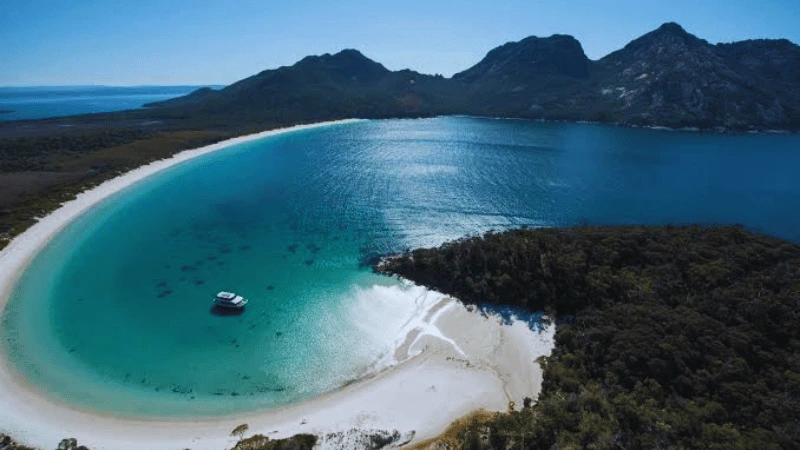
Few views in Australia are as instantly recognisable as Wineglass Bay. A perfect curve of white sand sweeps between pink granite peaks, and the water fades from turquoise to deep blue. You cannot drive to it, though. You have to earn it on foot, and that is half the magic.
This Wineglass Bay walk guide explains your main options in Tasmania’s Freycinet National Park. You can take the short climb to the lookout, drop down to the beach, or loop around via Hazards Beach. You will also find current parks pass prices, how to get there from Hobart or Launceston, the best time to go and the safety basics. Late spring and summer are the busiest walking months, so a little planning goes a long way.
Freycinet National Park at a Glance
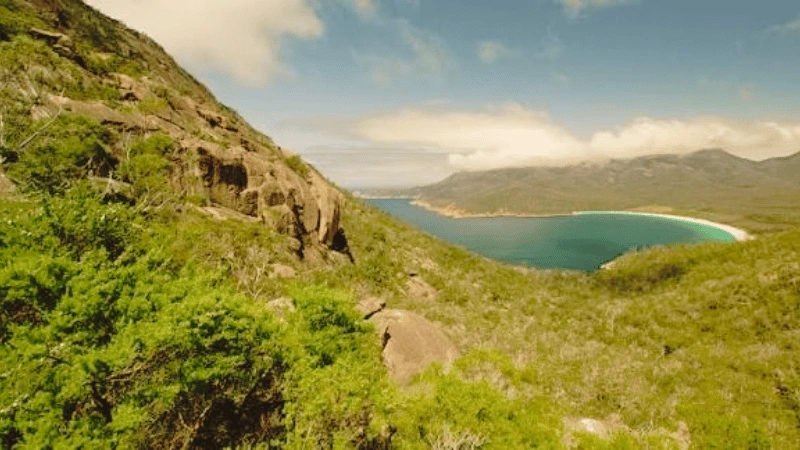
Freycinet National Park covers much of the Freycinet Peninsula on Tasmania’s east coast. A chain of granite mountains called the Hazards rises almost straight out of the sea above the small town of Coles Bay. On one side lies sheltered Great Oyster Bay. On the other, the Tasman Sea rolls into Wineglass Bay.
The park is about a 2.5-hour drive (195 km) north-east of Hobart and roughly two hours (175 km) south-east of Launceston. It is one of the state’s most visited parks. Even so, early starts and longer trails still reward you with quiet beaches and empty granite slabs.
A Short History of Wineglass Bay
The peninsula is the Country of the Paredarerme people of the Oyster Bay nation. Large shell middens along Hazards Beach show how long Aboriginal people gathered food on this coast.
Nicolas Baudin’s French expedition charted the area in 1802 and named the peninsula after the Freycinet brothers who sailed with him. In the 1820s and 1830s, shore-based whaling stations worked at Wineglass Bay and several nearby bays. Many local sources say the bay’s name comes from that grim era, when the water turned red during whale butchering, rather than from its elegant shape. The story is widely told, although it is hard to prove.
Grazing and mining followed the whalers. Then, in 1916, the peninsula was protected as a national park. That makes Freycinet, together with Mount Field, the oldest national park in Tasmania. The Friendly Beaches further north were added in 1992.
Wineglass Bay Walk Options Compared
Every Wineglass Bay walk starts at the walking tracks car park inside the park, a short drive past the visitor centre. The track climbs to a saddle in the Hazards, and from there you choose how far to go. These are the official times and distances from the Tasmania Parks and Wildlife Service Wineglass Bay Lookout page and its related track notes.
- Wineglass Bay Lookout: 2.6 km return, 1 to 1.5 hours, Grade 3.
- Wineglass Bay Beach: 6 km return, 2.5 to 3.5 hours, Grade 3.
- Wineglass Bay and Hazards Beach circuit: 11 km loop, 4 to 5 hours, Grade 4.
- Mount Amos: 3.6 km return, about 3 hours, Grade 4.
Wineglass Bay Lookout Walk
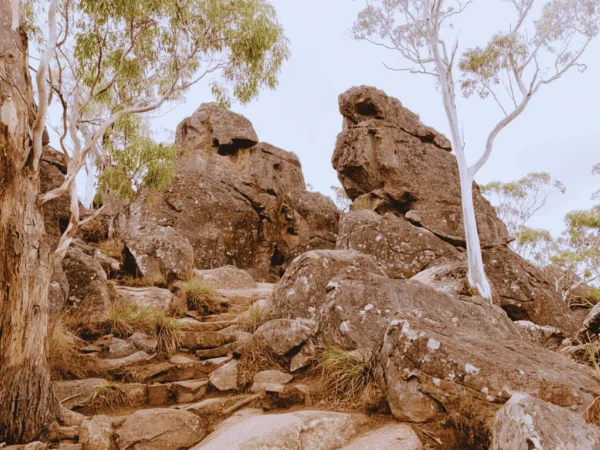
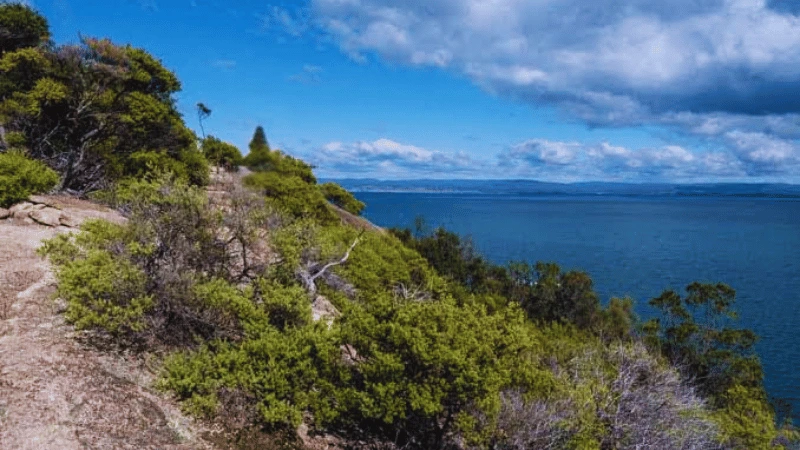
This is the classic short walk, and most visitors choose it. A well-built track climbs about 1.3 km through coastal woodland and past huge granite boulders. It is steady and steep, with plenty of steps. Use the resting seats along the way, because nobody is timing you.
From the saddle, it is a short stroll to the lookout platforms. Suddenly the bay opens up below you in a near-perfect crescent. On a good day you might even spot dolphins or whales out in the water. Take your photos, stay behind the barriers near the cliffs, and return the same way.
If you like short, steep climbs with a huge payoff, compare it with the Reinebringen stair climb above Reine in Lofoten, another staircase to a world-famous view.
Walking Down to Wineglass Bay Beach
From the saddle, a long staircase of roughly 1,000 steps drops down to the beach. Going down is easy on the lungs but hard on the knees. Coming back up is the real workout, so pace yourself and carry plenty of water.
The reward is worth every step. The sand is fine and bright, and the water is cold, clear and often calm. Walk about 20 minutes to the southern end of the beach for a classic view back towards the Hazards. There is a composting toilet near the beach but no bins, so carry out all your rubbish. The beach is not patrolled, so swim only in calm conditions and stay close to shore.
Wineglass Bay and Hazards Beach Circuit
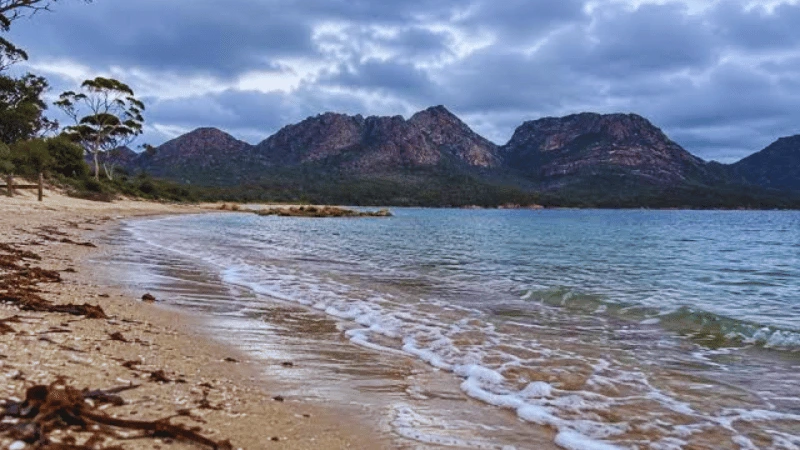
For a full day out, this 11 km loop is the pick of the park’s day walks. After Wineglass Bay, a flat track crosses a sandy isthmus to Hazards Beach on the Great Oyster Bay side. The water here is usually calmer, and the beach is often quieter.
From the halfway point, the track rises inland through she-oak forest. It then follows the rocky coast around Mount Mayson back to the car park. Parks staff warn that this last section can feel longer than expected, so save some energy and water for it. Walking boots are recommended. Doing the saddle first also gets the steepest climb done while your legs are fresh.
Prefer a gentler day walk across the Tasman Sea? Our Hooker Valley Track guide for Aoraki/Mount Cook covers New Zealand’s favourite easy alpine trail.
Mount Amos for Experienced Walkers
Mount Amos is the steep, adventurous option. The track climbs bare granite slabs to the top of one of the Hazards, and in places you will use your hands. From the summit, Wineglass Bay, Great Oyster Bay and Coles Bay appear in one sweeping view. Parks rate it Grade 4 for experienced walkers. Avoid it in wet or windy weather, when the rock becomes slippery, and turn back if you feel unsure.
Other Things to Do in Freycinet National Park
The Wineglass Bay walk is the headline act. However, Freycinet deserves a second day if you can spare it.
- Cape Tourville: An easy 600 m circuit, about 20 minutes, around a lighthouse with wide coastal views. It is ideal if you want the scenery without a big climb.
- Sleepy Bay: A short 500 m return walk to a rocky cove with clear water and orange, lichen-covered granite.
- Honeymoon Bay and Richardsons Beach: Calm, sheltered spots near the visitor centre for a swim, a paddle or a sunset picnic.
- Friendly Beaches: A long, wild stretch of white sand in the park’s separate northern section, signposted off the Coles Bay Road.
- Kayaking and cruises: Operators in Coles Bay run guided sea kayak trips and boat cruises, which show Wineglass Bay from the water.
- Freycinet Peninsula Circuit: A 27 km, two-to-three-day hike for fit, self-sufficient walkers carrying camping gear.
Scenic Views and Photography Tips
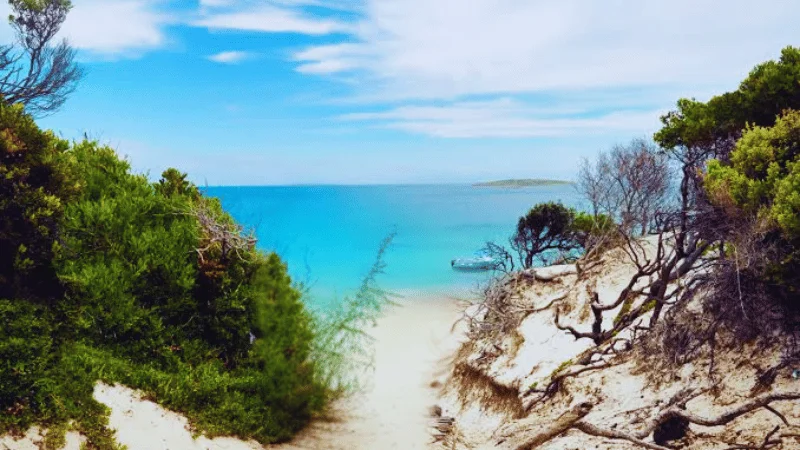
Bright, high sun brings out the turquoise colour of Wineglass Bay best. Mid-morning to early afternoon is therefore a good window for the lookout, although it is also the busiest time. Early mornings are calmer and quieter, even if the light is softer.
At sunset, head back towards Coles Bay. The west-facing Hazards often glow orange and pink from Richardsons Beach and Honeymoon Bay. Cape Tourville works well for sunrise over the Tasman Sea. Drone use in Tasmanian national parks is restricted, so check the Parks and Wildlife Service rules before you fly.
Best Time to Do the Wineglass Bay Walk
Freycinet enjoys one of the mildest climates in Tasmania. The main walking season runs from late spring to autumn, roughly November to April. Long-term weather averages for the area show daytime highs of about 20°C in November and about 23°C in January. Nights stay cool, so pack a warm layer.
Summer is the busiest period, especially during the late December and January school holidays. The walking tracks car park can fill by mid-morning. For that reason, start before 8 am or walk in the late afternoon. Spring brings wildflowers in the heathland, while March and April offer settled weather and fewer people. Winter is cooler and quieter, and the lookout walk is still very doable.
Weather on the east coast can change fast. Strong winds, sudden showers and hot summer days are all common. During bushfire season, check TasALERT and the park alerts before you set out.
How to Get to Freycinet National Park
By Car
Driving is the easiest option. From Hobart, follow the Tasman Highway (A3) north along the coast through Swansea. Then turn onto the Coles Bay Road (C302) and continue through Coles Bay to the park entrance. From Launceston, cross to the east coast and join the same highway before turning onto the Coles Bay Road. There is no car hire in Coles Bay, so pick up a vehicle in Hobart, Launceston or Devonport.
By Bus or Tour
Calow’s Coaches runs east coast bus services to Coles Bay and the Freycinet Visitor Centre, usually connecting through Bicheno or St Marys. Services are limited, so check the current timetable before you travel. From the visitor centre, the Freycinet Walk and Cycle Track takes you about 4 km (around an hour one way) to the walking tracks car park. Alternatively, several companies run full-day tours from Hobart and Launceston, although they make for a long day.
Parks Pass, Fees and Visitor Information
You need a valid parks pass to enter Freycinet. These are the current prices in Australian dollars listed on the official park passes and entry fees page. Fees are reviewed every year, so check before you buy.
- Daily pass, per vehicle (up to 8 people): $47.70, valid for 24 hours.
- Daily pass, per person (bus, bike or on foot): $23.85.
- Holiday pass, per vehicle: $95.50 for all Tasmanian national parks for up to two months.
- Holiday pass, per person: $47.75.
Children under five enter free. If you plan to visit two or more parks, the holiday pass is usually better value. You can buy passes online, at the Freycinet Visitor Centre, at Service Tasmania centres or on board the Spirit of Tasmania ferry.
The visitor centre sits at the park entrance and sells passes and maps. There are toilets there and at the walking tracks car park. Opening hours change with the seasons, so confirm them before you arrive.
For camping, Richardsons Beach, Honeymoon Bay and Ranger Creek sit right by the water. Parks list fees from 3 November 2026 of $24 per night for an unpowered tent site at Richardsons Beach or Ranger Creek, $35 for a powered site, and $18 at Honeymoon Bay. Peak summer and Easter sites are in very high demand. Parks also say a new booking system is coming in late 2026, so check the campground page before you go.
Wineglass Bay Walk Tips and Safety
- Start early: You will beat the heat, the crowds and the parking squeeze.
- Carry water: There is no drinking water on the tracks, and water in the park is untreated.
- Wear proper shoes: Sturdy trainers suit the lookout. Boots are better for the beach and the circuit.
- Protect yourself from the sun: Tasmania’s summer UV is strong, even on cool days.
- Pack layers: A windproof rain jacket is worth carrying in every season.
- Stay behind barriers: The lookout sits above steep cliffs, so supervise children closely.
- Respect wildlife: Do not feed the wallabies. In warmer months, give any snake plenty of space.
- Leave nothing behind: Pets are not allowed, and seasonal campfire bans often apply in summer.
Steep steps and quick weather changes are common on coastal mountain hikes everywhere. Our Platteklip Gorge hike guide for Table Mountain covers many of the same good habits.
Nearby Attractions on Tasmania’s East Coast
Coles Bay is a small, relaxed base with cafes, holiday homes and fresh local oysters from Great Oyster Bay. Just outside the park, Moulting Lagoon is an internationally recognised wetland where black swans gather in large numbers. Bicheno, about 40 minutes north, is known for its blowhole, rocky shoreline and evening penguin tours. To the south, Swansea is surrounded by vineyards and cellar doors along the coast road.
With more time, continue north to the orange-lichen boulders of the Bay of Fires, or south to Maria Island for convict history and wombats. Love wild coastal parks with granite and white sand? Our guide to Leeuwin-Naturaliste National Park in Western Australia shows another side of Australia’s coast. Meanwhile, Discover Tasmania’s Freycinet page is useful for wider trip planning.
Final Thoughts on the Wineglass Bay Walk
The Wineglass Bay walk proves that a famous view can still feel personal. A short, steep climb to the lookout gives you the postcard scene. Meanwhile, the descent to the beach lets you feel the sand and the cold, clear water. For a full day, the Hazards Beach circuit adds quiet forest and coastline that many visitors never see.
Buy your parks pass in advance, start early and carry more water than you think you need. Then take your time. Freycinet rewards walkers who slow down.
Explore More Destinations on LessExplore
Planning more Australian adventures? Time a trip to the remote Indian Ocean territory with our Christmas Island red crab migration guide. Beyond Australia, LessExplore covers hidden gems, waterfalls, scenic hikes and practical travel tips from every continent. There is always another trail, beach or quiet corner of the world to discover.
Wineglass Bay Walk FAQs
The Wineglass Bay Lookout walk is 2.6 km return and takes 1 to 1.5 hours. Walking down to Wineglass Bay Beach and back is 6 km and takes 2.5 to 3.5 hours. The full Wineglass Bay and Hazards Beach circuit is 11 km and takes 4 to 5 hours.
The lookout walk is short but steep, with many steps, so most people with average fitness can manage it at a steady pace. The descent to the beach adds roughly 1,000 steps that you must climb back up. The Hazards Beach circuit and Mount Amos are harder and best for experienced walkers.
Yes. A valid Tasmanian parks pass is required. A daily vehicle pass costs $47.70 for up to eight people, and a daily per-person pass costs $23.85. A holiday pass covering all Tasmanian national parks for up to two months costs $95.50 per vehicle.
Yes, you can swim at Wineglass Bay, but the beach is not patrolled and the water is cold for much of the year. Swim only in calm conditions, stay close to shore and supervise children. Hazards Beach and Honeymoon Bay are usually more sheltered.
November to April brings the mildest weather, with daytime highs of about 20 to 23°C. Start before 8 am or walk in the late afternoon to avoid crowds and heat, especially during the December and January summer holidays.