Picture a dusty coastal highway in eastern Oman. Then picture a small wooden boat, a narrow canyon and a string of turquoise pools hidden between pale limestone walls. At the far end, you swim through a crack in the rock and find a waterfall pouring inside a cave. That is the Wadi Shab hike, and it is one of the most rewarding short adventures in the Arabian Peninsula.
This guide explains how the Wadi Shab hike works from start to finish. You will learn about the boat crossing, the trail, the swim to the cave, the best months to go and how to get there from Muscat or Sur. We also cover flash flood safety, which matters more here than most visitors realise. Right now, in late November, the cool season has just begun, so it is a great time to plan.
What Is Wadi Shab?
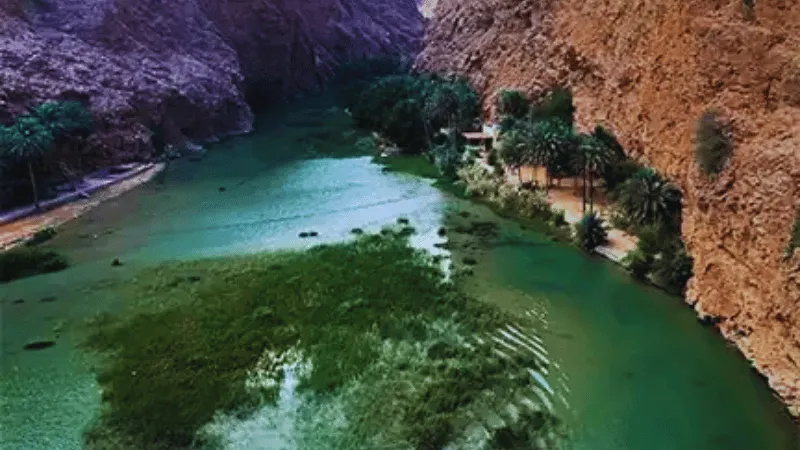
A wadi is a valley or riverbed that carries water only some of the time. Oman has hundreds of them, but Wadi Shab is the one most travellers know. Lonely Planet notes that the name translates roughly as “gorge between cliffs”, and the description fits perfectly. Steep walls rise on both sides, while date palms and small farms fill the valley floor.
The wadi sits near the village of Tiwi in the Al Sharqiyah South Governorate. According to the Oman Observer, it lies about 140 km from Muscat along the coastal road between Qurayat and Sur. The official Experience Oman guide to Wadi Shab puts it at around 170 km from Muscat International Airport, which makes it an easy day trip.
Wadi Shab Quick Facts
- Location: near Tiwi, Al Sharqiyah South, on Route 17 between Muscat and Sur
- Cost: about 1 OMR per person for the return boat crossing, paid in cash
- Trail length: roughly 2.5 to 3 km each way to the last pools
- Time needed: 3 to 5 hours, including swimming
- Difficulty: easy at first, then moderate with boulders and open-water swimming
- Best season: the cooler months, roughly September or October to April or May
A Little History and What Is Changing
For generations, Wadi Shab was simply a farming valley. Two old irrigation channels, known as aflaj, still run along its sides and carry water to nearby fields. According to the Oman Observer, storms have damaged these channels in recent years, and local residents repaired them through community effort. Look out for them as you walk, because they show how people have lived here for centuries.
Tourism has grown fast, and the government has taken notice. In October 2023, Oman’s Ministry of Heritage and Tourism formally declared Wadi Shab a tourist area. Then, in May 2025, the ministry signed an agreement with OMRAN Group to develop and operate the site. OMRAN describes plans for a family-friendly eco-adventure destination with shaded trails and sustainable lodging. An earlier ministry masterplan also mentioned parking, cafes, a rest area and a suspension bridge.
What does this mean for you? Facilities, prices and access arrangements may change over the next few years. The details in this guide reflect recent visitor reports and official sources, but always check locally before you go.
The Wadi Shab Hike, Step by Step
1. Park Under the Highway Bridge
Your day starts at a car park beneath the large highway viaduct. Search for “Wadi Shab Parking” in your map app, and it will take you straight there. Parking is free but limited, so it fills up on weekends and later in the morning. There is a toilet block near the dock, and visitors report a small fee to use it. Go before you start, because there are no facilities inside the wadi.
2. Take the Boat Across
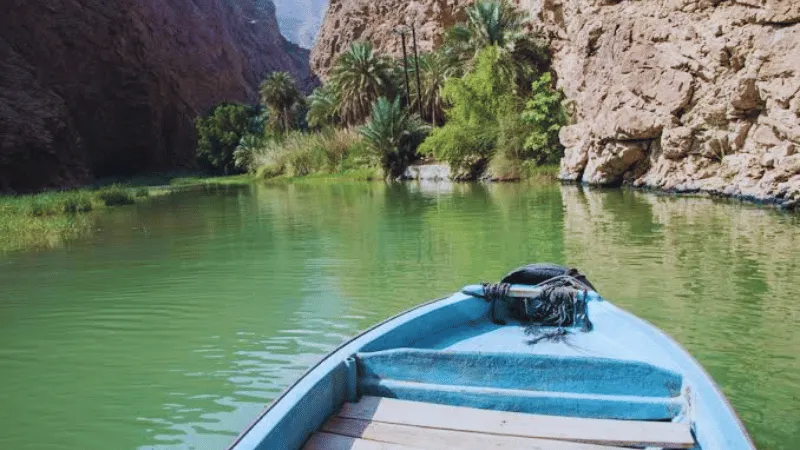
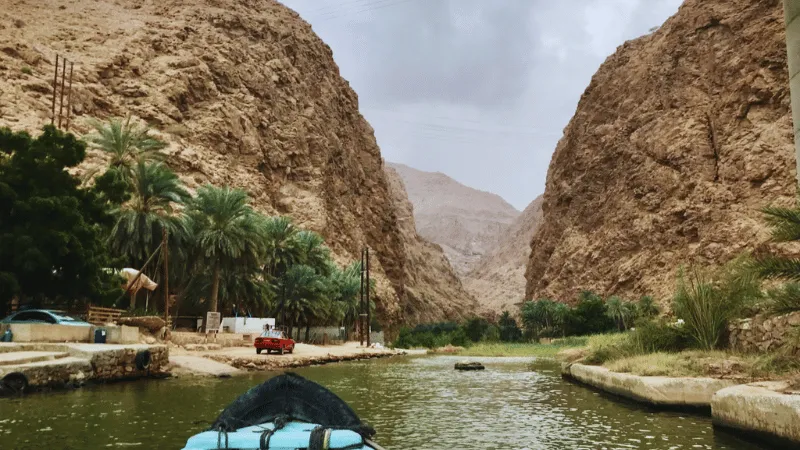
The trailhead sits on the other side of a deep channel of water. Local boatmen ferry walkers across in small motorboats, and the ride takes only a minute or two. Most recent reports put the fare at 1 OMR per person, and that price covers the return trip too. Bring cash, because cards are not accepted.
Many guides say the boats run from 8 am to 5 pm. However, several hikers report finding boats operating earlier than that. Ask the boatmen when the last return crossing leaves, especially if you start late. To come back, simply wave from the landing point and a boat will collect you.
3. Walk Through the Palm Groves
The first part of the trail is gentle. According to the Oman Observer, the opening 1.5 km is flat and easy. You walk past small plantations shaded by date palms, mango, banana, lemon and sidr trees. Donkeys still carry goods for local farmers, so you may share the path with a few.
After that, the canyon narrows. The trail turns into light boulder-hopping, and painted arrows on the rocks show the way. The stones can be slick, so take your time. Most people reach the first big swimming pool in about 45 minutes to an hour, depending on fitness and photo stops.
4. Swim Through the Pools
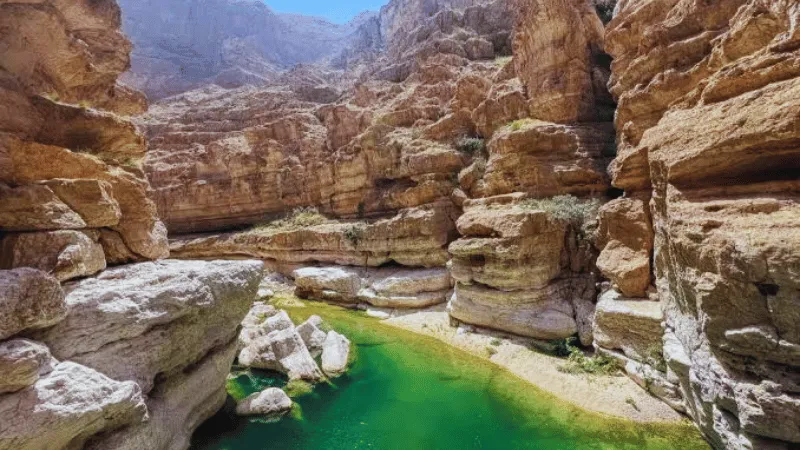
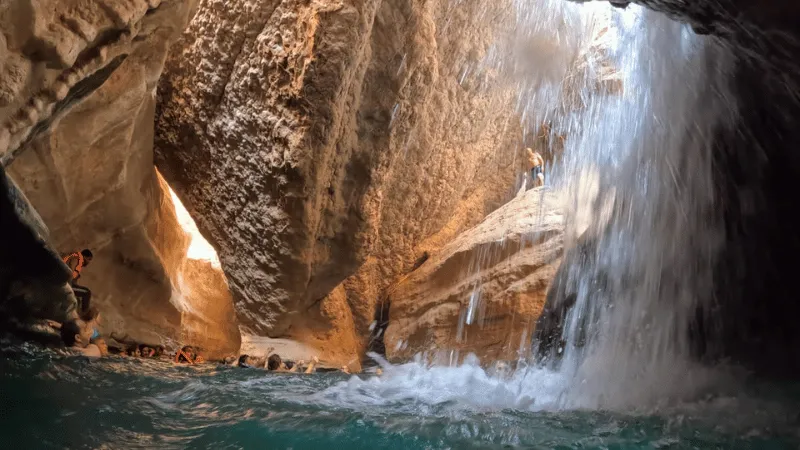
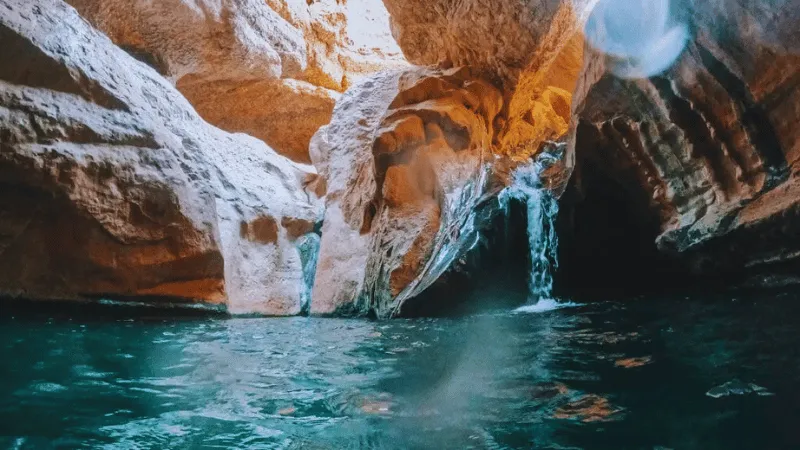
Here is where the Wadi Shab hike becomes special. The path ends at a chain of deep, clear pools, and the only way forward is to swim. The water glows turquoise and green against the pale cliffs. In some places you can wade, while in others you must swim properly with no footing.
Many visitors leave their bags on the rocks before the first deep pool. A waterproof dry bag is a smarter choice if you want your phone or car keys with you. The Oman Observer reports that life jackets and helmets can be rented at the entrance, which is helpful for weaker swimmers.
5. Enter the Hidden Waterfall Cave
The final pool leads to a narrow gap in the rock wall. You squeeze through with your head just above the water, and the space opens into a cave. Inside, a waterfall pours down from above, and the sound echoes around you. On sunny mornings, light filters in and turns the water bright blue.
Experience Oman says basic swimming skills are necessary to reach the waterfall, and it advises using a life jacket. The gap is tight, and it can feel claustrophobic. If you are not confident, enjoy the outer pools instead. They are beautiful in their own right, and there is no shame in turning back.
Scenic Views and Photography Tips
Wadi Shab is a dream for photographers. The best light usually arrives in the morning, when the sun clears the canyon walls and lights up the pools. Still water at the first big pool creates lovely reflections of the cliffs. The boat crossing under the viaduct also makes a striking contrast between old and new Oman.
Keep your camera gear minimal. You will be swimming, so a waterproof phone pouch or an action camera works far better than a large camera. Above all, be respectful when photographing local farmers and their homes. Always ask first.
Best Time for the Wadi Shab Hike
Experience Oman lists September to May as the best time to visit. In practice, the cooler months from about October to April are the most comfortable for walking. Summer brings intense heat, so if you visit then, start very early. November and December are excellent choices, with warm water and milder air.
Timing during the day matters too. Arrive around 8 am if you can. You beat the heat, and you beat the tour groups that arrive from Muscat later in the morning. Weekends in Oman fall on Friday and Saturday, and those days are noticeably busier. A weekday morning gives you the calmest experience.
How to Get to Wadi Shab
From Muscat
Most travellers drive from Muscat along the coastal highway, Route 17. The trip takes roughly 1.5 to 2 hours on good paved roads. Wadi Shab is clearly signposted from the highway, and a normal car is fine. You do not need a 4WD to reach the car park.
From Sur
If you are staying in Sur, the drive is shorter, at roughly 40 to 45 minutes. Sur makes a good base if you also plan to visit the turtle beaches further down the coast.
On a Guided Tour
Organised day trips from Muscat are widely available. Many combine Wadi Shab with the Bimmah Sinkhole and handle transport and boat fees for you. A tour suits travellers who prefer not to drive, and a local guide adds useful context. Experience Oman lists licensed tour operators on its website.
Flash Flood Safety: Read This Before You Go
Wadis are beautiful, but they can be dangerous. Oman’s dry riverbeds can turn into fast torrents within minutes after heavy rain, even if the rain falls far upstream. In March 2026, flash floods across Oman claimed several lives, and the Royal Oman Police stepped up warnings about entering flowing wadis.
Wadi Shab is not immune. In October 2024, the Ministry of Heritage and Tourism advised people not to organise trips to Wadi Shab because of high water levels during bad weather. A local guide also notes that the whole wadi can flood after rain, and the boats stop running when it becomes unsafe.
- Check the weather forecast and any official alerts the evening before and on the morning of your visit.
- Do not enter the wadi during or straight after rain.
- Leave immediately if the water turns muddy or rises, or if you hear a rumbling sound upstream.
- Never swim alone, and never jump into pools without checking the depth.
Travel Tips and What to Pack
- Footwear: water shoes or sturdy sandals with grip. Experience Oman warns against flip-flops on the rough terrain.
- Water and snacks: there are no shops in the wadi, so carry everything you need.
- Sun protection: a hat, sunglasses and reef-friendly sunscreen.
- Dry bag: to keep your phone, keys and cash safe while you swim.
- Cash: small notes for the boat and the toilets.
- Rubbish bag: pack out everything you bring in.
Dress Respectfully
Wadi Shab runs past real villages and farms. Wear clothes that cover your shoulders and knees while you walk, and choose modest swimwear. Many visitors swim in a rash vest or a light T-shirt and shorts. Change discreetly, keep noise down and greet locals politely. Small gestures like these keep the welcome warm for future visitors.
Visa and Entry
Oman has offered 14-day visa-free entry to citizens of about 100 countries for several years, with conditions for some nationalities. In August 2026, the Royal Oman Police also introduced a new free 14-day tourist visa for designated countries. Rules depend on your passport, so use the official Royal Oman Police visa eligibility wizard before you book.
Nearby Attractions
Bimmah Sinkhole (Hawiyat Najm Park)
About half an hour north of Wadi Shab, the Bimmah Sinkhole is a limestone hollow filled with blue-green water. Local legend says a falling star created it, which explains its Arabic name, Hawiyat Najm. Steps lead down to the water, and you can swim. Entry is widely reported to be free, with the park usually open from about 8 am to 8 pm. Modest dress is required inside the park.
Wadi Tiwi
Just down the road, Wadi Tiwi is a greener, more agricultural valley lined with villages and plantations. It is quieter than Wadi Shab and makes a pleasant second stop. The road inside is narrow and steep, so drive carefully or explore on foot.
Qalhat, Sur and Ras Al Jinz
Further south, the ancient port of Qalhat holds the Bibi Maryam Mausoleum, which has stood since the early 14th century. Sur is famous for its dhow-building heritage and seaside forts. Beyond Sur, the Ras Al Jinz Turtle Reserve offers guided turtle watching on its nesting beach. Together, these stops turn a day trip into a fantastic coastal road trip.
If you love desert landscapes as well as water, our Wadi Rum desert guide for Jordan pairs well with an Oman trip. Both show the Middle East’s wild side beyond the big cities.
Is the Wadi Shab Hike Right for You?
The walk itself suits most reasonably fit travellers. Older children who swim well usually love it. However, the full experience requires real swimming in deep water with no lifeguards. Younger children and non-swimmers can still enjoy the boat ride, the palm groves and the first pools. Simply set your turnaround point before you start.
Compared with other famous waterfall trips, Wadi Shab feels wilder. The Caldeirão Verde levada walk in Madeira is longer but involves no swimming. Meanwhile, Ouzoud Falls in Morocco is easier to see from viewpoints. Wadi Shab asks you to get wet, and that is exactly why it stays with you.
Final Thoughts on the Wadi Shab Hike
The Wadi Shab hike packs a lot into a few hours. You cross by boat, walk past farms and ancient water channels, swim through turquoise pools and finish inside a cave with its own waterfall. Go in the cool season, start early, watch the weather and respect the local community. Do that, and Wadi Shab will likely be the highlight of your trip to Oman.
Explore More Destinations on LessExplore
Hungry for more adventures? Walk among red dunes and ghostly trees in our Sossusvlei and Deadvlei guide to Namibia, or wander the turquoise lakes of Plitvice Lakes National Park in Croatia. LessExplore also shares worldwide travel guides, hidden gems, waterfalls, hiking routes, scenic escapes and practical tips to help you plan your next trip.
Wadi Shab Hike FAQs
The trail runs roughly 2.5 to 3 km each way. Most people reach the first big pool in 45 minutes to an hour. Allow 3 to 5 hours in total, including the boat, swimming and the cave.
There is no formal entry ticket. Recent visitors report paying about 1 OMR per person in cash for the boat crossing, and this covers the return trip. Parking is free, and the toilets may charge a small fee.
Yes. The last section involves swimming through deep pools and squeezing through a narrow gap into the cave. Basic swimming skills are essential, and a life jacket is strongly advised.
The cooler months from about October to April are the most comfortable. Arrive around 8 am on a weekday to avoid heat and crowds. Never visit during or right after heavy rain because of flash flood risk.
Wadi Shab is about 140 km from Muscat along the coastal highway, Route 17. The drive takes roughly 1.5 to 2 hours, and a normal car is fine. From Sur, it is around 40 to 45 minutes.