Picture yourself sliding into a shallow rock pool, the thunder of a waterfall filling your ears, and then peering straight down a 108-metre drop with nothing but a stone ledge between you and the air. That is Devil’s Pool, a natural infinity basin perched on the very lip of Victoria Falls. From roughly mid-August to mid-January, the Zambezi drops low enough to make this swim possible, and November 2026 sits squarely in the sweet spot.
Devil’s Pool only exists on the Zambian side of the falls, around Livingstone Island, so your route matters. Right now, water levels are at their most reliable of the year. Spray is lighter, guides are running daily sessions, and bookings fill fast. However, few travellers understand how the season actually works, how much a tour really costs, or what happens once you swim out to that famous ledge.
In this guide, you’ll find the 2026 season dates, current prices, tour options, safety rules, and the practical details of getting to Livingstone from both Zambia and Zimbabwe. By the end, you’ll know whether a Devil’s Pool swim belongs on your 2026 trip, and exactly how to make it happen.
What Is Devil’s Pool at Victoria Falls?
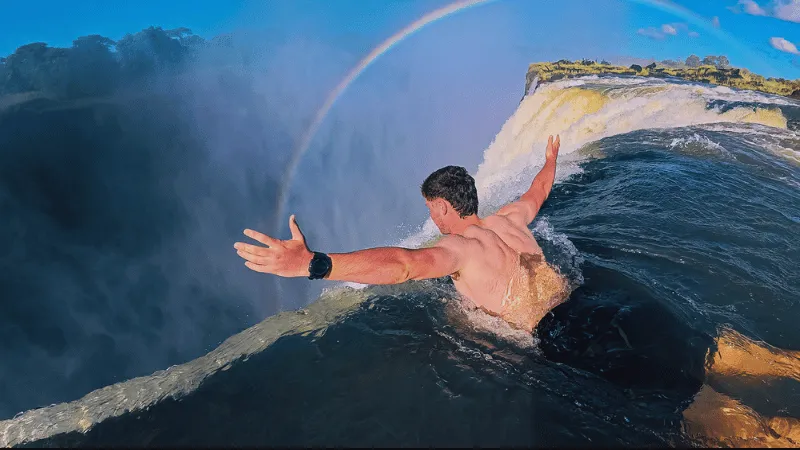
Devil’s Pool is a natural pocket of calm water carved into the basalt lip of Victoria Falls. Just downstream of Livingstone Island, the Zambezi has worn a shallow basin into the rock. A small submerged ledge then rises along its outer edge. That ledge is the reason you can safely perch at the brink of a 108-metre plunge without being swept over.
Local Lozi people have long called the falls Mosi-oa-Tunya, meaning “the smoke that thunders.” You’ll hear and see that smoke from the pool itself. Spray drifts up around you, a rainbow often arches across the gorge, and the roar makes conversation almost impossible. In other words, Devil’s Pool offers one of the most intense ways to experience the falls, rather than just viewing them from the mainland.
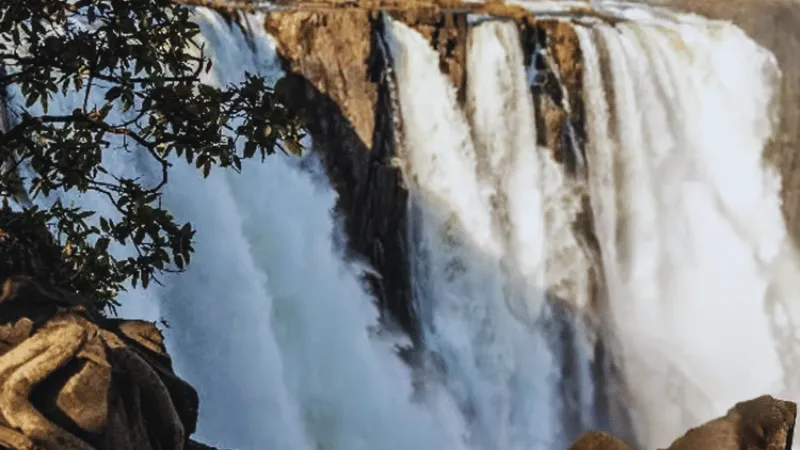
However, Devil’s Pool is not a beach swim. Guides lead you across uneven wet rock, you cross short sections of fast-moving river, and you lie against the ledge while a staff member steadies you. The experience suits confident swimmers who are comfortable with heights and natural water. Nervous swimmers can still visit Livingstone Island for breakfast or high tea without entering the pool.
Why Low Water Season Is the Only Time You Can Swim
The Zambezi’s Annual Cycle
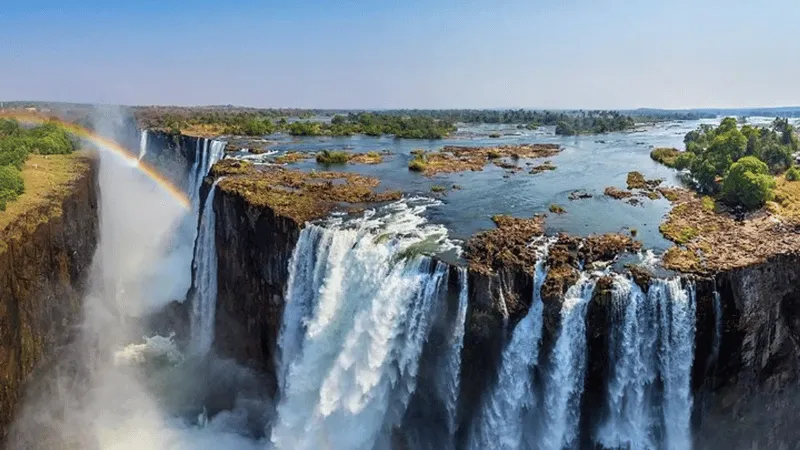
The Zambezi has two very different moods, and only one of them makes Devil’s Pool possible. From roughly February to July, rainfall in Angola and northern Zambia pushes huge volumes of water downstream. As a result, Victoria Falls becomes a thunderous wall of spray that completely hides the gorge. Any attempt to swim at the edge during this time would be impossible.
By late July, however, the flow starts to drop. Rock shelves slowly emerge along the Zambian lip, and crossings become safer. Therefore, operators open Devil’s Pool once the water hits safe thresholds, usually in mid-August. The season then runs until the first serious rains return in January.
2026 Low Water Season Dates
The 2026 Devil’s Pool season runs from mid-August to mid-January, with exact opening and closing dates set by Zambezi water levels rather than a fixed calendar. November typically sits in the lowest-water window of the year, which means tours are the most reliable during this month. For more on seasonal flow, the operator Wild Horizons lists October as the lowest-flow month, with November and December marked as the transition into the rainy season.
Several tour operators consistently note that mid-September to late December offers the clearest window, when the river is low enough to swim safely on the Zambian lip. If you’re planning around October or November 2026, then, you’re in the safest window of the whole season.
For December and early January, keep in mind that water levels can rise quickly after a few days of heavy rain. Consequently, late-season visitors should plan a flexible itinerary and book Devil’s Pool on the first day of their trip when possible.
What a Devil’s Pool Tour Actually Looks Like
Boat to Livingstone Island
Every Devil’s Pool experience starts with a short boat ride. You board a small motorboat at a sheltered launch point upstream of the falls, inside the Royal Livingstone or Tongabezi area. From there, the crew weaves between quiet channels and finally lands on Livingstone Island, the exact spot where the Scottish explorer David Livingstone first viewed the falls in 1855.
The Rock Walk and the Swim
Once on the island, a guide briefs you on safety, hands out towels, and leads you across the rocks to the pool. You’ll swim a short stretch of calm water, climb onto a flat ledge, and then slide feet-first into Devil’s Pool. Guides steady each person while you lean out over the edge. For many travellers, that single moment, with the spray on your face and the falls below your chest, becomes the most powerful memory of their African trip.
Breakfast, Lunch or High Tea on the Island
After the swim, you return to a shaded spot on Livingstone Island for a meal. The tour you book decides which one. Livingstone Island hosts morning breakfast, midday lunch and afternoon high tea sessions throughout the season. Dishes often include fresh fruit, pastries, a hot plate of eggs or meat, and local coffee or tea. The setting, right in the middle of the Zambezi, is as much part of the experience as the swim itself.
Booking Devil’s Pool for 2026
Operator, Price and Capacity
Tongabezi Lodge is the main operator for Devil’s Pool and manages all access to Livingstone Island. Tours cost roughly $100 to $180 per person in 2026, which usually includes the boat transfer to Livingstone Island, the guided swim, and either breakfast or lunch depending on your session. Some private transfer packages run higher, closer to $200 to $230 per person, when hotel pickup and small-group guiding are included.
Capacity is strict. Sessions are capped at around 16 guests, and demand regularly exceeds supply during peak low water months. For that reason, book two to four weeks ahead if you plan to visit between September and November. In December and early January, one to two weeks’ notice is usually enough.
How to Book
You can book directly through Tongabezi’s booking portal, through hotel concierges at properties like the Royal Livingstone or Victoria Falls Safari Lodge, or through verified tour operators in Livingstone. Hotel concierge bookings often include transfers and simplify the day. Still, booking directly tends to give you the widest choice of session times, especially during peak months.
What to Pack for the Swim
Keep it simple. You need a swimsuit, a quick-dry towel, water shoes or old sneakers for the wet rock, and a small dry bag for your phone or camera. The staff also provide towels, snacks and bottled water. Leave jewellery, loose clothing and anything valuable at your hotel. Finally, apply sunscreen before you arrive, because reapplying on the island becomes awkward with wet hands.
Is Devil’s Pool Actually Safe?
Safety is the first question most travellers ask, and for good reason. Devil’s Pool sits on the edge of a 108-metre waterfall. However, the rock ledge mentioned earlier acts as a natural wall. It rises just enough to stop swimmers from being pushed over the lip, even when the current nudges you forward.
Guides have run thousands of swims across the decades, and serious incidents are extremely rare. Each session includes an experienced guide who holds swimmers in position. Groups are kept small for exactly this reason, and no one is ever pushed to swim against their will.
That said, the activity is not for everyone. Operators clearly note that Devil’s Pool is not suitable for young children because it involves wet, uneven rock, open water and a location right at the lip of Victoria Falls. Likewise, if you can’t swim comfortably in moving water, or if you have a serious fear of heights, choose a Livingstone Island breakfast without the swim instead. You’ll still get to the island, the view, and the meal.
Tours can also be cancelled at short notice. If your booking is cancelled because water levels are too high or too low, operators typically offer a full refund or an alternative date when you have flexibility. That’s one more reason to book Devil’s Pool for early in your trip, with a couple of backup days baked in.
Best Time to Visit Victoria Falls in 2026
Victoria Falls shifts character throughout the year, so pick your month based on the kind of experience you want. Here’s a quick breakdown for 2026.
- November to early December: Peak low water. Devil’s Pool and Livingstone Island tours are at their most reliable. Expect hot, dry days above 30°C and cooler nights.
- Late December to mid-January: Transition into the green season. Devil’s Pool may still run, but short storms can briefly raise water levels and cancel sessions.
- February to May: High water. The main falls are at their most powerful, and spray reaches hundreds of metres into the air. Devil’s Pool is closed, and lunar rainbows are possible on full moon nights.
- June to August: Cooler mid-flow. Views remain strong, game viewing improves in surrounding parks, and Devil’s Pool reopens in mid to late August.
In short, if swimming at the edge is your main goal, aim for October to early December 2026. If you prefer the waterfall at its most thunderous, plan a return trip in April or May.
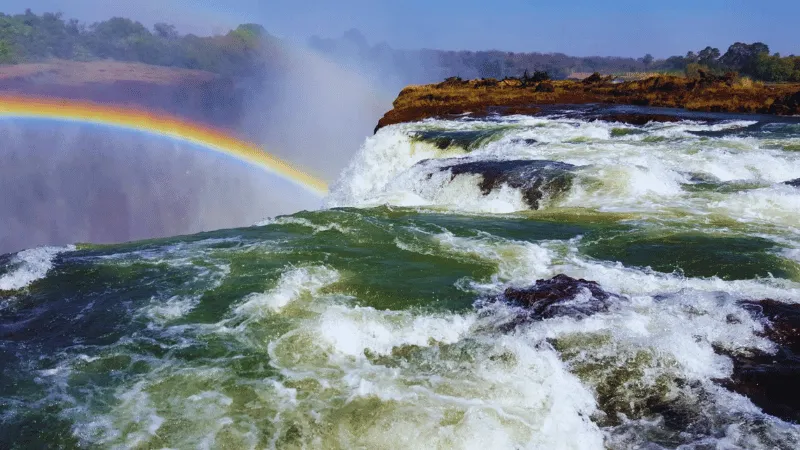
How to Reach Livingstone and Victoria Falls
Flights
Two airports serve the falls. Zambia’s main gateway is Harry Mwaanga Nkumbula International Airport in Livingstone, while Zimbabwe’s side is served by Victoria Falls International Airport. Both sit about 15 minutes from their respective town centres. Frequent flights connect Johannesburg, Lusaka, Addis Ababa, Nairobi and Cape Town with one or both airports.
Because Devil’s Pool is on the Zambian side, Livingstone is the simpler base. Still, many travellers fly into Victoria Falls, Zimbabwe, and then cross the border. The land crossing on the Victoria Falls Bridge is one of the most scenic in the world, and it is now easier than ever.
Visa and Border Rules in 2026
Zambia updated its visa fees effective 1 January 2026. The single-entry visa doubled from USD 25 to USD 50, and the double-entry visa rose from USD 50 to USD 100. The day-tripper visa remains USD 10. The KAZA UniVisa, by far the best value for most Victoria Falls travellers, still costs USD 50 and allows multiple movements between Zambia and Zimbabwe for up to 30 days, plus day trips into Botswana through the Kazungula border.
You can buy the KAZA UniVisa on arrival at Livingstone or Victoria Falls airport, or at the land border. Check the latest nationality rules on the official Zambia Tourism website before you fly.
Crossing between the two countries has also become easier. The Victoria Falls border post between Zambia and Zimbabwe now operates 24 hours a day, after the previous 22:00 curfew was lifted in late 2025. That means an evening Zambezi cruise on the Zambian side no longer forces a late dash back across the bridge.
Getting to Livingstone Island
On the morning of your Devil’s Pool tour, your transfer heads to the departure point along Riverside Drive or through the Royal Livingstone Hotel grounds. The boat ride to Livingstone Island itself takes about ten minutes. After the swim and the meal, boats return via the same route, and most guests are back at their hotel by late morning or early afternoon.
Beyond Devil’s Pool: Things to Do Around Livingstone
Devil’s Pool only fills a morning or afternoon. Fortunately, Livingstone has plenty more to offer, and the wider region is one of Africa’s great adventure hubs.
- Walk the Zambian falls trail. The path across the Knife Edge Bridge gets you closest to the water during low season, with huge views back toward the gorge.
- Mosi-oa-Tunya National Park. This small park next to the falls shelters white rhino, zebra, giraffe and plenty of birdlife, and most game drives last only half a day.
- Zambezi sunset cruise. Hippos surface beside the boat, elephants come down to drink on the banks, and a cold drink makes the whole scene even better.
- Victoria Falls Bridge. Walk the historic bridge to Zimbabwe, or sign up for the 111-metre bungee jump straight into the gorge.
- Livingstone Museum. Dive into the region’s Lozi culture, Victorian-era exploration and the complicated colonial history of the falls themselves.
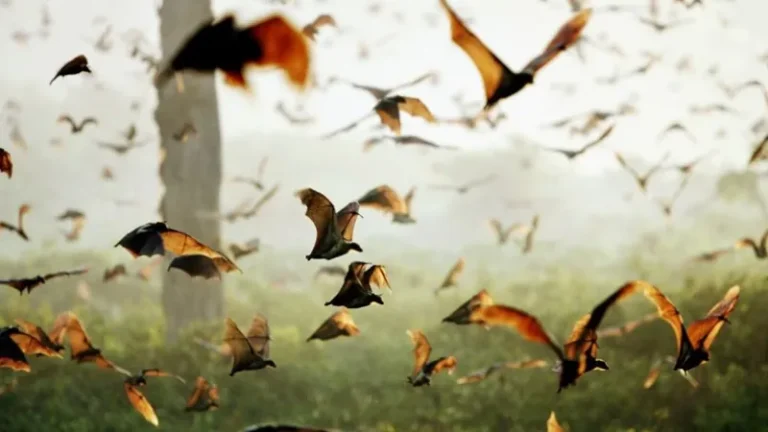
For wildlife fans, Zambia keeps giving even after your Devil’s Pool morning. About 500 kilometres north-east of Livingstone, the Kasanka bat migration turns the forest canopy black with ten million fruit bats every October and November. It is one of the biggest mammal spectacles on Earth, and very few travellers combine the two experiences in a single trip.
Important Things Visitors Should Know
Keep a few essentials in mind before booking. First, Devil’s Pool is strictly a swimming activity, so a basic level of fitness is non-negotiable. Second, guides enforce safety rules firmly, and they decide who swims and who sits out. Trust their judgement, even if you have travelled a long way for this exact experience.
The weather matters too. November mornings in Livingstone are usually clear and hot, but afternoon storms can roll in during the second half of the month. Book a morning session when you can, and keep an eye on forecasts the day before.
Finally, protect the environment you came to see. Do not touch or stand on the waterfall rock outside the pool itself, do not throw anything into the Zambezi, and respect the national park fees that keep the falls protected. Carry small US dollar notes for park fees, tips and incidental costs, since card payments are not universal across the Zambian side.
Final Thoughts on Devil’s Pool in 2026
Swimming on the edge of Victoria Falls is one of the most talked-about adventures in Africa, and 2026 is a great year to tick it off. The low water season is in full swing right now, the Zambia–Zimbabwe border now runs 24 hours, and most sessions still fall between $100 and $200 per person. All you really need is a confident swim stroke, a flexible schedule and a sense of adventure.
So pick your dates, book your session, and give yourself a buffer day on either side. Then arrive, trust your guide, and lean out over the drop. Few travel moments compare to feeling the Zambezi at your back and the smoke that thunders in your face.
Explore More African Destinations
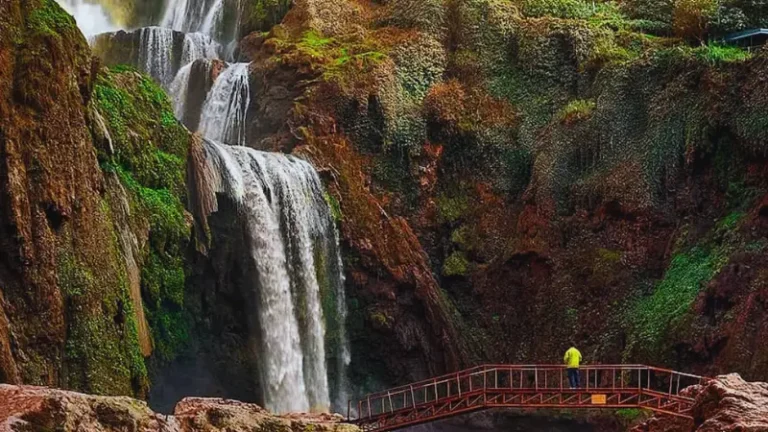
If this guide has inspired your next African trip, LessExplore has plenty more to help you plan. Start with our guide to Sossusvlei and Deadvlei in Namibia for red dunes and ghost trees, or lace up your boots for the Platteklip Gorge hike up Table Mountain in Cape Town. For a very different waterfall, read our visitor guide to the Ouzoud Falls in Morocco, hidden in the Middle Atlas a few hours from Marrakech.
FAQ Section
Devil’s Pool runs from roughly mid-August to mid-January, with exact dates set by Zambezi water levels. October and November 2026 fall in the lowest water window, so tours are the most reliable during these months.
Standard Devil’s Pool and Livingstone Island tours cost about $100 to $180 per person in 2026, including the boat transfer, guided swim and either breakfast or lunch. Private transfer packages with hotel pickup can run closer to $200 to $230 per person.
Yes, for confident swimmers. A submerged rock ledge rises along the outer edge of the pool and stops swimmers from being pushed over the falls. Each session is small, a guide holds people in position, and tours are cancelled if water levels become unsafe. Devil’s Pool is not recommended for young children or non-swimmers.
Tongabezi Lodge is the main operator and manages all access to Livingstone Island. You can book directly through their portal, through hotel concierges at properties like the Royal Livingstone, or through verified Livingstone tour operators. Sessions are capped at around 16 guests, so book two to four weeks ahead during peak low water months.
Yes. Devil’s Pool sits on the Zambian side, so you will need to cross into Zambia. The $50 KAZA UniVisa is the easiest option: it allows multiple movements between Zambia and Zimbabwe for up to 30 days and covers qualifying day trips to Botswana. You can buy it on arrival at Livingstone or Victoria Falls airport, or at the Victoria Falls Bridge border post, which now operates 24 hours a day.