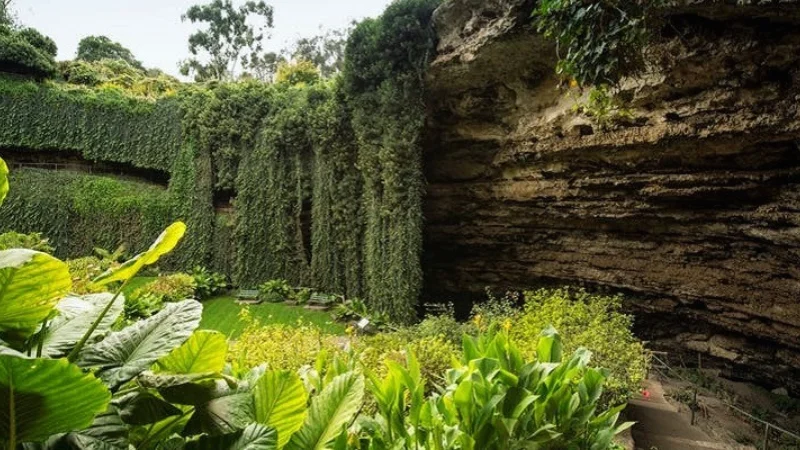
You drive past farms, pine forests and flat paddocks. Then the ground simply drops away. The Umpherston Sinkhole sits just outside Mount Gambier in South Australia, and it feels like a secret garden somebody hid inside the earth. Green ferns spill down limestone walls. Hydrangeas glow in the shade. Meanwhile, cool air rises from the depths and carries the smell of damp stone.
Many visitors compare the scene to a film set. Some say it looks like a fantasy world from Avatar. I think the comparison works, especially at dusk. However, the Umpherston Sinkhole is real, free to enter and easy to reach. This guide covers how it formed, what to do there and when to go. It also includes practical tips for planning your visit.
What Is the Umpherston Sinkhole?
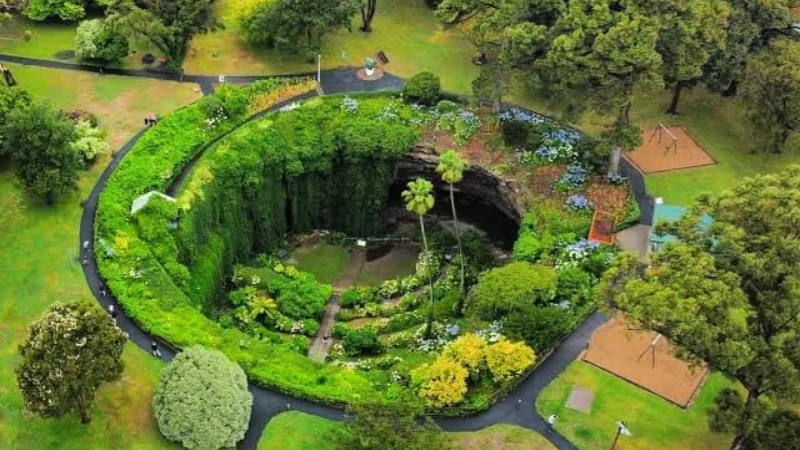
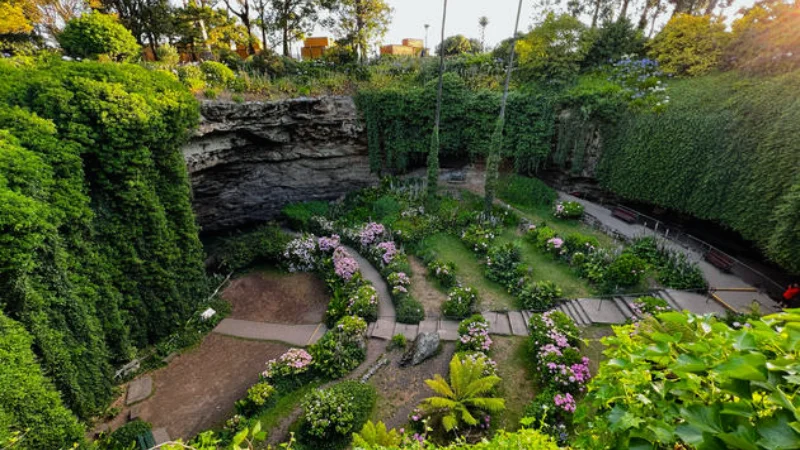
The Umpherston Sinkhole is a collapsed limestone cave. Long ago, a hollow chamber sat beneath the ground here. Eventually, the roof gave way and left a huge, open bowl. Today, steep rock walls surround a sunken garden that sits far below the surrounding paddocks.
The region around Mount Gambier rests on thick limestone. This rock formed from the shells and skeletons of tiny sea creatures that piled up on an ancient seabed. Over millions of years, the sea retreated and the limestone rose above the water. As a result, the whole area now sits on soft, easily dissolved rock.
Rain plays the key role in what happened next. Rainwater picks up a little acid as it soaks through soil. It then trickles into cracks in the limestone and slowly dissolves the rock. Over thousands of years, those cracks grow into caves and underground rivers. Furthermore, the water table in this region sits close to the surface, so many chambers fill with clear water.
Eventually, a cave roof grows too thin to hold its own weight. It collapses and leaves a sinkhole. Mount Gambier has dozens of them. Some hold water, while others stay dry. Similarly, some are tiny and some are enormous. The Umpherston Sinkhole is one of the most beautiful, because people turned its floor into a garden.
The History of the Umpherston Sinkhole
The land has a much longer story than most visitors realise. The Boandik people lived across this part of South Australia for thousands of years. They knew the caves, springs and lakes well, and they used the area’s natural water sources. Today, the volcanic craters and sinkholes of the region still carry deep cultural meaning for the local community.
European settlers arrived in the 1800s. One of them, James Umpherston, bought the land in the 1880s. He saw potential in the sunken hollow instead of a hazard. Therefore, he built a garden inside it and made it a place for rest and enjoyment.
Umpherston planted trees, climbing vines and flowers on the terraces. He also built a path that wound down into the bowl. Visitors from the town came to walk through his creation. In those days, the hollow became known as a “sunken garden,” and the name still fits.
After Umpherston’s time, the garden faded. Weeds spread and the paths wore away. However, the local council later restored the site. Workers rebuilt the terraces, replanted the beds and added safe walkways. Consequently, the sinkhole now looks better than it has for many years. The site carries heritage listing, and the City of Mount Gambier looks after it.
Things to See and Do at the Umpherston Sinkhole
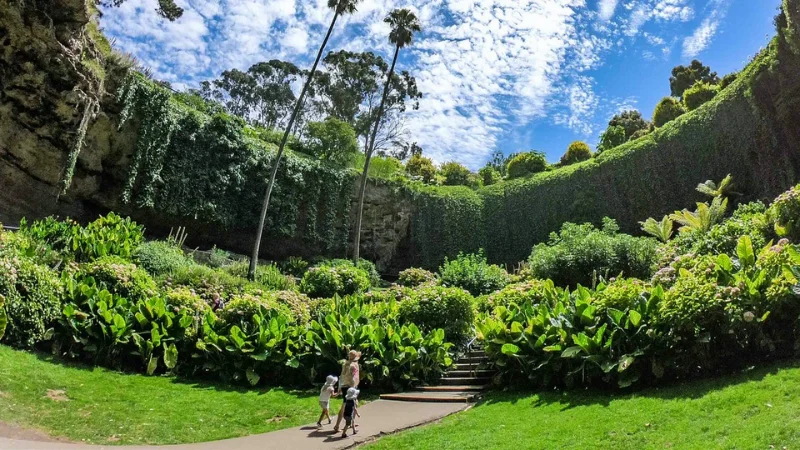
Start at the top. A viewing area lets you look straight down into the bowl. The view alone is worth the stop. Dark green leaves cover the lower levels, and pale limestone walls rise on every side. In spring and summer, flowers add bursts of colour.
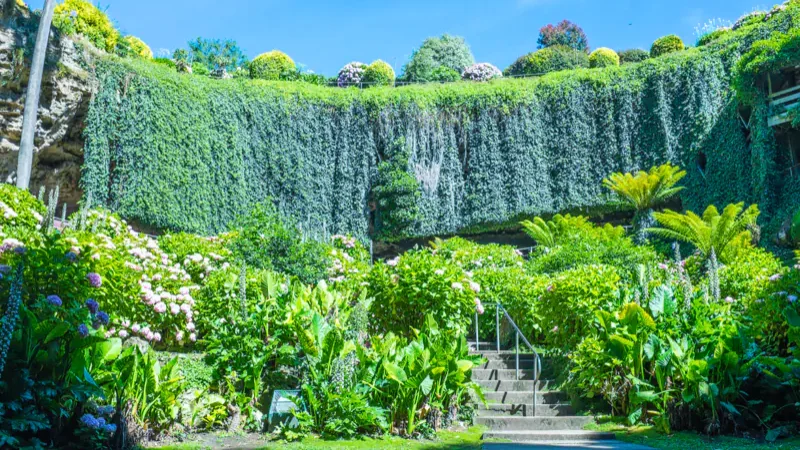
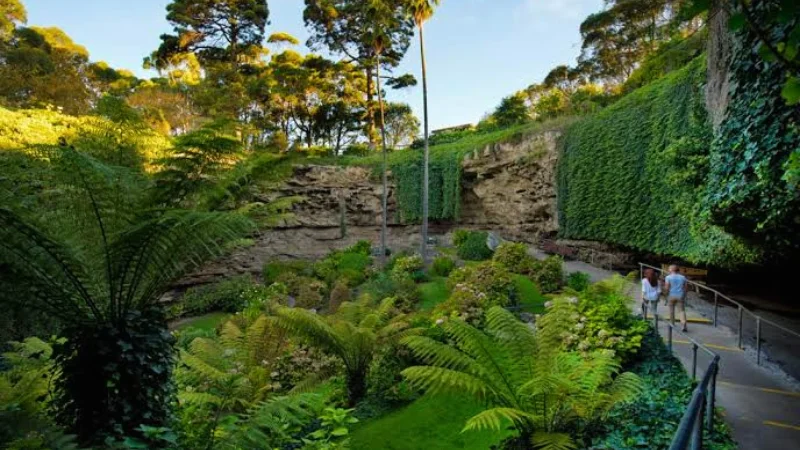
Next, walk down the path. A wide, curved walkway leads to the garden floor. It’s gentle enough for most visitors, although some stretches include steps. The descent takes only a few minutes. Meanwhile, the temperature drops noticeably as you go. Even on a hot afternoon, the bottom feels cool and calm.
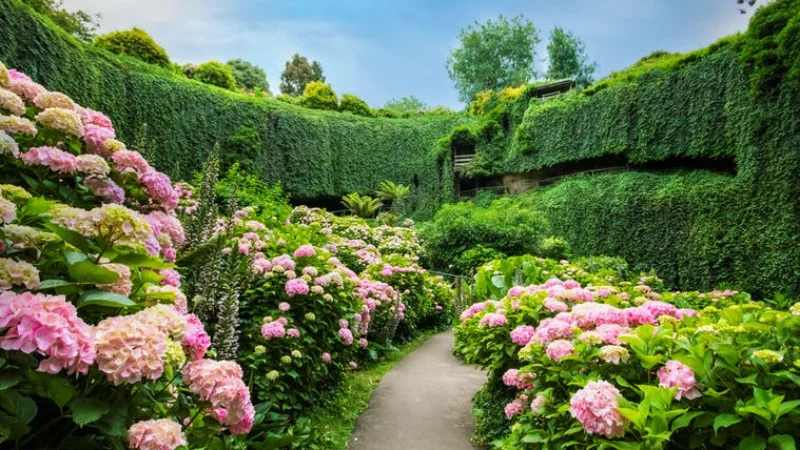
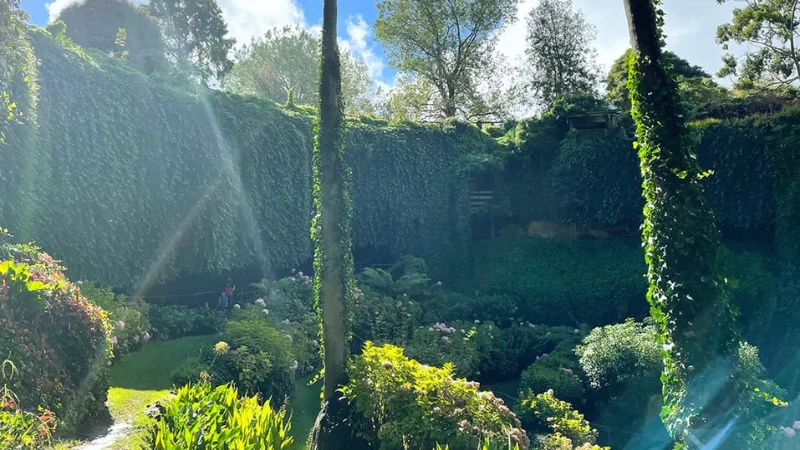
Once you reach the floor, take your time. A lush lawn and ornamental plants fill the space. Hydrangeas bloom along the edges, and ferns cling to the damp rock. Ivy and climbing vines drape the cliff faces. Moreover, an old fig tree adds a sense of age and character. Wherever you look, something green hangs from above.
Look up too. Birds dart across the opening, and the sky forms a bright circle overhead. That circle gives the garden a dreamy feel. In addition, the rock walls show layers of old seabed, so you can see the geology up close. Short information signs explain how the sinkhole formed.
Families enjoy this spot as well. Children love the descent and the cool, shady lawn. Likewise, picnickers find plenty of room. However, remember that the garden is a protected site, so stay on the paths and leave the plants alone.
Visiting the Umpherston Sinkhole at Dusk
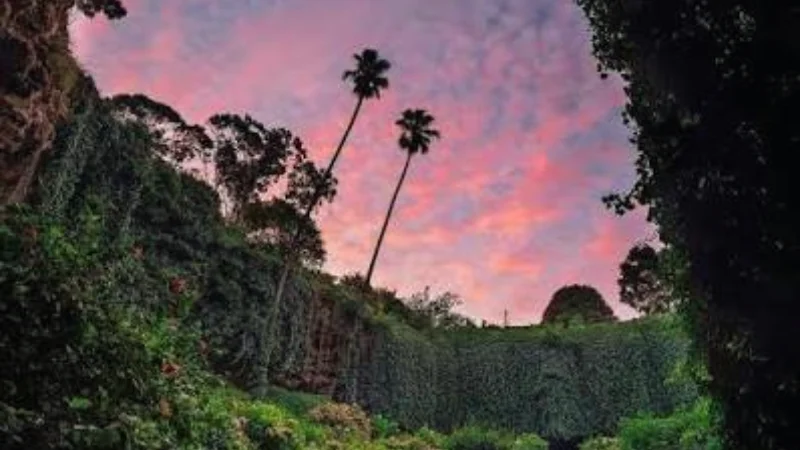
Daytime is lovely, but dusk is special. As the sun drops, the bowl fills with soft shadows. The limestone turns gold and then grey. Then floodlights switch on, and the whole garden glows. This is the moment visitors compare to a scene from Avatar. Leaves seem to shine from within, and the rock walls turn warm and dramatic.
The possums make evening even better. Common brushtail possums live in the sinkhole. They stay hidden during the day, but they emerge once the light fades. Soon they scamper along the walls and climb the trees. Sometimes they peer out from ledges as you walk past. For many travellers, the possums are the highlight of the trip.
Please keep a respectful distance, though. These are wild animals. Feeding them can harm their health and change their natural behaviour. Therefore, enjoy them quietly and let them move freely. Follow any signs at the site, and keep your voice low so you don’t scare them.
You may wonder how long to stay. About 45 minutes to an hour works well for most people. Arrive before sunset so you can see the garden in daylight first. Then wait for the lights and the possums. As a result, you get two very different views in one visit.
Photography Tips for the Umpherston Sinkhole
The Umpherston Sinkhole rewards photographers of every level. Even a phone camera captures the scene well. However, a few simple tricks will lift your shots.
First, shoot from the top. A wide view of the bowl shows the full scale of the sinkhole. Stand near the railing and frame the walls so they curve around the garden. Additionally, include a pathway to give the image a sense of depth.
Second, go low. Once you reach the floor, point your camera upward. Ferns, vines and rock walls create strong lines that lead toward the sky. This angle also makes the sinkhole feel deeper than it looks from above.
Third, use the evening light. After the floodlights come on, the garden glows with warm tones. A tripod helps here, because low light calls for longer exposure. If you don’t have one, rest your camera on a wall or railing. Meanwhile, switch on night mode if your phone has it.
Finally, photograph the possums with care. Keep your flash off, because bright light can startle them. Instead, raise your camera’s sensitivity and wait patiently. Good shots come when an animal pauses on a branch or ledge. Importantly, never use food to lure them closer.
Early morning also works well for photos. The crowds are thinner, and soft light filters into the hollow. In contrast, midday sun can create harsh shadows, so avoid it if you can.
Travel Tips and Visitor Information
Planning a visit takes little effort. Nonetheless, a few practical details will make your trip smoother.
Best Time to Visit
You can visit the Umpherston Sinkhole in any season. Each one offers something different. Spring brings fresh growth and blooming flowers. Summer offers long evenings, so you can wait for dusk in warm weather. Autumn adds soft light and fewer visitors. Winter feels cold and misty, but the greenery stays rich.
Mount Gambier sits in the cooler south of the state, so evenings can be chilly even in summer. For that reason, pack a light jacket. For the best experience, arrive about an hour before sunset. You’ll see the garden in daylight, watch the lights come on and meet the possums.
How to Reach the Umpherston Sinkhole
The sinkhole lies a few minutes’ drive from the centre of Mount Gambier. It sits on Jubilee Highway East, close to the city. A car makes the trip simplest, and free parking is available on site.
Most travellers reach Mount Gambier by road. The drive from Adelaide takes roughly four and a half to five hours. From Melbourne, it takes a similar amount of time, so the town makes a great stop on a Great Ocean Road journey. Coaches also run to the city, and a regional airport has services to Adelaide. Once you arrive, you can rent a car or take a taxi to the sinkhole.
Things to Know Before Visiting
Entry is free, and the site stays open every day. Gates and opening hours can change, however, so check the council’s website before you go. Bring a torch in case you need extra light on the way back to your car.
Wear sturdy, flat shoes. The paths can feel damp, and steps can get slippery after rain. Furthermore, some sections are steep, so people with limited mobility should check the layout first. Bring water, insect repellent in summer and a camera with a charged battery.
Leave no rubbish behind, and respect the plants and wildlife. Don’t climb on walls or fences. Also, keep children close, because the drop-offs are real. Dogs are not usually allowed in the garden, so check the signs before you bring a pet.
Nearby Attractions
Mount Gambier has plenty to explore, so build a full day around your visit. The Blue Lake sits inside an old volcanic crater. Its water shifts from steel grey to brilliant blue in the warmer months, which makes it one of the region’s best-known sights. Additionally, the Cave Garden in the city centre is another sinkhole, with a tidy park around it.
Other highlights include Valley Lake and Engelbrecht Cave, which offers guided tours underground. Furthermore, Mount Schank is a dormant volcano that you can climb for sweeping views. Nature lovers should also consider Port MacDonnell, a fishing village by the sea. Meanwhile, wine fans can head north to the Coonawarra region, which is famous for its red wines. If you have extra time, Naracoorte Caves National Park lies about a hundred kilometres away and protects fossils of ancient animals.
Final Thoughts on the Umpherston Sinkhole
The Umpherston Sinkhole proves that beauty can hide in unexpected places. A collapsed cave became a quiet, green refuge. People shaped it, nature reclaimed it and visitors now enjoy it for free. The sinkhole blends geology, history and wildlife in one small space.
Whether you come for the garden, the photography or the possums, you will leave with a lasting memory. Moreover, the visit costs almost nothing and takes very little time. Therefore, it’s an easy win for any South Australian road trip. Arrive at dusk, walk slowly and look up. You’ll see why so many travellers call the Umpherston Sinkhole their favourite surprise in Mount Gambier.
Explore More Destinations
Loved the Umpherston Sinkhole? There’s plenty more to discover across Australia and beyond. For a different kind of wonder, skip the crowds and see the Red Centre at Ormiston Gorge. If you prefer a gentle riverside stroll, the Pound Bend River Walk in Warrandyte State Park makes an easy escape. Meanwhile, waterfall fans will enjoy the Sherbrooke Falls Walk in Dandenong Ranges National Park. For big views and giant granite boulders, read our complete visitor guide to Big Rock in You Yangs Regional Park. Keep exploring our travel guides, hidden gems, scenic destinations and adventure ideas to plan your next trip.
FAQ Section
The Umpherston Sinkhole is a collapsed limestone cave in Mount Gambier, South Australia. Its roof fell in long ago and left a deep bowl. Today, a landscaped sunken garden fills the floor, with ferns, hydrangeas and shady lawns.
Yes, entry is free. You can walk down into the garden and use the on-site parking at no cost. However, opening hours can change, so check the City of Mount Gambier website before you go.
Dusk is the best time. The floodlights switch on, the limestone glows and the resident possums come out. Arrive about an hour before sunset so you can see the garden in daylight first.
Most visitors spend 45 minutes to one hour. That gives you time to walk down, explore the garden and take photos. If you stay for dusk and the possums, allow a little longer.
Mount Gambier sits roughly 450 kilometres south-east of Adelaide. The drive takes about four and a half to five hours. The sinkhole lies a few minutes from the city centre.