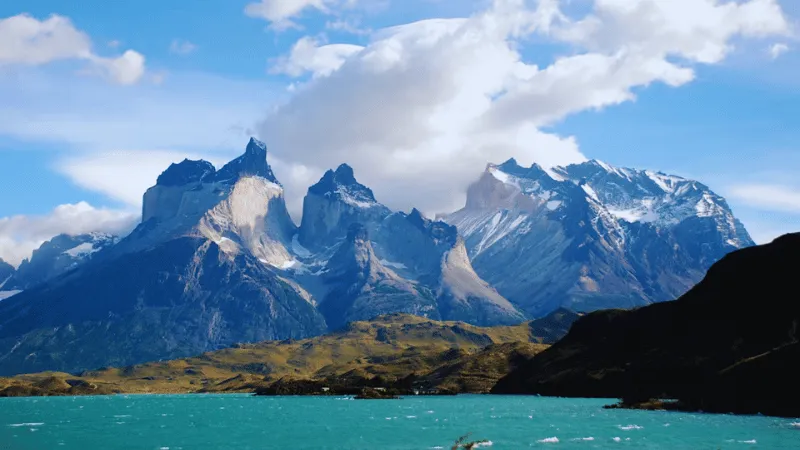
Three granite towers glowing pink at sunrise. A glacier breaking into icebergs on a grey-blue lake. A valley ringed by hanging ice that cracks and rumbles while you eat lunch. The Torres del Paine W Trek packs all of that into four or five days in Chilean Patagonia, which is why it ranks among the most famous hikes in South America.
However, the hardest part isn’t the walking. It’s the planning. Every night on the trail must be booked in advance, two private companies run the campsites, and the park ticket is a separate purchase. This guide walks you through the route, the 2026-27 booking rules, costs, transport from Puerto Natales and the safety points that matter most. Prices and rules were checked on 26 November 2026 and can change, so confirm them before you pay.
Torres del Paine W Trek at a Glance
- Location: Torres del Paine National Park, Magallanes Region, southern Chile.
- Distance: roughly 75 to 80 km with the side trips, depending on where you finish.
- Duration: 4 nights and 5 days is the classic plan. Fit hikers sometimes squeeze it into 3 nights.
- Highest point: Mirador Base Las Torres, at about 870 metres.
- Independent season: October to April. Winter visits need a certified guide.
- Bookings: mandatory for every night, plus an online park ticket.
What Is the W Trek?
The W gets its name from its shape on the map. The trail runs along the southern edge of the Paine Massif, and three “arms” reach north into the mountains. Each arm leads to a different highlight, and you walk in and out of each one along the same path.
Torres del Paine is one of Chile’s best-known protected areas, and UNESCO declared it a Biosphere Reserve in 1978. The park protects steppe grasslands, southern beech forest, lakes, glaciers and the granite peaks that give it its name. Along the way you may spot guanacos, Andean condors and, if you’re lucky, a puma crossing the grass at dawn.
Unlike high Andean treks, the W stays below 1,000 metres. As a result, altitude is never a problem. Wind, rain and long days on rocky ground are the real challenges.
The Three Highlights of the W
Mirador Base Las Torres
This is the postcard view. Three granite spires rise straight above a glacial lake at the head of the Ascencio Valley. The walk up from the Central sector takes most of a day, roughly 19 to 20 km return. The final stretch climbs a steep boulder moraine, and it’s tougher than it looks from below.
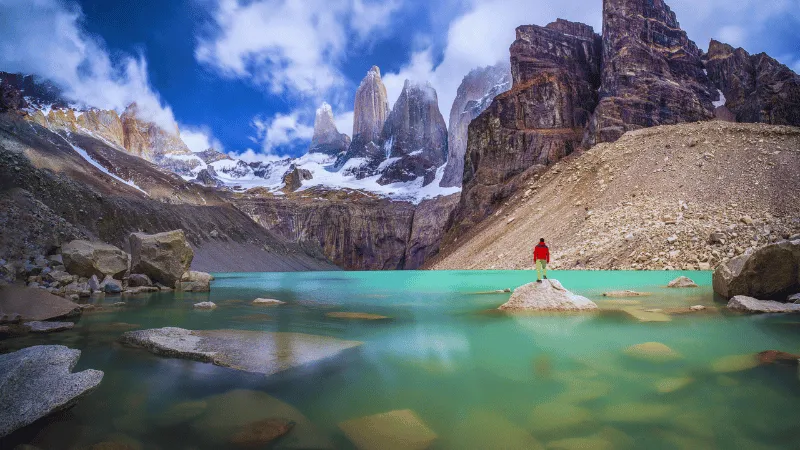
If you want the famous sunrise glow, sleep at El Chileno campsite. From there, the viewpoint is about two hours’ walk, so a pre-dawn start with a headlamp gets you to the lake as the first light hits the towers.
Valle del Francés and Mirador Británico
The middle arm climbs the French Valley between the Paine Grande massif and the striped Cuernos peaks. Early on, you’ll hear the Francés Glacier crack and may see small avalanches spill down its face. Higher up, Mirador Británico opens onto a full ring of granite walls and spires.
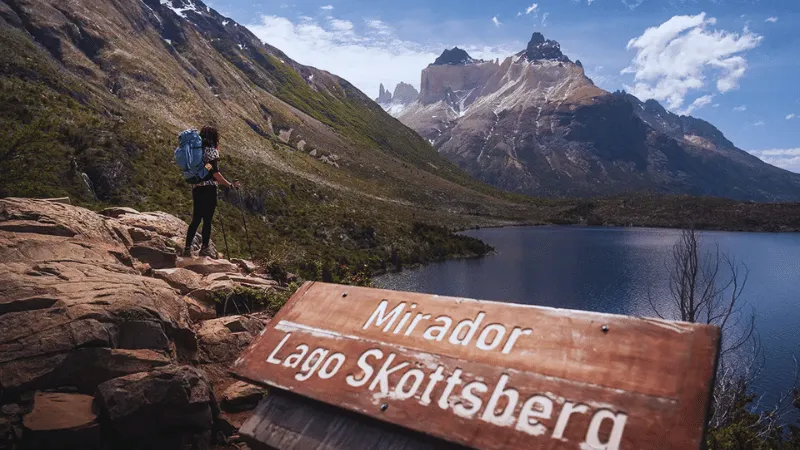
Many hikers say this is the best day of the trek. It’s also the longest, often 20 km or more, so start early. Rangers can close the upper valley in bad weather, and trail cut-off times are posted along the route. Follow them.
Glacier Grey
The western arm follows Lago Grey to the face of Glacier Grey, which flows from the Southern Patagonian Ice Field. From Paine Grande, it’s about 11 km and three and a half to four hours to Refugio Grey. Viewpoints along the way look over a lake dotted with blue icebergs.
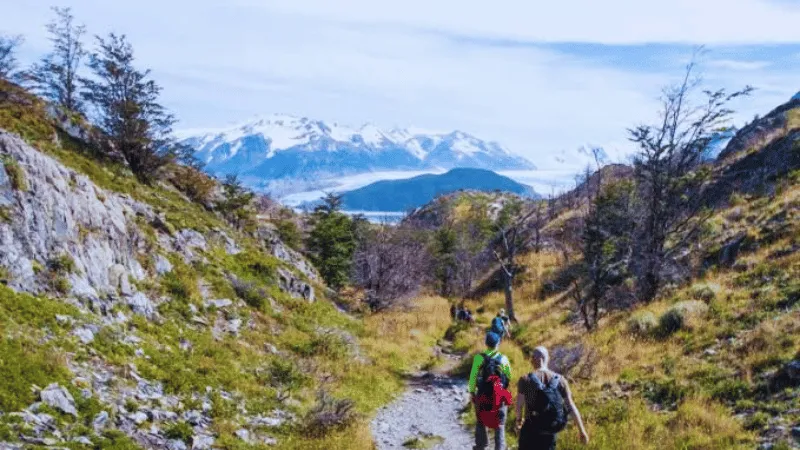
Beyond Refugio Grey, a trail continues for roughly an hour and a half to suspension bridges over deep gorges. They offer closer views of the ice. That path is part of the O Circuit, though, so W hikers turn back at the bridges and return the same way.
A Sample 5-Day Torres del Paine W Trek Itinerary
Most people walk west to east, saving the towers for the end. The plan below follows that direction. If you start in the east, simply reverse it.
- Day 1: Bus from Puerto Natales to Pudeto, then the catamaran to Paine Grande. Hike to Refugio Grey (about 11 km). Sleep at Grey.
- Day 2: Morning walk to the suspension bridges or the glacier viewpoints, then return to Paine Grande. Sleep at Paine Grande.
- Day 3: Walk to the Italiano junction and climb the French Valley to Mirador Británico. Then continue to Francés or Los Cuernos. This is the hardest day.
- Day 4: Follow the shore of Lago Nordenskjöld to El Chileno. The lake turns a striking turquoise on sunny days.
- Day 5: Pre-dawn climb to Mirador Base Las Torres, then descend to the Welcome Centre and catch the shuttle to Laguna Amarga for the bus back.
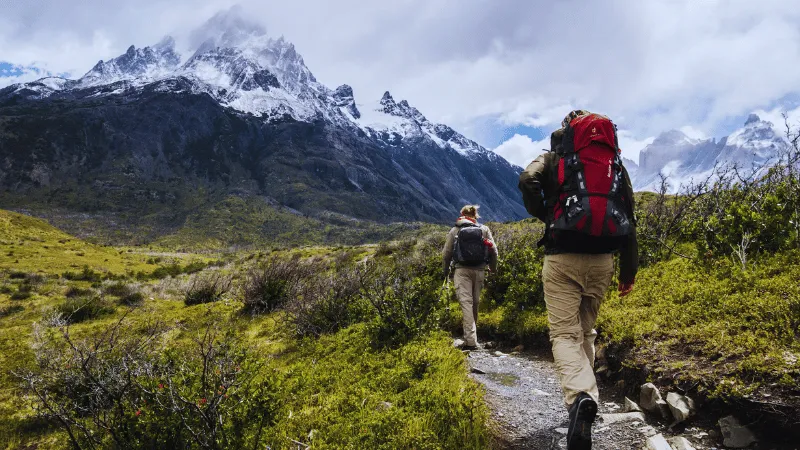
Short on time? A four-night version skips the extra morning at Grey. Either way, build one spare day into your wider Patagonia trip. Wind can delay the catamaran or close trails, and a buffer saves a lot of stress.
How to Book the W Trek for 2026-27
You cannot simply turn up and hike. Camping is only allowed at authorised sites, and rangers check bookings. Therefore, reserve your nights first and buy flexible transport second.
Who Runs Which Campsite
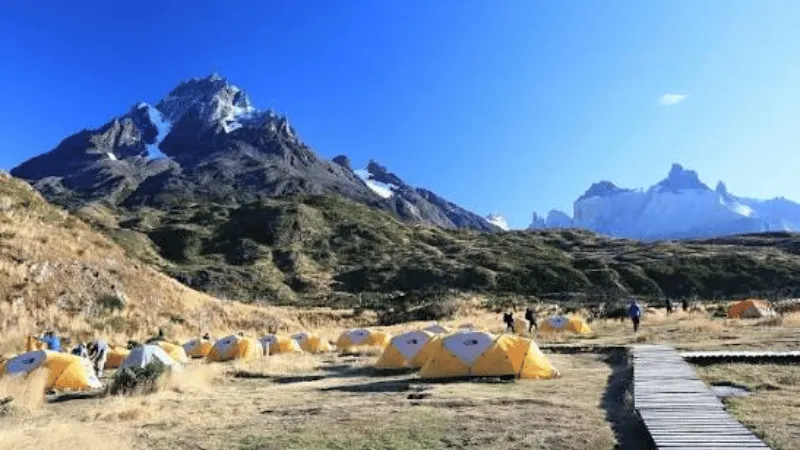
Two private concessionaires manage all the overnight stops on the W, and you book each one on its own website.
- Vertice Patagonia runs the western side: Paine Grande and Grey, plus Dickson and Los Perros on the O Circuit.
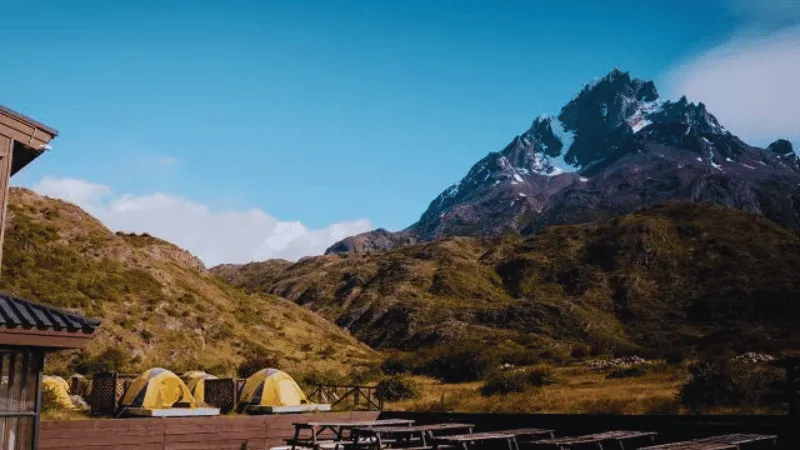
- Las Torres Patagonia runs the eastern and central sites: Central, El Chileno, Francés and Los Cuernos, plus Serón on the O.
The free CONAF campsites, including Italiano, are closed, according to Worldly Adventurer’s November 2026 update. In addition, the refugio building at El Chileno is closed this season, so only camping is available there. Stoves are not allowed in the Chileno sector either, so plan to buy meals or carry food that needs no cooking.
What It Costs
The two operators charge very different prices. Here are the 2026-27 foreign-visitor rates published by Worldly Adventurer, per person per night in US dollars.
- Vertice camping, own tent: US$13 at Paine Grande and US$11 at Grey.
- Vertice dorm bed, own sleeping bag: US$66 at Paine Grande and US$46 at Grey.
- Las Torres camping, own tent: US$40 in October and April, US$50 from November to March, based on two sharing. Solo campers pay close to the two-person price.
- Las Torres dorm or dome bed: US$200 to US$230, depending on the month.
Meals, tent hire and sleeping bag rental cost extra at both companies. Carry your passport and the PDI entry slip you receive on arrival in Chile, because the dollar rates apply to foreign tourists and staff may ask for proof.
The Park Entrance Ticket
Entry tickets are sold online through Pases Parques, CONAF’s official ticket portal. Under the tariff that took effect on 1 May 2026, foreign adults pay CLP 32,400 for a day ticket or CLP 48,500 for a multi-day pass, according to several 2026 guides. The multi-day pass lasts up to 10 consecutive days, which covers the whole W.
One timely catch: Pases Parques paused sales of 2027 tickets during November 2026 while it adjusts prices for inflation. Sales are due to restart in December 2026, so expect slightly higher prices for 2027 dates. The portal also says that anyone holding an overnight reservation inside the park is guaranteed entry tickets. Tickets are non-refundable, so check your dates carefully and download the QR code before you leave town.
Best Time to Hike the W Trek
The independent hiking season runs from October to April. Each month has a different feel.
- October and November: spring flowers, fewer people and cheaper Las Torres rates in October. However, snow can linger high up, and Los Cuernos only opens on 1 November.
- December to February: peak summer, with very long days and every facility open. It’s also the busiest stretch, and campsites sell out months ahead.
- March and April: autumn colour in the beech forests and thinner crowds. Days shorten quickly in April.
Outside that window, winter rules apply. In 2026, CONAF required a certified guide, microspikes, trekking poles and a headlamp on the W from 27 April until 15 September. If you dream of snowy towers and empty trails, book an accredited winter tour instead of going solo.
Whatever the month, expect four seasons in a day. Gusts on exposed stretches can knock hikers off balance, and rain can arrive with little warning.
How to Reach the Torres del Paine W Trek
Puerto Natales is the gateway town. Most travellers fly into Puerto Natales or Punta Arenas, then continue by bus. One note for this season: Worldly Adventurer reports that runway works at Puerto Natales airport will limit departures from January to March 2027. Check your flights early, and consider flying into Punta Arenas and taking the bus north.
From Puerto Natales, early-morning buses reach Laguna Amarga in about two hours and Pudeto in about three. A return ticket costs around CLP 37,000. Most hikers stop at Laguna Amarga to show their park ticket.
- Starting in the west: stay on the bus to Pudeto, then take the 25-minute catamaran across Lago Pehoé to Paine Grande. A one-way crossing costs about CLP 32,000, and tickets should be bought online ahead of time.
- Starting in the east: get off at Laguna Amarga and take the shuttle (about CLP 4,500) to the Welcome Centre near Central.
Park gates open from 7 a.m. to 9 p.m. between October and April, according to Pases Parques. Weather or safety decisions can change these hours.
Travel Tips and Things to Know Before You Go
Fire Rules Are Strict
Torres del Paine has suffered several major wildfires caused by visitors. Today, stoves may only be used in designated cooking areas, and open flames are forbidden elsewhere. Chilean media report that CONAF warns heat-source offences can bring fines of up to CLP 2 million, prison terms and even expulsion from Chile for foreigners. Take it seriously.
Pack for Wind and Rain
- A fully waterproof jacket and trousers, plus a pack liner.
- Warm layers and a hat, even in January.
- Broken-in boots and trekking poles for the moraine and descents.
- A headlamp for the sunrise climb.
- Strong cord for tent platforms at Francés and El Chileno.
- A power bank, because charging points are limited.
Money and Connectivity
There’s no phone signal at Laguna Amarga, so save every booking and your park QR code offline. Print copies too. Some campsites sell paid Wi-Fi, but don’t count on it. Carry some Chilean pesos for snacks and small purchases in case card machines fail.
Leave No Trace
Stay on marked paths, carry out all rubbish and never feed wildlife. Guanacos and foxes may wander close to camp, but they’re wild animals. Keep your distance and enjoy the moment.
Nearby Adventures in Patagonia
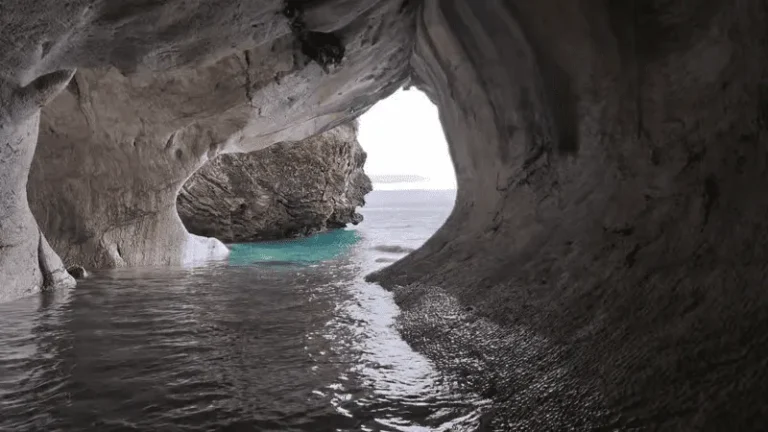
Many travellers pair the W with a few days across the border in Argentina. The mountain village in our guide to El Chaltén, Argentina’s trekking capital, makes a natural next stop for Fitz Roy hikes. Further north in Chile, you can take a boat into the swirling blue rock of the Marble Caves on Lake General Carrera.
If wildlife tops your list, the Atlantic coast of Argentine Patagonia is another world. Our guide to Península Valdés whale watching covers southern right whales, orcas and elephant seals.
Final Thoughts on the Torres del Paine W Trek
The Torres del Paine W Trek rewards good planning more than raw fitness. Book your campsites with Vertice and Las Torres first, then secure your park ticket and transport. After that, all that’s left is the walking: icebergs on Lago Grey, the thunder of the French Valley and that first sight of the towers at dawn.
Start early each day, respect the weather and keep a spare day in your plans. Do that, and the W could well be one of the best hikes of your life.
Time-sensitive information: campsite prices, park fees, opening dates and transport details were checked on 26 November 2026. CONAF, Vertice and Las Torres can change rules at short notice, so confirm everything directly before you travel.
Explore More Destinations
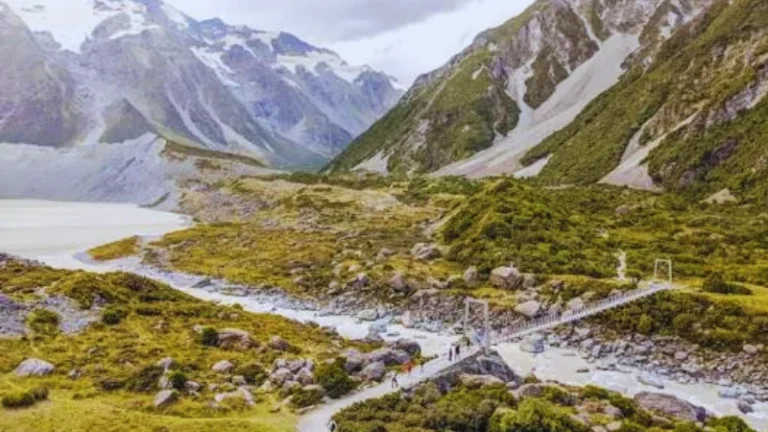
Hungry for more mountain trails? Browse our worldwide travel guides to hidden gems, scenic escapes, waterfalls and adventure hikes. Walk among glaciers and swing bridges on the Hooker Valley Track in New Zealand, or climb the stone steps above Reine on the Reinebringen hike in Lofoten.
FAQ Section
Most hikers take 4 nights and 5 days. The route covers roughly 75 to 80 km including the side trips to Glacier Grey, the French Valley and Mirador Base Las Torres. Strong hikers sometimes finish in 3 nights.
Yes. Every night must be booked before you arrive, with Vertice Patagonia for Paine Grande and Grey and with Las Torres Patagonia for Central, El Chileno, Francés and Los Cuernos. You also need an online park ticket from Pases Parques.
Under the tariff in force since 1 May 2026, foreign adults pay CLP 32,400 for a day ticket or CLP 48,500 for a multi-day pass valid up to 10 consecutive days. Prices for 2027 dates are being adjusted for inflation, so check Pases Parques before buying.
Yes, from October to April you can hike independently with confirmed bookings. During the winter period a certified guide is required. In 2026 that rule applied from 27 April to 15 September.
Most people walk west to east, starting with the catamaran to Paine Grande and finishing at the towers. Walking east to west works just as well, and you see the same highlights. Choose the direction that fits your campsite availability.