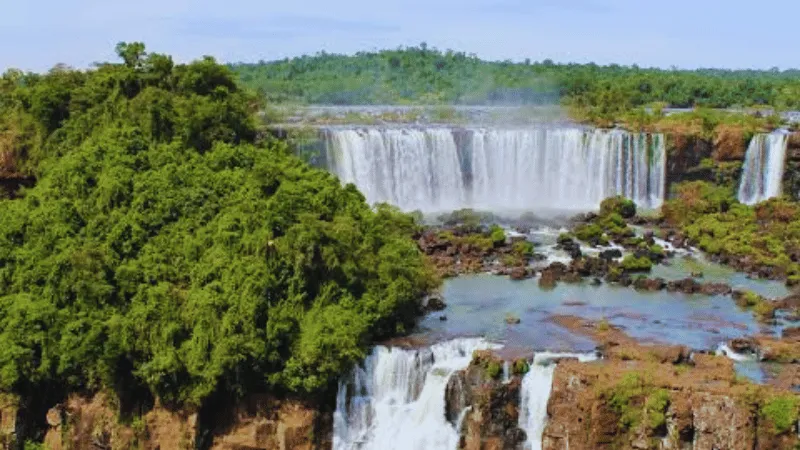
Few places on Earth sound as powerful as they look. At Iguazu Falls, a wide river tumbles off the edge of a basalt plateau in hundreds of separate drops. Spray rises above the rainforest, rainbows hang in the mist, and swifts dart straight through the curtains of water. It is one of the great natural sights of South America, and it sits right on the border between Argentina and Brazil.
That border creates the classic planning question: should you see the falls from Argentina or from Brazil? This Iguazu Falls Argentina vs Brazil guide compares both sides and explains the 2026 Devil’s Throat closures. It also covers current ticket prices, opening hours, boat rides and how to cross between the two parks. River levels have been unusually high this year, so up-to-date planning makes a real difference.
Iguazu Falls at a Glance
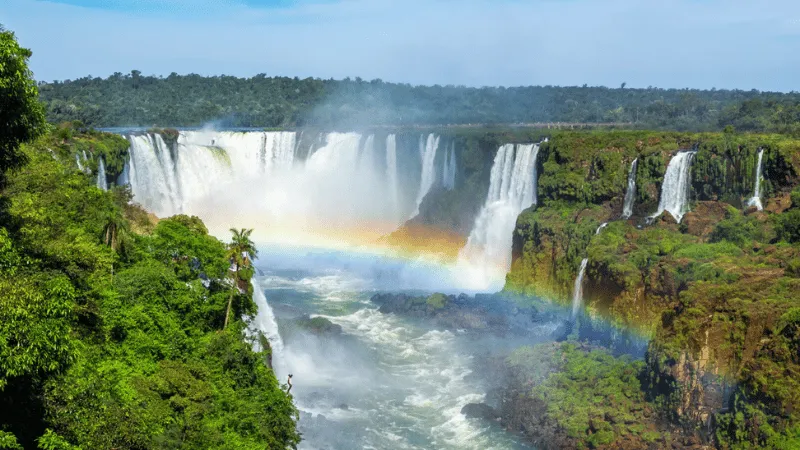
The falls lie on the Iguazu River, a short distance before it joins the Paraná. The Argentine town of Puerto Iguazú sits on one side, and the Brazilian city of Foz do Iguaçu sits on the other. Paraguay lies just across the Paraná, so locals call this corner the Triple Frontier.
Depending on water levels, the river breaks into roughly 275 individual falls along a curving edge of about 2.7 km. The biggest is the Devil’s Throat, known as Garganta del Diablo in Spanish and Garganta do Diabo in Portuguese. It is a horseshoe-shaped chasm more than 80 metres deep, and a huge share of the river pours into it at once.
Each country protects its side in its own national park: Iguazú National Park in Argentina and Iguaçu National Park in Brazil. They are separate parks with separate tickets, rules and opening hours. A ticket for one will not get you into the other.
A Short History of Iguazu Falls
The name comes from the Guaraní language and is usually translated as “big water”. Guaraní communities lived in this forest long before Europeans arrived, and several still live in the region today. The Spanish explorer Álvar Núñez Cabeza de Vaca is generally credited as the first European to record the falls, in the 1540s. One of the cascades on the Argentine side still carries his name.
Both countries created national parks here in the 1930s, Argentina in 1934 and Brazil in 1939. UNESCO later listed the Argentine park as a World Heritage Site in 1984 and the Brazilian park in 1986. Together, they protect a large block of Atlantic Forest, a habitat that has largely vanished elsewhere. As a result, coatis, toucans, butterflies and colourful birds are part of almost every visit.
Devil’s Throat Update: What Is Open in Late 2026
This year really matters for your plans. Forecasts linked to El Niño predicted major floods on the Iguazu River. As a precaution, the Argentine park closed its Devil’s Throat circuit on 3 August 2026 and started removing the metal walkway that crosses the upper river. By early November, no reopening date had been announced. When we checked, the official Devil’s Throat circuit page still listed the circuit as closed because of high river flow.
The floods did arrive. On 26 October, the river peaked at about 17.7 million litres per second, the highest flow of the year. In Argentina, the Upper and Lower circuits closed briefly in mid-October and then reopened. In Brazil, the walkway to the Devil’s Throat viewpoint closed from 11 to 30 October. It reopened on 31 October once the flow had dropped.
- Argentina, Upper and Lower circuits: Open when we researched this guide, subject to weather.
- Argentina, Devil’s Throat circuit: Closed, with no announced reopening date.
- Brazil, Devil’s Throat walkway: Open again in November, but it closes when the flow passes about 8.5 million litres per second and keeps rising.
Conditions can change within a day. Therefore, check both parks’ websites the evening before you go.
Iguazu Falls Argentina vs Brazil: The Key Differences
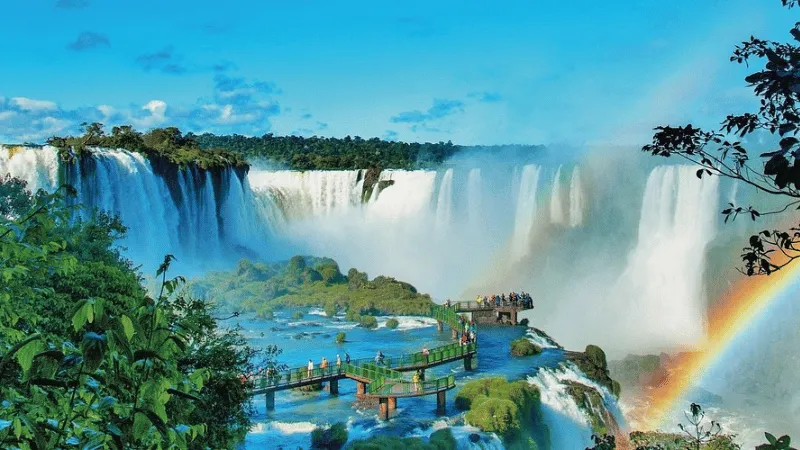
Here is the simplest summary. Argentina takes you close to the water, while Brazil gives you the big panorama. Most of the falls lie on the Argentine side, so its walkways run above, beside and below individual cascades. Brazil sits across the gorge and looks back at that whole wall of water.
The Argentine Side
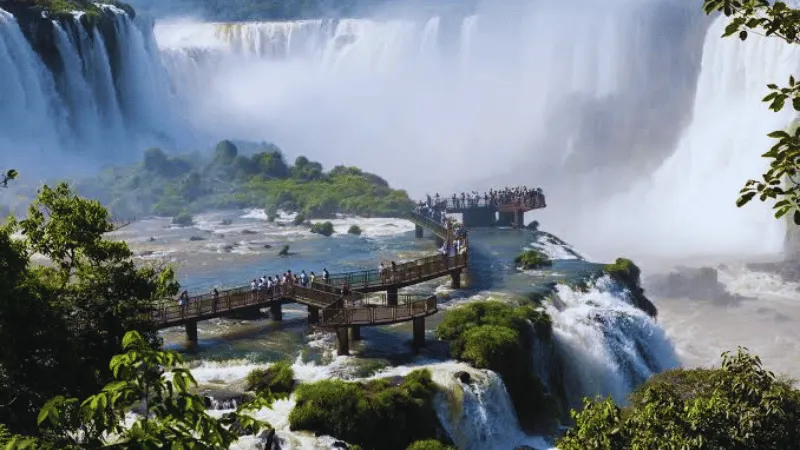
Plan a full day here. A small train, the Tren Ecológico de la Selva, links the central station with the falls area. From there, several walking circuits fan out through the forest. You walk on raised walkways above the jungle and right to the edge of several falls. It feels wild and immersive, and you will get wet in places.
In a normal year, the highlight is the Devil’s Throat balcony, where you stand right above the main chasm. With that walkway closed in late 2026, the Argentine side loses its most famous moment. Even so, the Upper and Lower circuits still deliver hours of spectacular views.
The Brazilian Side
Half a day is usually enough. A park bus takes you from the visitor centre to the start of the main trail, the Trilha das Cataratas. This paved path of about 1.2 km follows the gorge past a series of lookouts. Every bend reveals a wider view of the Argentine falls opposite. The trail ends at a walkway that reaches out over the river towards the Devil’s Throat, where the spray is intense. Afterwards, an elevator lifts you to an upper viewpoint at Porto Canoas.
Which Side Should You Choose?
If you have the time, see both. Two days is ideal, with one day on each side. If you can only manage one, these points may help you decide:
- Choose Argentina for close-up walks, more trails and a full day in the forest.
- Choose Brazil for the famous panoramic view and a shorter, simpler visit.
- In late 2026, Brazil is the only side where you can currently get close to the Devil’s Throat.
- For limited mobility, Brazil’s single trail and bus are easy, while Argentina’s Upper Circuit is fully wheelchair accessible.
Things to Do at Iguazu Falls
Walk the Upper Circuit in Argentina
The Upper Circuit is about 3.7 km return and takes around 90 minutes, according to the park’s operator. It is flat, rated easy and fully wheelchair accessible. Metal walkways pass along the top of falls such as Dos Hermanas, Bossetti, Adán and Eva. The route ends at a balcony above the San Martín fall, the second-largest in the park.
If you love boardwalks that weave between waterfalls, you will also enjoy our guide to Plitvice Lakes National Park in Croatia, a much calmer but equally photogenic water world.
Walk the Lower Circuit in Argentina
The Lower Circuit is about 2.9 km return and also takes around 90 minutes. It is rated moderate because of steep stairs, although an adapted alternative route exists. Here you look up at the falls rather than down on them. Highlights include the Lanusse and Álvar Núñez falls, plus wide views towards San Martín and the Devil’s Throat. Expect plenty of spray.
Ride the Jungle Train and Walk a Forest Trail
The jungle train is included in the Argentine park ticket. If the queue is long, the short Sendero Verde path links the central station to the falls area on foot in about 15 minutes. For a quieter break, the Macuco trail heads into the forest, away from the busy walkways. It is a good place to look for birds, butterflies and the odd monkey.
Take a Boat Ride Under the Falls
Both sides offer boat trips that race up the river and push into the spray of the lower falls. On the Brazilian side, the Macuco Safari was listed at about R$384 in 2026, on top of park entry. Argentine boat trips were listed at roughly US$50 to 60 per person in 2026, again in addition to the park fee. Either way, expect to get completely soaked.
Boat trips usually have minimum ages and health restrictions. They can also be suspended when the river runs high, which is worth remembering this year. For a smaller, more relaxed waterfall adventure, see our Ouzoud Falls visitor guide for Morocco.
Explore the Brazilian Park Beyond the Falls
Your Brazilian ticket also covers several other trails and paths in the park. These include a cycle path and a circuit past the ruins of an old hydroelectric plant. Most visitors skip them entirely, which is exactly why they feel peaceful on a busy day.
Scenic Views and Photography Tips
Iguazu is a wet place to take photos. Bring a dry bag for your phone or camera, and keep a lens cloth in a sealed pocket. On sunny afternoons, rainbows often appear in the spray, especially along the Brazilian trail.
The best wide shots come from the Brazilian lookouts, where you can frame the full sweep of falls. In Argentina, the Upper Circuit is great for leading lines along the walkways and close-ups of single cascades. Arrive at opening time if you want photos without crowds on the walkways. Drone use is restricted in protected areas, so check each park’s rules before you fly anything.
Best Time to Visit Iguazu Falls
Iguazu has a humid subtropical climate, and rain can fall in any month. Summer, from December to February, is hot, sticky and busy with holiday crowds. Winter, from June to August, is milder, but the July school holidays bring huge numbers. In fact, Brazil’s park recorded more than 263,000 visitors in July 2026, its busiest month ever.
For comfort, the shoulder months of March to May and September to November are often the most pleasant. However, the volume of water depends on rain upstream, not only on the calendar. High water looks more dramatic but can close walkways. Low water makes some falls thinner but keeps everything open. This year, late spring has brought high water, so build some flexibility into your trip.
How to Get to Iguazu Falls
By Air
Both sides have their own airport. Cataratas del Iguazú airport near Puerto Iguazú has domestic flights from Buenos Aires. Foz do Iguaçu airport on the Brazilian side connects with São Paulo, Rio de Janeiro and other Brazilian cities. Long-distance buses also reach both towns, although the journeys are long.
Many travellers combine Iguazu with a wider Argentina trip. For example, you could add the wildlife coast in our Península Valdés whale watching guide or the trails of El Chaltén, Argentina’s trekking capital.
From Puerto Iguazú to the Argentine Park
The park entrance is about 18 km from the centre of Puerto Iguazú. Regular buses run from the town’s bus terminal, and in late 2026 the fare was reported at ARS 12,000 each way. Taxis and private transfers are also easy to arrange through hotels.
Crossing Between Argentina and Brazil
The two towns are linked by a road bridge across the Iguazu River. You can cross by local bus, taxi or organised tour, and many hotels arrange day trips to the other side. Always carry your passport and complete border formalities as required, even on a day trip. Allow extra time at busy periods, because queues at the border can be slow.
Check visa rules before you plan the Brazilian side. Since April 2025, travellers with US, Canadian and Australian passports have needed a Brazilian e-visa. Brazil has changed these rules several times, so confirm the latest position on the Brazilian government’s e-visa information page or with your nearest consulate.
Iguazu Falls Tickets, Fees and Opening Hours in 2026
These are the latest published prices we could verify. Argentine fees are set in pesos and change often with inflation, so check them before you travel.
- Argentine park, foreign adults: ARS 60,000 since 1 June 2026, up from ARS 45,000.
- Argentine park, other rates: ARS 25,000 for Argentine residents and ARS 15,000 for students. Very young children enter free.
- Argentine second day: A consecutive second visit costs 50% if you validate your ticket before leaving the park.
- Brazilian park, standard ticket: R$134, which includes a voluntary R$3 contribution to a local tourism fund.
- Brazilian park, Brazil and Mercosur citizens: R$121, including the same R$3 contribution.
The Brazilian park lists its current prices on the official Cataratas do Iguaçu website, where you buy tickets in advance for a set date and time. On the Argentine side, the park is open daily from 8 am to 6 pm, with last entry at 4 pm. The walking circuits close at 4:45 pm. The Brazilian park usually opens at about 9 am, sometimes earlier on weekends and holidays, and hours change for special periods.
Travel Tips for Visiting Iguazu Falls
- Arrive at opening time: The walkways and train get busy from mid-morning.
- Dress to get wet: Quick-dry clothes and a light rain jacket or poncho work best.
- Wear grippy shoes: Wet metal walkways and stairs can be slippery.
- Protect your skin: Pack sunscreen, a hat and insect repellent.
- Never feed the coatis: They look cute, but they snatch food and can bite or scratch.
- Carry both currencies: Pesos and reais are useful for buses, snacks and small purchases.
- Check closures the night before: High water can shut walkways or boat trips at short notice.
Nearby Attractions
Parque das Aves sits right next to the entrance of the Brazilian national park. It is a bird park with large walk-through aviaries, and many of its birds were rescued. It pairs well with a half day at the falls. Also in Foz do Iguaçu, the huge Itaipu Dam on the Paraná River runs tours that explain how it powers much of the region.
In Puerto Iguazú, walk to the Hito Tres Fronteras viewpoint at sunset, where you can see Argentina, Brazil and Paraguay at once. On the road to the park, the Güira Oga wildlife centre cares for injured and rescued native animals. If Iguazu sparks a wider Brazil trip, our guide to Lençóis Maranhenses and its white dunes shows a very different side of the country.
Final Thoughts on Iguazu Falls Argentina vs Brazil
The Iguazu Falls Argentina vs Brazil debate has no wrong answer. Argentina puts you inside the falls, with long walkways through the forest and right over the water. Brazil gives you the grand panorama in a few easy hours. In late 2026, Brazil also offers the only close view of the Devil’s Throat while the Argentine walkway stays closed.
So give yourself two days if you can, buy tickets early, check river conditions and pack something waterproof. Then let the roar of the water do the rest.
Explore More Destinations on LessExplore
Planning more time in South America? Walk among the world’s tallest palms with our Cocora Valley hike guide for Colombia. Beyond the continent, LessExplore covers waterfalls, hidden gems, scenic hikes, adventure trips and practical travel tips from every corner of the world. There is always another trail, viewpoint or quiet escape waiting to be discovered.
Iguazu Falls FAQs
Neither side is better overall. Argentina has most of the falls and longer walkways that take you close to the water, so plan a full day there. Brazil offers the classic panoramic view in about half a day. If you have time, visit both sides on separate days.
On the Argentine side, the Devil’s Throat circuit has been closed since 3 August 2026 because of high river levels, and no reopening date had been announced in November. On the Brazilian side, the walkway facing the Devil’s Throat reopened on 31 October 2026. Check both parks’ websites before you go, because conditions change quickly.
Since 1 June 2026, foreign adults pay ARS 60,000 for the Argentine park, with half price for a validated second consecutive day. The Brazilian park charges R$134 for a standard ticket, including a voluntary R$3 contribution. Boat rides are extra on both sides.
Two days is ideal: a full day on the Argentine side and a half day on the Brazilian side, with time left for the bird park or Itaipu Dam. With only one day, choose the side that best matches your priorities and current walkway openings.
It depends on your passport. Since April 2025, US, Canadian and Australian passport holders have needed a Brazilian e-visa, even for a short trip. Rules have changed several times, so confirm the current requirements with Brazilian consular sources before you travel.