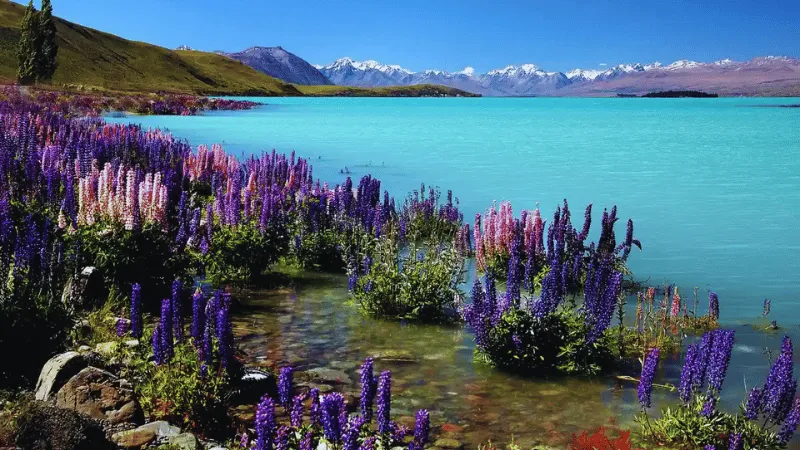
Picture a glacial lake the colour of a swimming pool, snow still dusting the Southern Alps, and a shoreline spiked with pink, purple and blue flowers. That is the Mackenzie Country in late spring, and it’s why thousands of travellers time a New Zealand trip around a single flower. The Lake Tekapo lupins bloom is short, colourful and a little controversial. It’s also starting about now.
Southern Hemisphere spring is well under way, and the lupins usually begin to open from mid-November. Peak colour normally arrives in late November and runs into the first half of December. In this guide, you’ll find the bloom window, the famous spots, some quieter ones, how to stop safely on the highway and why local conservation groups see these flowers very differently from visitors.
Lake Tekapo Lupins at a Glance
- Where: The Mackenzie Basin in Canterbury, on New Zealand’s South Island, around Lake Tekapo, Lake Pukaki, Twizel and Omarama.
- Bloom window: Mid-November to early January.
- Usual peak: Late November to mid-December. It shifts a little each year with spring temperatures.
- Best light: Sunrise and sunset, when low sun makes the petals glow.
- Cost: Roadside viewing is free. Guided tours to private land cost extra.
- Season status: The season is just opening. I couldn’t find a verified 2026 bloom report yet, so check recent local photos before you commit to dates.
Research date: 14 November 2026. Bloom timing is a seasonal pattern, not a forecast. The flowers respond to weather and lake levels, so conditions can differ from year to year.
When Do the Lupins Bloom?
Lupins can technically flower from spring into summer, but the showy display in the Mackenzie Basin is far more focused. Most local guides and tourism sites agree on mid-November to early January, with the fullest colour from late November through the first half of December.
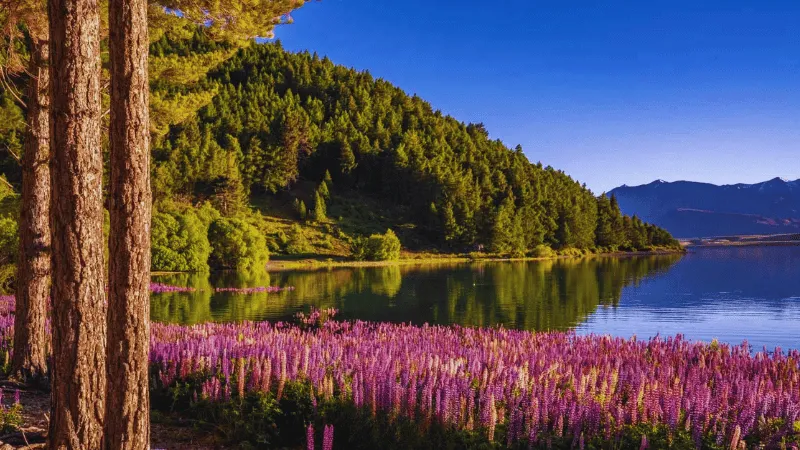
The bloom also travels. The flowers open first around Tekapo and the Mackenzie Basin, then move south through the Lindis Pass towards Wānaka, Queenstown and Glenorchy. As a result, a trip in mid-December can still find fresh flowers further south, even when the Tekapo patches are starting to fade.
Weather and water matter too. One well-documented example: in December 2020, Lake Tekapo’s water level was too high at a critical point in the plants’ growth cycle, so fewer lupins flowered around the shore that year. In other words, nobody can guarantee a purple shoreline on a specific date. Therefore, build some flexibility into your plans.
Here’s a simple way to think about timing:
| Period | What to expect |
|---|---|
| Early to mid-November | Only a few early flowers. The season is just starting. |
| Late November | Good displays start to appear across the Mackenzie Basin. |
| Early to mid-December | Usually the fullest colour and the safest window. |
| Late December to early January | Still possible, but patches thin out in many spots. |
Where to See Lupins Around Lake Tekapo and the Mackenzie
Lupins aren’t planted in neat rows. They grow wherever seeds land, so patches move from year to year. Treat the places below as reliable starting points, not guarantees, and keep your eyes open on every drive.
Tekapo Foreshore and the Church of the Good Shepherd
This is the classic scene. A small stone church sits on the lakeshore, and lupins often bloom close by in season. It’s easy to reach and easy to photograph, so it’s also the busiest. Arrive early, before the tour coaches, or come back near sunset.
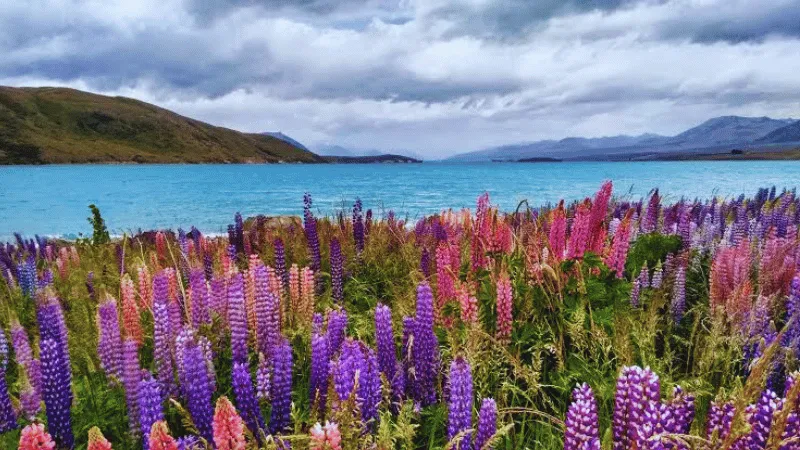
A quick note on etiquette here. The church is a working place of worship cared for by a small group of local parishioners. Photography inside the building isn’t permitted, and commercial photographers need a permit for the grounds. Donations (koha) help with upkeep. Check the church’s visitor information page before you go.
Roads Around Tekapo Village
Travellers regularly report lupins beside the main road at both ends of the village. Coming from the north, look for a big field just before town. Arriving from the south, you’ll often see roadside patches near the lakefront resorts. Braemar Road, which links Tekapo with Lake Pukaki, and the road towards Lake Alexandrina are also popular with lupin hunters.
Lake Pukaki, Twizel and the Mount Cook Road
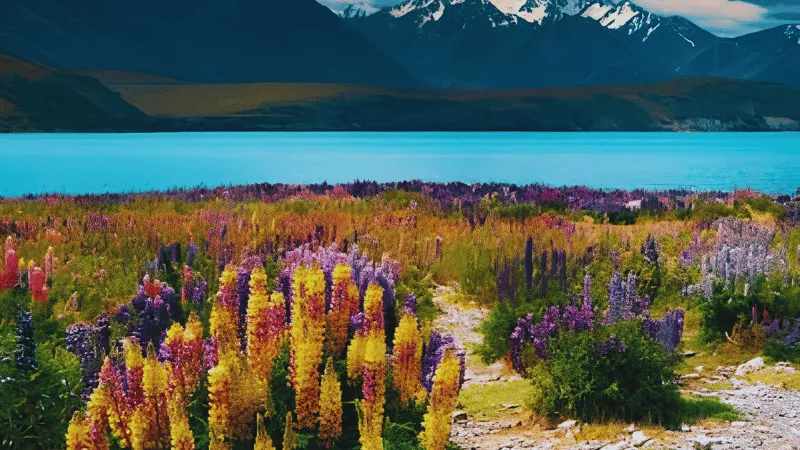
Lake Pukaki’s brilliant blue water makes a dramatic partner for the flowers. Several local photographers also rate the fields west of Tekapo, closer to Pukaki, as bigger and more photogenic than the famous shoreline. Twizel works well as a base, and lupins often grow beside the river path and along the road towards Aoraki / Mount Cook.
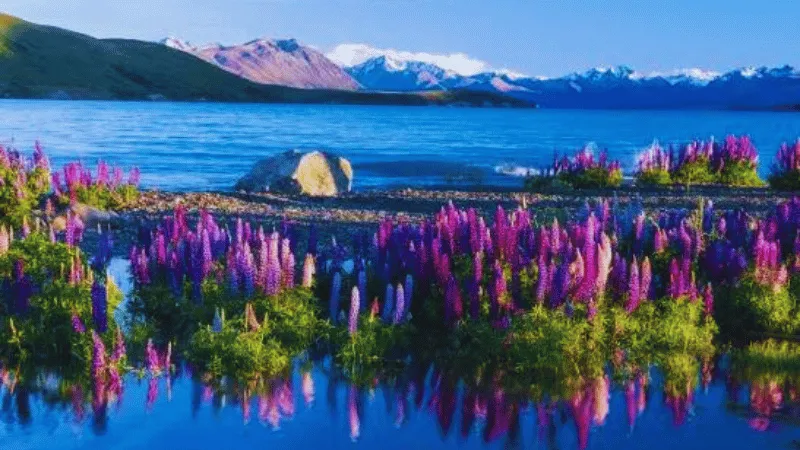
If you’re heading up the valley anyway, pair the drive with our guide to the Hooker Valley Track. It’s one of the easiest ways to put a big mountain walk alongside the flowers.
Omarama, the Ahuriri River and the Clay Cliffs
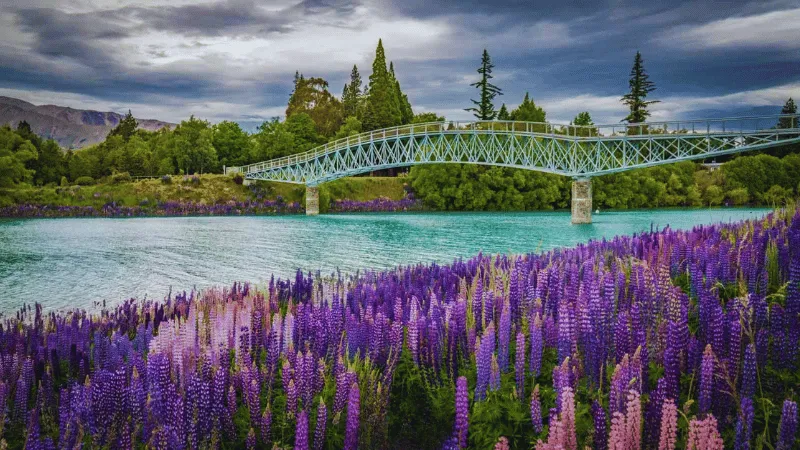
For fewer people, drive south. The road between Twizel and Omarama often passes lupin fields, and the Ahuriri River corridor towards the Lindis Pass is another favourite. Around the Clay Cliffs, the best flowers grow on the riverbanks below the formations. These spots feel quieter than Tekapo, which is exactly why they’re worth the extra driving time.
Why Lupins Are Controversial
Here’s the part most travel posts skip. Those gorgeous Russell lupins aren’t native. They arrived in the Mackenzie Basin around the 1940s from sowings and garden escapes, and they’ve spread widely since.
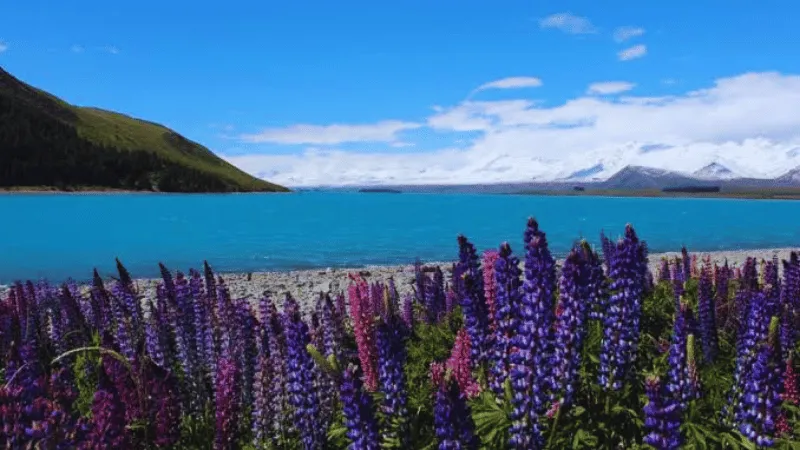
Today, the Department of Conservation and the Te Manahuna Aoraki project treat wild Russell lupins as a weed. According to the project, they can choke out native plants in braided rivers, tussock grasslands and wetlands. Conservation groups also say the plants take over the open gravel where endangered birds such as the wrybill and the black-fronted tern nest. The basin’s dryland ecosystems support more than 60 rare and threatened species, so the stakes are real.
Control work is ongoing. The Te Manahuna Aoraki programme has targeted adult wild Russell lupins for removal, and one national tourism guide notes that visitors will now see fewer wild lupins than in the past, with the flowers concentrated in a handful of places. Learn more on the project’s weed control page.
So how should a thoughtful traveller handle this? Enjoy the colour, but don’t treat it as a reason to wander into sensitive riverbeds. Don’t collect seeds or dig up plants. If you walk through seeding patches, brush off boots and clothing before you move on. And remember that the real treasure here is the braided rivers and dry grasslands the flowers sit in.
How to Stop Safely and Respect the Land
- Use proper lay-bys. State Highway 8 is a busy main road with few safe places to pull over. Stop only where there’s a designated lay-by, and park fully off the road.
- Stay out of private farmland. Many of the best fields sit behind fences on working high-country stations. Obey signs and shoot from the public roadside.
- Don’t trample or lie in the flowers. It snaps the stems, and it can crush ground-nesting birds. Visitors have reported oystercatchers nesting among the lupins, so watch your step.
- Don’t pick them. Besides spreading seed, picking can break local rules in protected areas around the lake.
- Check the roads. Mackenzie weather can turn quickly. Snow closed State Highways 8 and 80 as late as October 2025, so check the NZTA Journey Planner before you set off.
Is a Guided Lupin Tour Worth It?
If you’d rather not hunt for patches, local operators run seasonal 4WD lupin tours from about mid-November to early January. They visit private high-country stations that you can’t enter on your own, so you can see big, undisturbed fields without trespassing. Peak season is early December. Tours take a few hours and suit most ages. Prices and departure times change, so check directly with the operator and book early for the busiest weeks.
More Than Flowers: Stars, Lakes and Mountains
One big bonus of this trip: Lake Tekapo sits inside the Aoraki Mackenzie International Dark Sky Reserve. In other words, you can watch lupins by day and stargazing by night. Expect cold evenings even in late spring, so bring layers. Beyond that, the Mackenzie is full of easy day outings, from lakeside strolls to short hikes with Aoraki / Mount Cook towering at the end of the valley.
Practical Travel Tips
Getting There and Getting Around
Lake Tekapo sits on State Highway 8, between Fairlie and Twizel, and a car is by far the easiest way to chase lupins. Public transport won’t take you to the roadside fields. If you’re driving a campervan, take extra care on the exposed stretches, because strong winds are common in the basin.
Where to Base Yourself
Tekapo suits first-timers, with the lake, the church and the stargazing on its doorstep. Twizel is handy for Pukaki and the Mount Cook road, while Omarama puts you close to the Ahuriri River and the Clay Cliffs. Book ahead for December, because late spring is a popular time.
What to Pack
- Warm layers and a windproof jacket, even in sunny weather.
- A sun hat, sunscreen and sunglasses for the bright alpine light.
- Sturdy shoes for gravel pull-offs and riverbanks.
- A zoom lens, so you can frame the flowers without stepping into them.
- Water and snacks, because services thin out between towns.
Important Things to Know Before You Go
- The bloom isn’t guaranteed. Weather and lake levels change the display from year to year.
- Patches move. Control work and natural spread mean last year’s favourite field may look different.
- Safety comes first. No photo is worth stopping on a live highway or climbing a farm fence.
- Respect the church. Follow the posted rules, and don’t photograph inside.
- Check conditions daily. Look at road updates and recent local photos before you drive.
Conclusion: Chase the Colour, Leave the Land Alone
The Lake Tekapo lupins aren’t a secret, but they’re easy to see badly. Rush in at midday, stop on the highway and wade into a field, and you’ll miss what makes this place special. Slow down instead. Arrive at sunrise, drive the quieter roads towards Pukaki and Omarama, and remember that the flowers are an imported beauty sitting in a fragile native landscape. Aim for late November or early December, stay a night or two for the stars, and you’ll see the Mackenzie at its most colourful.
Explore More on LessExplore
Love a seasonal spectacle? Follow the moon and the rain to the Christmas Island red crab migration, or head to the forests of central Mexico for the monarch butterfly sanctuaries. If you’d rather plan a festival trip, our guide to the Pushkar Camel Fair in Rajasthan covers dates and practical tips. You’ll find hidden gems and seasonal escapes from every continent across LessExplore.
Lake Tekapo Lupins FAQs
Lupins usually bloom from mid-November to early January. They are typically at their fullest from late November through the first half of December, depending on spring weather and lake levels.
Popular spots include the Tekapo foreshore near the Church of the Good Shepherd, roadsides near Tekapo village, Braemar Road, Lake Pukaki, Twizel, and the Ahuriri River and Clay Cliffs area near Omarama. Patches vary from year to year.
No. Russell lupins were introduced to the Mackenzie Basin around the 1940s. The Department of Conservation and the Te Manahuna Aoraki project treat wild Russell lupins as a weed because they threaten braided rivers and native grasslands.
No. Don’t pick the flowers, and don’t enter private farmland or trample the plants. Many fields sit on working stations, and birds can nest among the flowers. Photograph from public roadsides and use designated lay-bys.
Sometimes. The bloom can last into early January, but many patches thin out after Christmas. Early December usually offers the best chance of full colour.
Bloom timing, road conditions, access rules and tour availability can change. Always confirm current details with official and local sources before you travel. Last checked: 14 November 2026.