Two of Iceland’s most famous waterfalls sit about 25 minutes apart on the south coast. One lets you walk behind a curtain of falling water. The other thunders down a cliff so wide that rainbows often hover in its spray. This guide to Seljalandsfoss and Skógafoss shows how to see both in a single day, what to wear, and when the paths are safe.
You will also find notes on the hidden Gljúfrabúi canyon fall, the stairs beside Skógafoss, and a simple route for the rest of the day. Where sources disagree on a detail, we say so, so you can check it before you travel.
Seljalandsfoss and Skógafoss at a Glance
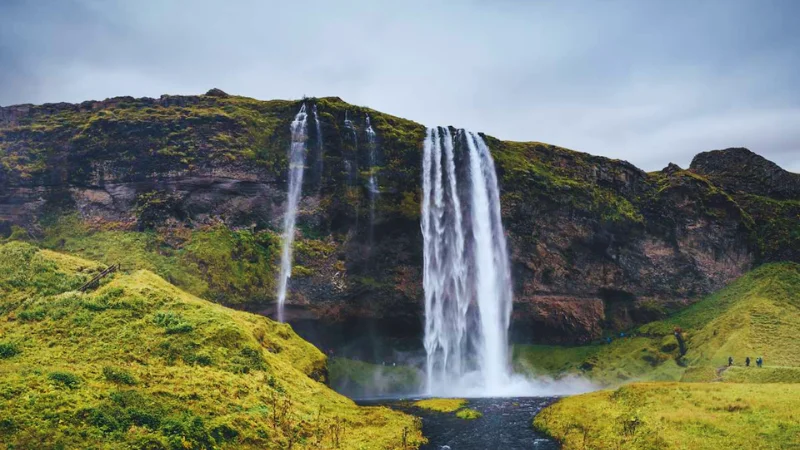
Both falls drop about 60 metres, according to Wikipedia’s Skógafoss entry and the regional tourism body Visit South Iceland. They look very different, though. Seljalandsfoss is a slender ribbon that pours over an overhanging cliff. Skógafoss is a broad wall of water, roughly 25 metres wide, that crashes onto a flat plain.
Both stops lie right beside the Ring Road, Route 1. Because of this, they fit easily into any South Iceland road trip. You can park, walk a few minutes, and take photos within the hour. Still, the best visits are slower, so plan at least an hour at each fall.
Seljalandsfoss: The Waterfall You Can Walk Behind
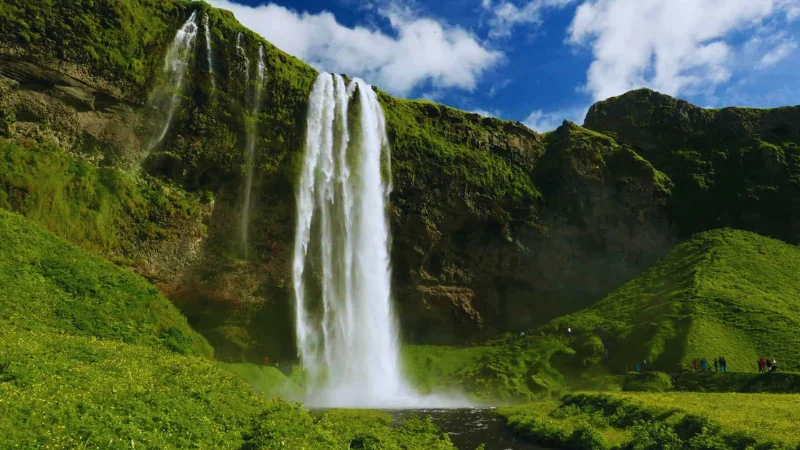
Seljalandsfoss is fed by the Seljalandsá river, which starts at the Eyjafjallajökull glacier. The fall tumbles over an old sea cliff, and a path runs in a loop behind the water. Few waterfalls in Europe let you stand inside the curve like this. The view from behind, especially in late evening light, is what most visitors remember.
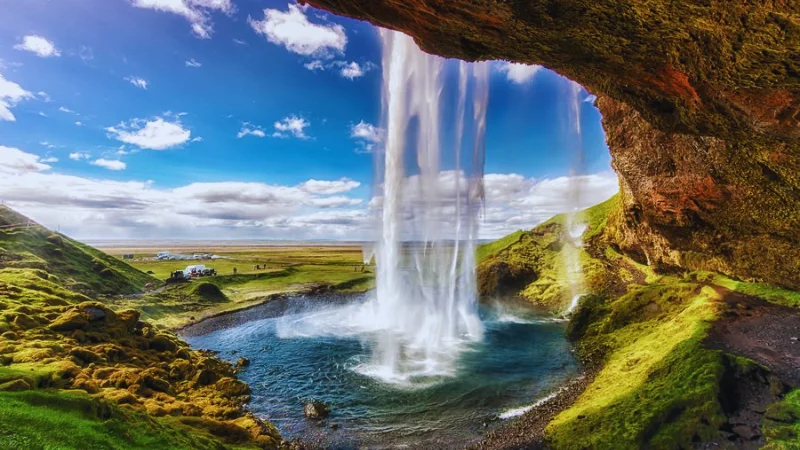
The path is short, but it is not easy underfoot. Perlan’s visitor guide warns that the rocks are often wet and slippery. Wear shoes with decent grip, and keep a hand free. Spray also soaks clothing quickly, so a hooded waterproof jacket makes the walk far more comfortable. Protect your phone and camera with a dry bag or cloth.
When the Path Behind the Falls Is Closed
In cold months, ice builds on the cliff and the trail. Visit South Iceland notes that the area can be dangerous in winter, because paths turn slippery and large pieces of ice may fall. It asks visitors to respect closures. One travel guide says the walk-behind route stays shut from about November to March. Another says only that it may close when icy. No single official date exists, so treat conditions on the day as the rule.
Gljúfrabúi: The Waterfall Hidden in a Canyon
Just a short walk from Seljalandsfoss, a second waterfall hides behind a rock wall. Gljúfrabúi drops into a narrow canyon, and from outside you see only a thin stream of water. To see the full fall, you step through a gap in the rock. Perlan’s guide says to be ready to get wet, and suggests waterproof clothing and wellies.
Check the water level first. Only go in if the stream looks shallow, and never when it runs high after heavy rain. If you would rather stay dry, you can still peek through the opening. Sources describe the approach differently, with some pointing to the trail north of Seljalandsfoss and others to the nearby farm road. Follow the signs on site.
Skógafoss: A Wall of Water on the South Coast
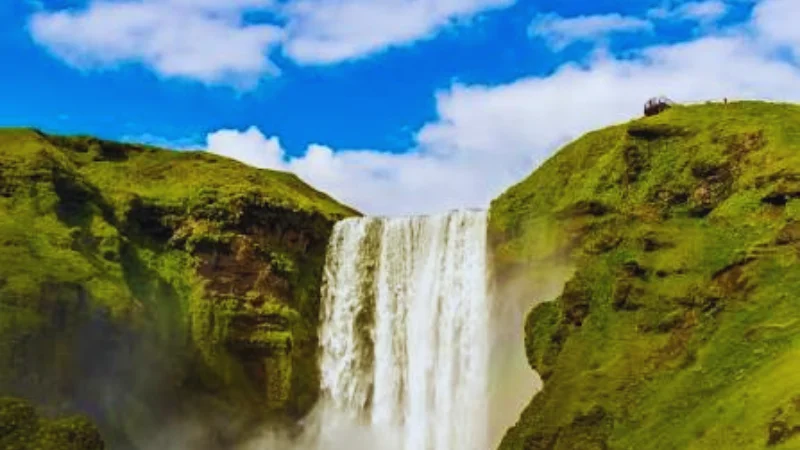
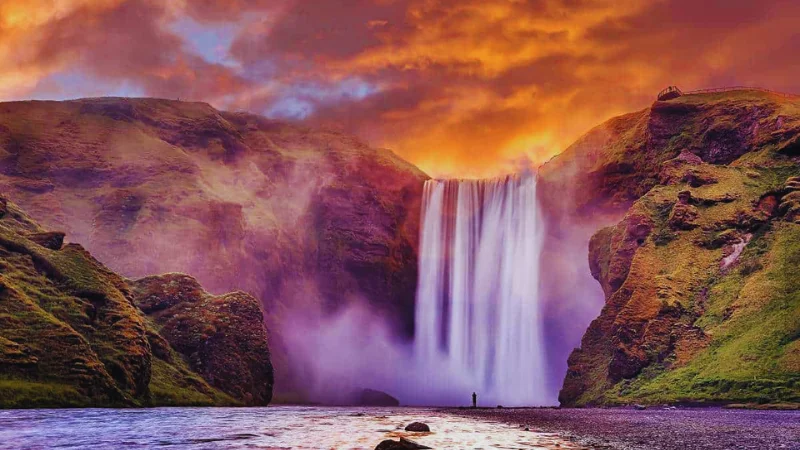
Skógafoss sits at the edge of the village of Skógar. You can walk almost to the base of the fall from the car park. The roar grows louder with every step, and the mist can drench you well before you reach the rocks. On sunny days, a single or even double rainbow often forms across the spray.
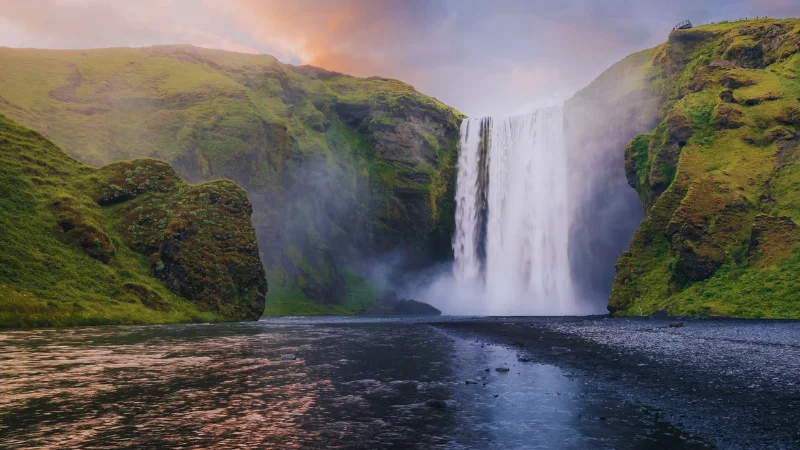
Take care near the base. Wikipedia notes that visitors can be drenched if they go too near, and one guide says the mist soaks through a rain jacket in seconds. A waterproof layer is therefore wise. Stay on marked paths too, because the moss and volcanic soil are fragile.
The Skógafoss Stairs and Viewing Platform
A steel staircase on the right side of the fall leads up to a viewing platform at the top. From there, you look down on the plunge and out toward the coast. Wikipedia gives the staircase as 527 steps. Perlan’s guide says roughly 370, so the count varies by source. Either way, expect a steady climb, and rest on the landings if needed.
The steps can be slippery from spray, rain, or ice. Hold the rail, and avoid rushing on the way down. The reward is worth the effort. You see the river approach the edge, and you gain a new sense of the fall’s size.
The Legend of the Hidden Treasure Chest
Local legend adds some mystery. The first Viking settler in the area, Þrasi Þórólfsson, is said to have buried a chest of treasure in a cave behind the fall. Years later, locals reportedly found it. They managed to grab only the ring on its side before the chest vanished again. The ring was said to be placed on the church door, and a ring linked to the tale is now shown at the Skógar museum.
Beyond the Platform: The Fimmvörðuháls Trail
Past the top of the stairs, a trail follows the Skógá river upstream, passing many smaller falls. This is the start of the Fimmvörðuháls route, which climbs between the Eyjafjallajökull and Mýrdalsjökull glaciers and descends to Þórsmörk. Perlan describes the full route as about 25 kilometres. It is a serious mountain hike, so it needs good weather, proper gear, and a check of conditions.
You do not have to hike the whole trail. Many visitors walk a short way upstream to see the river falls, then turn back. Sources give very different times for this out-and-back stroll, so set your own turnaround time and keep an eye on the weather.
How to Get to Seljalandsfoss and Skógafoss
Most travellers drive from Reykjavík along Route 1. Seljalandsfoss is roughly 130 kilometres away, which takes under two hours without stops, according to Perlan. Skógafoss lies about 20 to 25 minutes further east. Both turn-offs are well signed, and the roads are paved.
Rental cars give the most freedom, particularly in winter when daylight is short. Guided day tours also run from Reykjavík, which suit travellers who prefer not to drive on icy roads. Before you set out, check road conditions at the Icelandic road traffic information site and weather alerts at SafeTravel Iceland. Conditions can change quickly.
Best Time to Visit the Waterfalls
Summer, from June to August, brings the mildest weather and the easiest walking. The paths are open, the days are very long, and you can visit late in the evening when the light is soft. Crowds are largest at midday, so early morning or evening is calmer.
Winter looks very different. Perlan notes that icy formations and fewer crowds make the falls dramatic from roughly November to April. However, daylight is short, and the Seljalandsfoss path behind the water may be closed. Spring and early autumn sit between the two extremes. They can offer good light with a little more space on the paths.
Parking, Costs and Safety Tips
Parking at Seljalandsfoss is paid. Perlan reports a flat fee of about 800 ISK, while another guide says 900 ISK for 24 hours by card or app. Prices change, so check the sign and machine on arrival and carry a payment card. Skógafoss also has a paid car park, but no reliable fee was found, so confirm it locally.
A few simple habits keep the visit safe and pleasant:
- Dress for spray. Bring a waterproof jacket, and waterproof trousers if you plan to go close.
- Choose grippy footwear. Wet rock and metal steps are slippery in every season.
- Respect closures. Never ignore signs or barriers on icy paths.
- Check drone rules. Perlan says Skógafoss lies in a protected area where drone flights are restricted.
- Stay on marked trails. This protects fragile moss and soil.
A Simple One-Day South Coast Itinerary
Start early from Reykjavík and reach Seljalandsfoss in the morning, when the car park is quieter. Walk the loop behind the fall if conditions allow. Then visit Gljúfrabúi before you leave. Allow about an hour and a half for both.
Next, drive east to Skógafoss. Climb the stairs for the view, and eat lunch nearby. The Skógar museum, which Perlan places less than a kilometre from the fall, is a good rainy-day stop with historic turf houses. If time allows, continue about 12 kilometres to the Sólheimajökull glacier area, where a short walk leads toward the ice. Turn back by mid-afternoon in winter, because the return drive is long.
Some travellers push on to Vík and Reynisfjara beach. This makes for a very long day, so many prefer to stay a night in the area. Be especially careful on any black sand beach, as waves can be dangerous.
More Waterfall Adventures Around the World
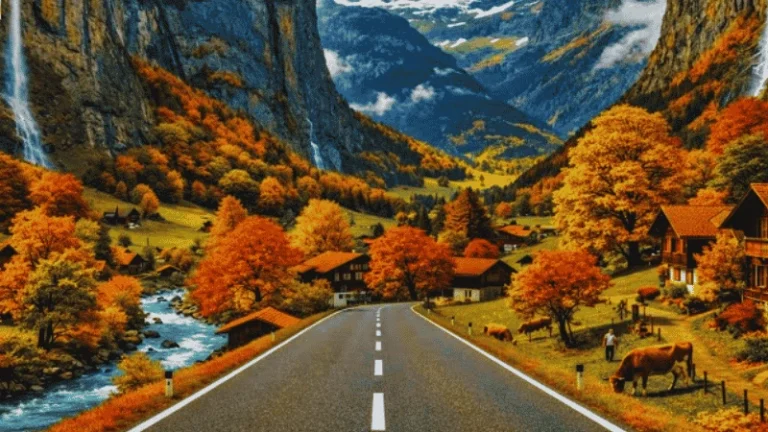
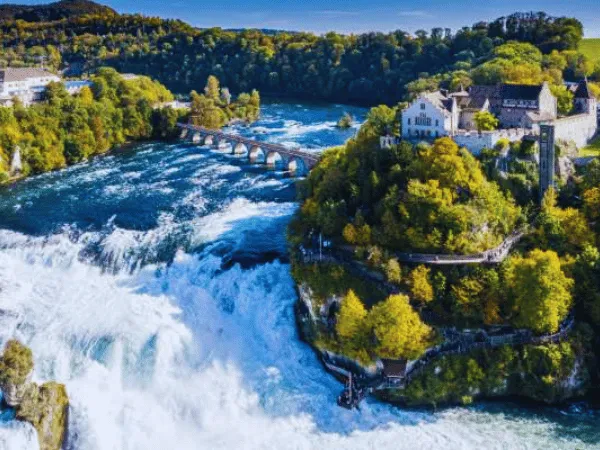
If these falls inspire you, plenty of other cascades deserve a trip. In Switzerland, Rhein Falls offers boat rides beneath Europe’s largest waterfall, while the Lauterbrunnen Valley packs dozens of falls into one cliff-lined valley.
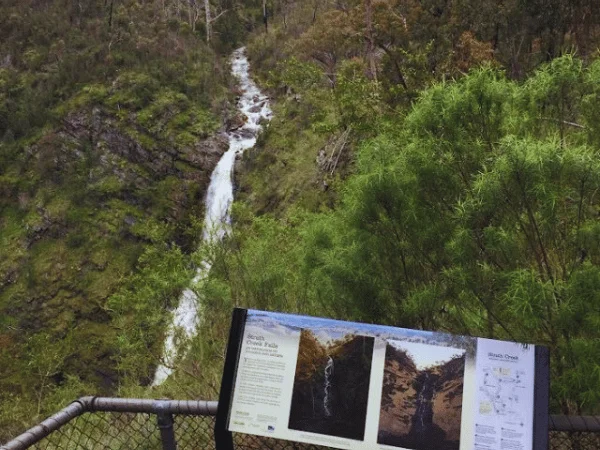
For turquoise terraces and boardwalks, read our guide to Plitvice Lakes National Park in Croatia. Closer to the southern hemisphere, our list of the top waterfalls in Victoria shows a very different style of cascade.
Frequently Asked Questions About Seljalandsfoss and Skógafoss
They are about 20 to 25 minutes apart by car along Route 1. Both lie close to the Ring Road, so they pair easily in one day trip from Reykjavík.
Not always. Ice can make the path dangerous, and it may be closed. Check conditions on the day and respect any signs or barriers.
Wikipedia lists 527 steps to the top viewing platform. One visitor guide says roughly 370, so counts differ by source. Expect a steady climb either way.
Entry to the falls is not charged in the sources we checked, but parking is paid. Seljalandsfoss parking is reported at about 800 to 900 ISK. Check the machine on arrival.
June to August has the mildest weather and open paths. Winter brings icy scenery and fewer crowds, but shorter days and possible closures.
Final Thoughts on Seljalandsfoss and Skógafoss
Seljalandsfoss and Skógafoss show two sides of Iceland’s waterfalls: one delicate and walkable from behind, the other broad, loud and easy to reach. Together they make one of the best short stretches of the Ring Road. Dress for spray, respect icy paths, and leave time to linger.
Ready for more? Explore LessExplore for worldwide travel guides, hidden gems, waterfalls, hiking destinations, scenic escapes, and practical travel tips. For another wild escape, try our guide to Sossusvlei and Deadvlei in Namibia.
Fees, closures and timings change. Check official sources before you travel.