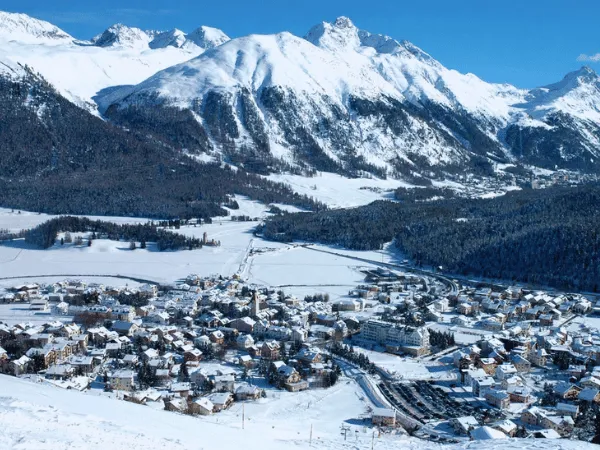
Some places promise the aurora. Abisko quietly improves your odds. This tiny village sits on the shore of a frozen lake, 200 km north of the Arctic Circle, under a patch of sky that often stays clear when the rest of Lapland clouds over. Right now, as the long nights deepen towards the polar night, it is one of the best-placed bases in Europe for seeing the northern lights.
This guide to the Abisko northern lights covers everything you need for the 2026–27 season. You will learn why the famous “Blue Hole” matters, what the Aurora Sky Station costs, when the darkest weeks fall and how to get there by train or plane. Information was checked on 20 November 2026, and prices and timetables can change, so confirm them before you book.
Why Abisko Is Special for the Northern Lights
Seeing the aurora needs three things: darkness, geomagnetic activity and a clear sky. Abisko delivers the first two easily. It lies directly beneath the auroral oval, the ring around the magnetic pole where the lights appear most often. From autumn to spring, the nights are long and properly dark.
The third ingredient is where Abisko stands apart. Moist air rolling in from the Atlantic hits the high mountains on the Norwegian border and drops its rain and snow there. As a result, the valley around Abisko sits in a rain shadow. Locals and aurora guides call the resulting gap in the clouds the “Blue Hole”. It does not guarantee clear skies every night, but it does give Abisko a real weather advantage over many coastal aurora towns.
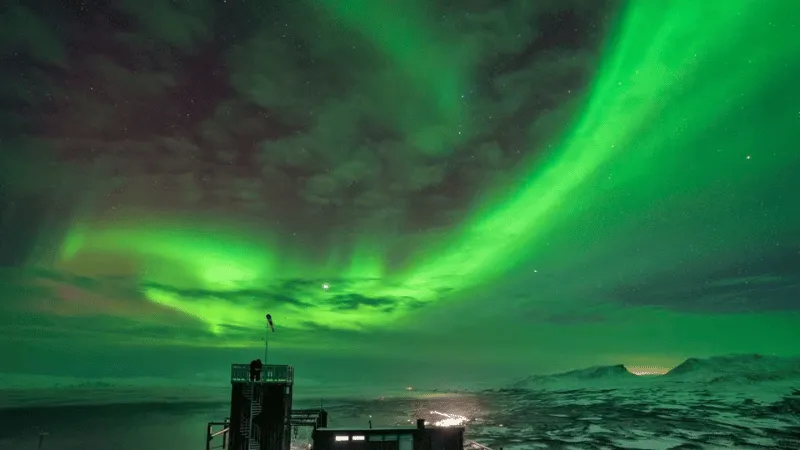
There is also good news from the sun. Solar Cycle 25 peaked in late 2024, and activity remains elevated. Space weather forecasters have issued several geomagnetic storm watches this November alone. Displays may not be as frequent as at the peak, yet the 2026–27 winter is still widely expected to be a strong aurora season.
Abisko National Park at a Glance
Abisko is more than an aurora village. It is also the gateway to Abisko National Park, one of Sweden’s oldest. The park was established in 1909 and covers about 77 square kilometres of mountain birch forest, alpine meadow and bare fells. According to Sweden’s official national parks site, it is the most visited national park in Norrbotten County.
The village sits on Torneträsk, a long, deep mountain lake that freezes in winter. To the west, the U-shaped valley of Lapporten, known in Sámi as Čuonjávággi, frames the horizon like a giant gate. Meanwhile, the river Abiskojåkka rushes through a narrow limestone canyon close to the tourist station. In summer this is hiking country, and the famous Kungsleden trail begins here. In winter, however, the whole valley turns quiet, white and dark.
Abisko also lies in Sápmi, the homeland of the Sámi people. Many local names, including the mountain Njullá (Nuolja in Swedish), come from the Sámi language. Several guides weave Sámi stories about the lights into their tours, which adds real depth to a night outside.
When to See the Abisko Northern Lights
The aurora season in Abisko runs roughly from September to March. Within that window, each part of the winter has its own character.
Late November and the Polar Night
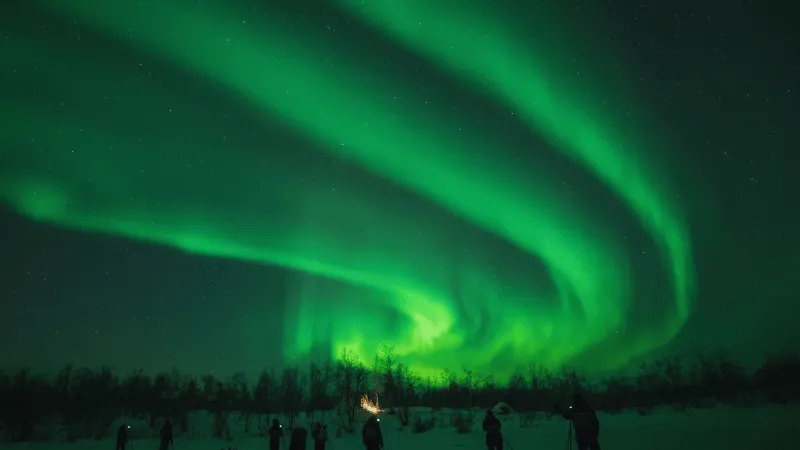
Right now, in late November, the days are short and getting shorter fast. Around early December, the sun stops rising above the horizon altogether. In Abisko, this polar night lasts until around early January. It is not pitch black all day, though. Instead, the midday hours glow with a soft blue and pink twilight over the snow. For aurora hunters, the long darkness simply means more hours each night when the lights could appear.
December and January
December and January are the darkest and coldest months. They give you the most viewing hours, but you need serious winter clothing. Christmas and New Year are popular, so book accommodation and tours early if you plan to visit then.
February and March
Late winter brings returning daylight, deep snow and often more settled weather. You can enjoy daytime activities in proper light and still have long, dark nights. The weeks around the March equinox can also bring a small seasonal bump in geomagnetic activity.
Plan Around the Moon
A bright full moon washes out fainter displays. For the darkest skies, aim for the days around a new moon. This winter, new moons fall around 8–9 December 2026 and 7 January 2027, while full moons fall around 24 November and 23–24 December 2026. A moonlit night is still worth going out, though. Strong auroras shine through, and the moon lights up the snowy mountains beautifully in photos.
STF Aurora Sky Station: Prices and What to Expect
The Aurora Sky Station is Abisko’s best-known aurora experience. It sits about 900 metres above sea level on the slopes of Njullá. You reach it on a two-kilometre chairlift ride from the valley, wrapped up against the cold. Up there, far from the village lights, you get a wide view over Torneträsk and Lapporten.
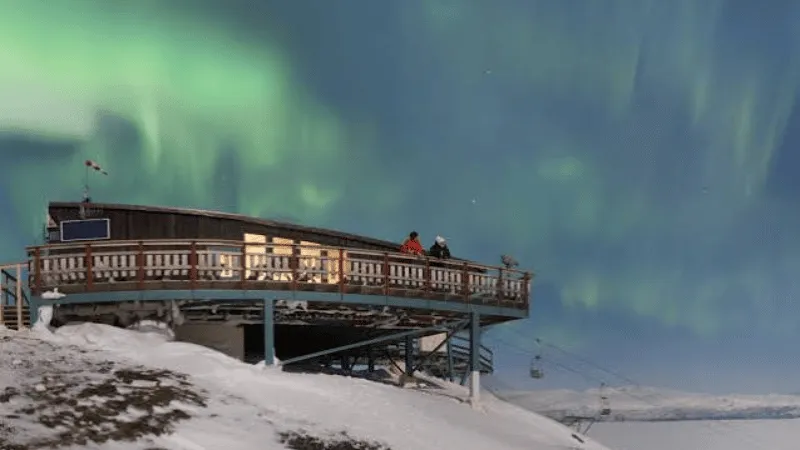
The Swedish Tourist Association (STF) runs two main evening experiences for the 2026–27 season, which continues until 27 March 2027:
- Night Visit: From 1,295 SEK per adult. It runs from 8:30 pm until no later than 1 am and includes a guided evening, plus warm drinks and northern Swedish snacks in a lavvu tent. Details are on the official Aurora Sky Station Night Visit page.
- Northern Light Dinner: From 2,395 SEK per adult. It starts at 5:30 pm and includes a four-course dinner with Nordic and Lapland flavours at the station. Drinks cost extra.
Both experiences include warm overalls and winter boots. Places are limited each evening, so STF recommends booking in advance. Keep in mind that no tour can promise the aurora. Still, the elevated station and the Blue Hole give you a good vantage point if the sky cooperates.
One change for 2026–27 matters to skiers rather than aurora watchers. STF has ended avalanche mitigation on Njullá. Any downhill skiing on the mountain is now entirely at your own risk, with no ski patrol or mountain rescue service. Only single-ride chairlift tickets are sold.
Other Ways to Chase the Aurora in Abisko
You do not need a paid tour to see the Abisko northern lights. On a clear, active night, the aurora can fill the sky right above the village.
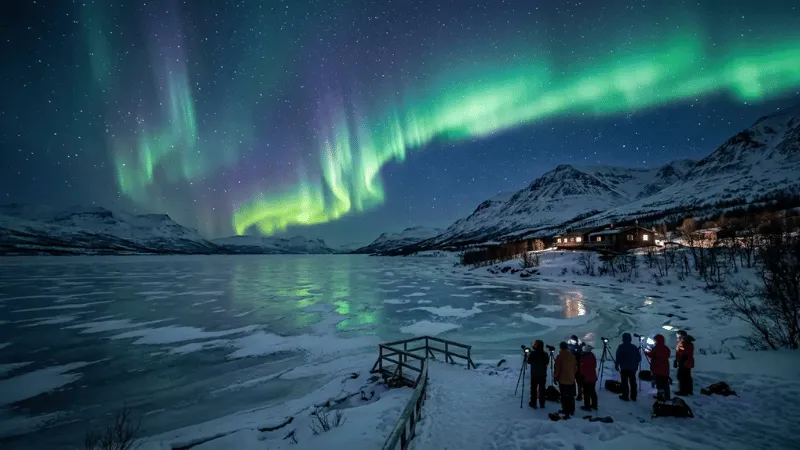
- The shore of Torneträsk: A short walk from the tourist station takes you to the lake. Its frozen surface gives you a wide, open horizon, which is ideal for photos.
- Guided aurora photography tours: Local operators take small groups to dark spots, help with camera settings and move with the weather.
- Aurora hikes and snowshoe walks: STF and private guides run evening walks into the snowy landscape.
- Dog sledding and winter activities: Daytime sledding, cross-country skiing and snowshoeing make good use of the short daylight hours.
Check an aurora forecast before heading out. The NOAA Space Weather Prediction Center publishes geomagnetic forecasts, and several apps send alerts. However, the local cloud forecast matters just as much, so check both.
Northern Lights Photography Tips
Photographing the aurora is easier than it looks, but the cold makes everything harder. A few simple habits help a lot.
- Use a tripod: You will need exposures of a few seconds, so hand-held shots blur.
- Start with simple settings: Try a wide aperture, an ISO of 1600 to 3200 and a few seconds of exposure. Then adjust as the aurora brightens or fades.
- Focus manually: Set your lens to infinity in daylight, then tape it in place.
- Bring spare batteries: Cold drains them fast, so keep spares in an inside pocket.
- Add a foreground: Lapporten, the lake ice or snowy birch trees turn a green sky into a real picture.
Most modern phones also have a night mode that can capture a decent aurora. Just brace the phone against something steady.
How to Get to Abisko
By Plane
The nearest airport is Kiruna, around 100 km from Abisko. Most international travellers connect through Stockholm Arlanda, then take a domestic flight north. From Kiruna, continue by train, bus, airport transfer or hire car. The E10 road runs right through the national park.
By Night Train
Arriving by train is part of the adventure. Abisko has its own station, called Abisko Turiststation, on the Ore Line between Kiruna and Narvik in Norway. SJ runs night trains from Stockholm towards Swedish Lapland. However, infrastructure works in 2026 have disrupted this route. Some journeys need a change at Boden, and the through service to Narvik has been suspended at times. Always check the latest timetable on SJ’s website before you plan around it.
A Special Northern Lights Train This Month
There is also a timely one-off option. Swedish operator Snälltåget is running a special overnight service from Malmö via Stockholm to Narvik on Monday 23 November 2026. Its preliminary timetable has the train leaving Stockholm Central at 18:55 and reaching Abisko at 14:45 the next day. The return leaves Narvik on Friday 27 November and calls at Abisko at 14:45. Accommodation is not included, and the operator says the times may change because of track works. See the Snälltåget aurora train page for availability.
If you continue past Abisko to Narvik, you are within reach of Norway’s Lofoten Islands. Our Reinebringen hike guide covers Lofoten’s most famous viewpoint for a future summer trip.
Where to Stay in Abisko
Abisko is small, so accommodation is limited. STF Abisko Turiststation is the main base. It sits inside the national park near the station, the naturum visitor centre and the chairlift. It is open all year and offers rooms, a restaurant and a shop.
Abisko Östra, the village part of Abisko, has a handful of guesthouses, cabins and small lodges. Björkliden, one stop west on the railway, has mountain accommodation with views of Lapporten. Alternatively, Kiruna offers far more choice if you are happy to travel out for evening tours. In peak weeks, book well ahead.
Practical Tips for an Arctic Winter Trip
- Dress in layers: Wear thermal base layers, a warm mid-layer and a windproof outer shell. Add a hat, a neck gaiter and insulated mittens.
- Protect your feet: Insulated winter boots and wool socks make the biggest difference on long nights outside.
- Stay at least three nights: Clouds and quiet solar nights happen. More nights mean much better odds.
- Carry a head torch with a red light: It protects your night vision and does not spoil other people’s photos.
- Stay on safe ground: Only walk on lake ice where guides or locals confirm it is safe. Avoid avalanche terrain unless you have training and equipment.
- Budget carefully: Lapland is not cheap. Book tours early and consider self-catering to keep costs down.
If you love dramatic northern landscapes, Iceland is another great winter option. Our Seljalandsfoss and Skógafoss guide covers two of its most famous waterfalls.
Final Thoughts on the Abisko Northern Lights
Abisko does not rely on luck alone. Its place under the auroral oval, its rain-shadow skies and its easy rail access make it one of Europe’s most practical aurora bases. Add the quiet polar night, a frozen lake and the silhouette of Lapporten, and you have a winter trip that feels truly Arctic.
Give yourself a few nights, check the forecasts each evening and dress far warmer than you think you need. Then step outside, look north and wait. When the sky finally starts to move, you will understand why people travel so far for it.
Explore More Destinations on LessExplore
Building a longer winter trip in Europe? Combine the Arctic with a festive city break using our Olomouc Christmas market 2026 guide. Beyond Europe, LessExplore covers hidden gems, natural wonders, scenic hikes and practical travel tips from every continent, so there is always another adventure to plan.
Abisko Northern Lights FAQs
The aurora season in Abisko runs roughly from September to March. December and January offer the longest dark hours, while February and March bring more daylight and often more settled weather. For the darkest skies, plan around a new moon.
The Blue Hole is a local name for the clearer skies above Abisko. Mountains on the Norwegian border block much of the moist air from the Atlantic, so the valley sits in a rain shadow. It does not guarantee clear nights, but it improves the odds.
For the 2026–27 season, the STF Aurora Sky Station Night Visit costs from 1,295 SEK per adult, and the Northern Light Dinner costs from 2,395 SEK per adult. Both include warm overalls and boots. Check the official site for current prices.
Fly to Kiruna, about 100 km away, then continue by train, bus, transfer or car along the E10. You can also take the train, as Abisko Turiststation lies on the line between Kiruna and Narvik. Check SJ for 2026 timetable changes caused by track works.
Plan for at least three nights. Cloud cover and quiet solar activity can hide the aurora on any single night, so more nights give you a much better chance of a good display.